Navigating Sensitivity Challenges: A Comprehensive Guide to DNA Methylation Assays in Low-Abundance Samples
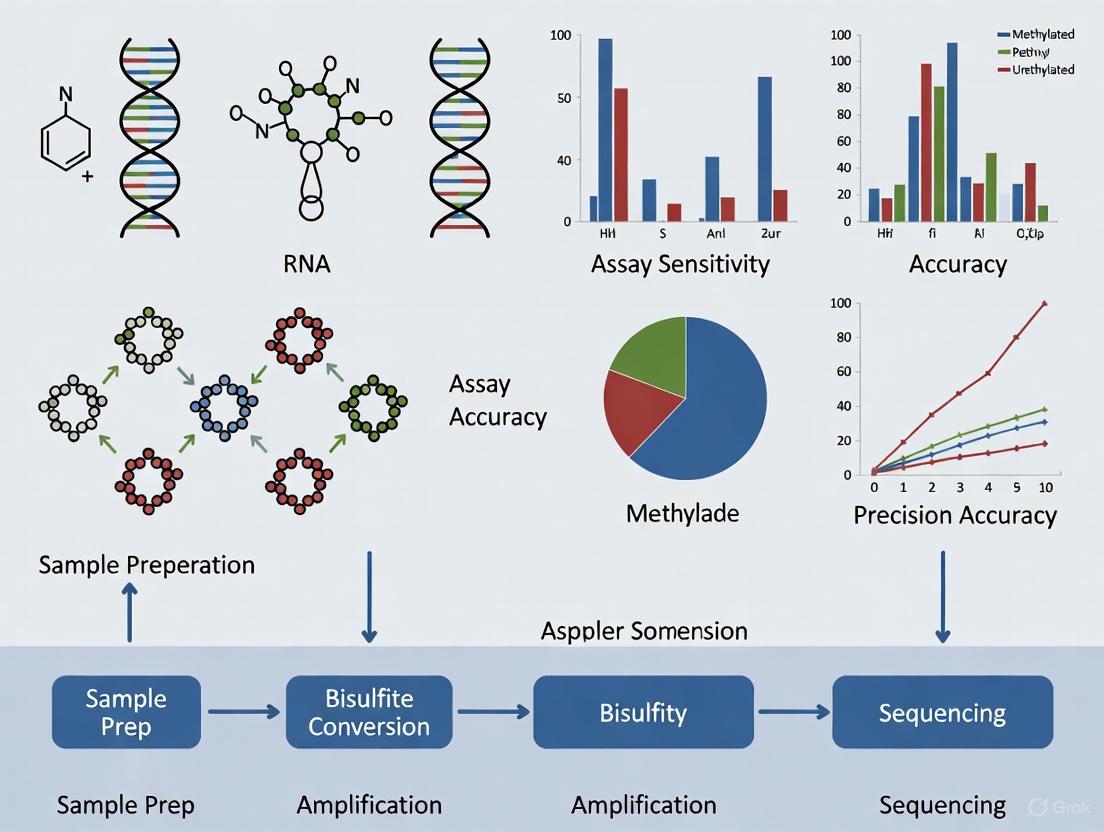
Accurate DNA methylation analysis in low-abundance samples is critical for advancing liquid biopsy applications, early cancer detection, and personalized medicine.
Navigating Sensitivity Challenges: A Comprehensive Guide to DNA Methylation Assays in Low-Abundance Samples
Abstract
Accurate DNA methylation analysis in low-abundance samples is critical for advancing liquid biopsy applications, early cancer detection, and personalized medicine. This article provides researchers, scientists, and drug development professionals with a comprehensive evaluation of methylation detection technologies, focusing on their performance limitations and optimization strategies for minimal input samples. We explore foundational principles of methylation biology in circulating tumor DNA, compare methodological approaches from bisulfite sequencing to emerging enzymatic and third-generation technologies, detail troubleshooting protocols for sensitivity enhancement, and present validation frameworks for assay selection. By synthesizing recent technological advancements and practical optimization techniques, this review serves as an essential resource for developing robust, clinically applicable methylation assays in challenging sample contexts.
The Fundamental Challenge: Understanding Methylation Biology in Low-Abundance Contexts
The accurate analysis of DNA methylation in low-abundance biological samples represents a significant frontier in molecular diagnostics and personalized medicine. Samples such as circulating tumor DNA (ctDNA), peripheral blood mononuclear cells (PBMCs), and other limited clinical materials contain vanishingly small amounts of target DNA, often present at concentrations below 1% of total cell-free DNA in blood [1]. This poses extraordinary challenges for detection, requiring technologies capable of identifying minute methylation signals against a high background of normal DNA. The emergence of liquid biopsy approaches has further intensified the need for highly sensitive methylation profiling techniques, as these minimally invasive methods provide access to tumor-derived epigenetic information but in extremely limited quantities [2] [3]. The inherent stability of DNA methylation patterns, their tissue-specific nature, and their emergence early in disease pathogenesis make them ideal biomarkers—if they can be reliably detected [2] [4]. This comparison guide objectively evaluates the performance of current DNA methylation detection technologies when applied to low-abundance samples, providing researchers with critical experimental data and methodologies to inform their assay selection.
Technology Performance Comparison for Low-Abundance Samples
The selection of an appropriate methylation detection platform requires careful consideration of multiple performance parameters, particularly when working with limited sample materials. The following comparison summarizes the key characteristics of major technologies:
Table 1: Performance Comparison of DNA Methylation Detection Technologies
| Technology | Sensitivity | DNA Input Requirements | Multiplexing Capability | CpG Coverage | Best Applications for Low-Abundance Samples |
|---|---|---|---|---|---|
| Whole-Genome Bisulfite Sequencing (WGBS) | Moderate (limited by bisulfite conversion) | High (typically >100ng) | Genome-wide | ~80% of CpGs | Comprehensive discovery when sample is not limiting [5] |
| Enzymatic Methyl-Seq (EM-seq) | High | Moderate (can handle lower inputs than WGBS) | Genome-wide | Comparable to WGBS | Preserved DNA integrity for fragmented samples [5] |
| Illumina EPIC Array | Moderate | Low (~500ng) | 935,000 pre-selected CpGs | Targeted but extensive | Population studies with many samples [5] |
| Oxford Nanopore (ONT) | Moderate | High (~1μg) | Genome-wide | Long-read coverage | Methylation haplotyping, complex regions [5] |
| Targeted Bisulfite Sequencing | High | Low (1-10ng) | 10s-1000s of targets | User-defined | Validation studies, clinical assay development [3] |
| Multi-STEM MePCR | Very High (0.1%) | Very Low | 3+ targets simultaneously | Highly targeted | Ultra-sensitive detection of specific biomarker panels [6] |
| PBMC Methylation Assays | High (93.2% sensitivity demonstrated) | Low (200μL blood) | Multiplexed (4-marker panel) | Targeted | Early cancer detection from immune cell profiling [7] |
Beyond these core performance metrics, each technology demonstrates distinct advantages for specific low-abundance scenarios. Bisulfite-based methods, particularly WGBS, have traditionally offered the broadest coverage but suffer from significant DNA degradation during the harsh conversion process, which is particularly problematic for already limited samples [5]. Enzymatic conversion methods like EM-seq have emerged as robust alternatives that better preserve DNA integrity while maintaining comprehensive coverage [5] [3]. For the most challenging applications with extremely low inputs, such as ctDNA from early-stage cancers, targeted approaches like the multi-STEM MePCR system demonstrate exceptional sensitivity down to 0.1% methylated alleles and can work with as few as 10 template copies [6]. Meanwhile, PBMC-focused assays leverage the accessibility of blood immune cells to achieve high sensitivity (93.2%) and specificity (90.4%) for early cancer detection without requiring the isolation of extremely rare ctDNA fragments [7].
Experimental Protocols for Low-Abundance Methylation Analysis
ctDNA Extraction and Processing for Methylation Studies
The pre-analytical phase is particularly critical for ctDNA analysis, as improper handling can dramatically impact downstream methylation results. Recommended protocols include:
- Blood Collection: Use butterfly needles with 21G or larger gauge to avoid hemolysis. Collect 2×10mL blood in cell-stabilizing blood collection tubes (e.g., cfDNA BCT by Streck, PAXgene Blood ccfDNA by Qiagen) for processing within 3-7 days at 4-25°C [1].
- Plasma Processing: Perform double centrifugation—first at 380-3,000×g for 10 minutes at room temperature to separate plasma, followed by 12,000-20,000×g for 10 minutes at 4°C to remove remaining cellular debris [1].
- ctDNA Extraction: Use silica membrane-based kits (e.g., QIAamp Circulating Nucleic Acids Kit) which typically yield more ctDNA than magnetic bead-based methods. Elute in 20-50μL of TE buffer or nuclease-free water [1].
- Storage Conditions: Store plasma at -80°C for long-term preservation. Avoid freeze-thaw cycles by aliquoting samples. Thaw slowly on ice when needed [1].
For cases where ctDNA abundance is exceptionally low, several pre-analytical enhancement strategies have been explored:
- Stimulated ctDNA Release: Localized irradiation (6-24 hours before blood draw) can transiently increase ctDNA concentration by inducing tumor cell apoptosis [1].
- Microfluidic Enrichment: Emerging technologies enable size-based or immunocapture enrichment of ctDNA from larger plasma volumes [1].
PBMC Isolation and Methylation Profiling
The protocol for PBMC methylation analysis differs significantly from ctDNA approaches:
- PBMC Isolation: Collect fresh blood in EDTA tubes. Within 2-6 hours, isolate PBMCs using Ficoll density gradient centrifugation. Wash cells twice with phosphate-buffered saline [7].
- DNA Extraction: Use standard column-based kits (e.g., DNeasy Blood & Tissue Kit) with optional RNAse treatment. Assess DNA purity via Nanodrop (260/280 ratio ~1.8) and quantify by fluorometry [7].
- Bisulfite Conversion: For genome-wide analysis, use the EZ DNA Methylation Kit with modified conversion conditions for PBMC DNA: incubate at 95°C for 30 seconds, 50°C for 60 minutes, repeat cycle 16-20 times [7].
- Targeted Validation: For specific marker validation (e.g., the 4-marker breast cancer panel), use pyrosequencing or targeted bisulfite sequencing with the following cycling conditions: 95°C for 5 minutes, then 45 cycles of 95°C for 30 seconds, 60°C for 30 seconds, 72°C for 30 seconds [7].
Bisulfite-Free Multiplex Methylation Detection
The multi-STEM MePCR protocol offers an alternative to bisulfite-based methods:
- MDRE Digestion: Digest 10-100ng DNA with GlaI (NEB) or other methylation-dependent restriction endonucleases in 1× CutSmart buffer at 25°C for 1 hour [6].
- STEM-MePCR Reaction: Prepare 20μL reactions containing 1× STEM-MePCR buffer, 0.5μM tailored-foldable primers, 0.25μM terminal-specific primers, 0.1μM universal primer, and 1× DNA polymerase [6].
- Thermal Cycling: 95°C for 5 minutes; 10 cycles of 95°C for 15 seconds, 60-65°C for 30 seconds; then 30 cycles of 95°C for 15 seconds, 55°C for 30 seconds, 72°C for 20 seconds [6].
- Detection: Monitor fluorescence in real-time or perform endpoint detection using capillary electrophoresis [6].
Diagram 1: Experimental workflow for low-abundance sample methylation analysis, showing critical decision points from sample collection through analytical outcomes.
Essential Research Reagent Solutions for Low-Abundance Methylation Studies
Successful methylation analysis of limited samples requires specialized reagents and materials optimized for minimal input and maximal recovery:
Table 2: Essential Research Reagents for Low-Abundance Methylation Studies
| Reagent Category | Specific Products | Key Features | Low-Abundance Application Notes |
|---|---|---|---|
| Blood Collection Tubes | cfDNA BCT (Streck), PAXgene Blood ccfDNA (Qiagen) | Cell-stabilizing preservatives | Enable room temperature transport for up to 7 days; prevent background DNA release [1] |
| Nucleic Acid Extraction Kits | QIAamp Circulating Nucleic Acid Kit (Qiagen), Cobas ccfDNA Sample Preparation Kit | Optimized for low-concentration, fragmented DNA | Silica membrane-based kits show higher ctDNA yields than magnetic beads [1] |
| Bisulfite Conversion Kits | EZ DNA Methylation Kit (Zymo Research), Premium Bisulfite Kit (Diagenode) | High conversion efficiency, minimal DNA degradation | Include conversion controls; optimize for input amount to maintain efficiency [7] |
| Enzymatic Conversion Kits | EM-seq Kit (NEB) | Tet2 enzyme oxidation, APOBEC deamination | Preserves DNA integrity; superior for low-input and fragmented samples [5] |
| Methylation-Specific Enzymes | GlaI (MDRE), Mspl/HpaII (MSRE) | Methylation-dependent or sensitive restriction | Enables bisulfite-free detection; critical for Multi-STEM MePCR [6] |
| Targeted Amplification Reagents | Multiplex PCR Master Mixes, Pyrosequencing Kits | Optimized for bisulfite-converted DNA | Include uracil-tolerant polymerases; reduce amplification bias [7] |
| Methylation Standards | Fully/partially methylated control DNA, synthetic spike-ins | Quantification standards | Essential for assay calibration and sensitivity determination [6] |
The landscape of DNA methylation analysis technologies for low-abundance samples offers multiple pathways with complementary strengths. For discovery-phase research requiring comprehensive genome-wide coverage, EM-seq provides an excellent balance of sensitivity and DNA preservation compared to traditional WGBS [5]. When analyzing PBMCs as surrogate biomarkers, targeted approaches like multiplex qMSP deliver clinically relevant sensitivity and specificity while remaining practical for implementation in clinical laboratories [7]. For the most challenging detection scenarios involving early-stage cancer screening or minimal residual disease monitoring, ultrasensitive bisulfite-free methods like Multi-STEM MePCR offer unprecedented sensitivity down to 0.1% methylated alleles [6]. The integration of machine learning frameworks further enhances the diagnostic potential of these technologies, enabling tissue-of-origin determination and disease classification even from complex mixed samples [8]. As the field advances, the optimal technology selection will continue to depend on the specific research question, sample type and quantity, and the required balance between comprehensive coverage and detection sensitivity.
Biological Characteristics of Circulating Tumor DNA and Methylation Stability
Circulating tumor DNA (ctDNA) refers to fragmented DNA molecules released from tumor cells into the bloodstream and other bodily fluids. These fragments carry tumor-specific genetic and epigenetic alterations, providing a non-invasive window into the molecular landscape of cancer. The biological characteristics of ctDNA—including its release mechanisms, fragment size, and chemical stability—directly influence its detectability, especially in low-abundance scenarios common in early-stage disease or minimal residual disease monitoring [9] [10].
The presence of cell-free DNA in the blood of cancer patients was first observed in 1977, but significant characterization only became possible with technological advances. In 1994, researchers unequivocally demonstrated the tumor origin of these DNA fragments by identifying characteristic cancer mutations, ushering in a new era of liquid biopsy development [9]. ctDNA exists as single- or double-stranded DNA in plasma or serum, typically shorter in fragment size than non-tumor cell-free DNA, although early studies reported conflicting findings regarding fragment length [9]. A key biological challenge is that ctDNA often represents a very small fraction (<0.01%) of total cell-free DNA in peripheral blood, creating significant analytical hurdles for reliable detection [9].
Biological Release Mechanisms and Methylation Stability
ctDNA Release Pathways
CtDNA enters the circulation through multiple biological pathways, with current evidence suggesting three primary origins: (1) apoptotic or necrotic tumor cells, (2) active release from living tumor cells, and (3) circulating tumor cells [9] [10]. The predominant release mechanism appears to be cell death, particularly apoptosis, where ctDNA fragments display a characteristic ladder-like pattern of approximately 167 base pairs—the length of DNA wrapped around a nucleosome plus linker DNA [10]. This specific fragmentation results from caspase-activated DNase (CAD) and other nucleases executing systematic DNA cleavage during apoptotic cell death [10].
Necrosis represents another significant release pathway, particularly in advanced cancers with adverse microenvironments characterized by nutrient depletion, hypoxia, and inflammation. Unlike the controlled fragmentation of apoptosis, necrotic cell death produces larger DNA fragments (up to many kilobase pairs) due to non-systematic release and partial digestion by nucleases [10]. The resulting ctDNA from necrosis undergoes complex processing where macrophages engulf necrotic tumor cells, digest cellular DNA, and release fragmented ctDNA into the extracellular space [10].
DNA Methylation Stability
DNA methylation represents one of the most stable epigenetic marks in ctDNA, offering significant advantages for biomarker development. This stability stems from both chemical and structural properties: DNA methylation is a binary mark (each CpG is either methylated or unmethylated in a single cell and allele) that facilitates reliable measurements on heterogeneous and degraded samples [11]. Furthermore, DNA methylation patterns are faithfully retained during long-term storage of fresh-frozen or formalin-fixed, paraffin-embedded (FFPE) samples, making them particularly suitable for clinical diagnostics [11].
The covalent nature of DNA methylation at cytosine residues in CpG dinucleotides provides greater chemical stability compared to RNA or protein biomarkers. This stability allows ctDNA methylation markers to withstand pre-analytical variables better than many other biomarker classes, maintaining their information content despite the harsh extracellular environment and enzymatic activity in blood [11]. Methylation patterns also provide cell-type-specific information while remaining robust toward transient perturbations, thus complementing static DNA-sequence-based biomarkers and volatile RNA-expression-based biomarkers [11].
Figure 1: Biological Pathways of ctDNA Release into Circulation. CtDNA originates through three primary mechanisms: apoptosis (programmed cell death), necrosis (uncontrolled cell death), and active release from viable cells. Each pathway produces characteristic fragment sizes and involves different cellular processes before ctDNA enters the bloodstream.
Comparison of Methylation Detection Methods
Technology Principles and Characteristics
Multiple technologies have been developed to detect DNA methylation patterns in ctDNA, each with distinct strengths and limitations for low-abundance applications. Traditional bisulfite-based methods exploit the differential sensitivity of methylated and unmethylated cytosines to chemical conversion by sodium bisulfite. Following treatment, unmethylated cytosines are converted to uracils while methylated cytosines remain unchanged, allowing methylation status to be determined through subsequent sequencing or array-based analysis [5] [11]. While considered the gold standard, bisulfite treatment has significant limitations including DNA degradation through single-strand breaks and substantial fragmentation, which is particularly problematic for low-abundance ctDNA [5].
Emerging technologies aim to overcome these limitations. Enzymatic methyl-sequencing (EM-seq) uses the TET2 enzyme for conversion and protection of 5-methylcytosine (5mC) to 5-carboxylcytosine (5caC), followed by selective deamination of unmodified cytosines by APOBEC. This approach preserves DNA integrity and reduces sequencing bias while improving CpG detection, especially with lower DNA input [5]. Third-generation sequencing from Oxford Nanopore Technologies (ONT) enables direct detection of DNA methylation without chemical or enzymatic pretreatment by measuring electrical current deviations as DNA passes through protein nanopores. This method excels in long-range methylation profiling and accessing challenging genomic regions, though it requires relatively high DNA input (approximately one µg of 8 kb fragments) [5].
Performance Comparison in Low-Abundance Context
The sensitivity of methylation detection methods becomes critically important when analyzing ctDNA, which often exists at very low concentrations amidst a high background of normal cell-free DNA. A comprehensive benchmarking study compared multiple widely used DNA methylation analysis methods compatible with routine clinical use [11]. The evaluation assessed assay sensitivity on low-input samples and the ability to discriminate between cell types, with good agreement observed across all tested methods. Amplicon bisulfite sequencing and bisulfite pyrosequencing demonstrated the best all-round performance across multiple parameters [11].
A 2025 comparative evaluation of four DNA methylation detection approaches—whole-genome bisulfite sequencing (WGBS), Illumina methylation microarray (EPIC), enzymatic methyl-sequencing (EM-seq), and Oxford Nanopore Technologies (ONT) sequencing—provided updated insights into sensitivity performance [5]. The study assessed these methods across multiple human genome samples derived from tissue, cell line, and whole blood, systematically comparing resolution, genomic coverage, methylation calling accuracy, cost, time, and practical implementation. EM-seq showed the highest concordance with WGBS while avoiding the DNA degradation issues of bisulfite treatment, indicating strong reliability due to their similar sequencing chemistry [5].
Table 1: Performance Comparison of DNA Methylation Detection Methods
| Method | Resolution | DNA Input | Sensitivity in Low-Abundance Samples | Advantages | Limitations |
|---|---|---|---|---|---|
| Whole-Genome Bisulfite Sequencing (WGBS) | Single-base | High | Moderate; limited by DNA degradation from bisulfite treatment | Comprehensive genome-wide coverage | High cost; DNA degradation; sequencing bias [5] [11] |
| Enzymatic Methyl-Sequencing (EM-seq) | Single-base | Low to Moderate | High; preserves DNA integrity and improves CpG detection | Consistent and uniform coverage; minimal DNA damage | Newer method with less established protocols [5] |
| Oxford Nanopore Technologies (ONT) | Single-base | High | Moderate; enables detection in challenging genomic regions | Long-read sequencing; no conversion needed | High DNA input requirement; lower agreement with WGBS/EM-seq [5] |
| Illumina EPIC Array | Predefined CpG sites | Low | High for targeted sites; optimized for human methylation analysis | Cost-effective for large cohorts; standardized | Limited to predefined CpG sites (~935,000) [5] [11] |
| Bisulfite Pyrosequencing | Single-base | Low to Moderate | High; excellent for validation of specific loci | Quantitative accuracy; rapid turnaround | Limited multiplexing capability; targeted approach only [11] |
| Amplicon Bisulfite Sequencing | Single-base | Low to Moderate | High; efficient for focused panels | Excellent sensitivity and specificity; flexible panel design | Amplification bias; limited genomic coverage [11] |
Method Selection for Low-Abundance Applications
For ctDNA applications where target molecules are scarce, method selection must balance sensitivity, coverage, and practical considerations. The 2025 comparative evaluation emphasized that despite substantial overlap in CpG detection among methods, each technique identified unique CpG sites, highlighting their complementary nature rather than strict superiority [5]. EM-seq and ONT emerged as robust alternatives to WGBS and EPIC, offering unique advantages: EM-seq delivers consistent and uniform coverage, while ONT excels in long-range methylation profiling and access to challenging genomic regions [5].
The optimal method choice depends heavily on the specific research or clinical question. For discovery-phase studies requiring comprehensive genome-wide coverage, EM-seq provides an excellent balance of sensitivity and DNA preservation. For targeted clinical validation studies, bisulfite pyrosequencing and amplicon bisulfite sequencing offer proven sensitivity and quantitative accuracy [11]. When analyzing complex genomic regions or seeking to phase methylation patterns, ONT sequencing provides unique capabilities despite its higher input requirements [5].
Figure 2: Decision Framework for Selecting Methylation Detection Methods in Low-Abundance Research. This workflow guides researchers in selecting appropriate methylation detection methods based on study aims, DNA input quantity, and specific information needs, optimizing the balance between sensitivity and practical considerations.
Experimental Protocols for Sensitivity Assessment
Reference Sample Preparation
Robust evaluation of methylation detection sensitivity requires carefully designed reference materials that mimic clinical scenarios. A community-wide benchmarking study established best practices using 32 reference samples encompassing various applications relevant to ctDNA analysis [11]. This set included: (1) DNA from six pairs of primary colon tumor and adjacent normal colon tissue samples (tumor/normal), (2) DNA from two cell lines before and after treatment with a demethylation-inducing drug (drug/control), (3) a titration series with partially methylated DNA spiked into unmethylated DNA (titration 1), (4) another titration series with DNA from a cancer cell line spiked into whole blood DNA (titration 2), and (5) DNA from two matched pairs of fresh-frozen and FFPE xenograft tumors (frozen/FFPE) [11].
To establish standardized targets for locus-specific assays, the benchmarking study performed genome-scale DNA methylation analysis with the Infinium 450k assay and selected 48 differentially methylated CpGs covering broad technical challenges in biomarker development [11]. These included genomic regions with high and low CpG density, GC content, and repetitive DNA overlap. As an additional challenge, they included a single-nucleotide polymorphism (SNP) that replaces a potentially methylated CpG by an always unmethylated TpG dinucleotide in some reference samples, testing the assays' ability to distinguish true methylation signals from sequence variation [11].
Sensitivity Validation Protocols
For sensitivity assessment in low-abundance conditions, the benchmarking study employed rigorous titration experiments. In one protocol, researchers created a dilution series with partially methylated DNA spiked into unmethylated DNA at precisely defined ratios, enabling quantitative assessment of detection limits and dynamic range [11]. A second approach involved spiking DNA from cancer cell lines into whole blood DNA from healthy donors at varying concentrations, more closely mimicking the clinical scenario of detecting rare ctDNA fragments in a background of normal cell-free DNA [11].
The 2025 comparison study implemented a similar approach across three human genome samples derived from tissue, cell line, and whole blood, systematically evaluating each method's limit of detection (LOD) and limit of quantification (LOQ) [5]. For the Illumina EPIC array, the protocol specified bisulfite conversion of 500ng DNA using the EZ DNA Methylation Kit followed by processing according to Infinium assay recommendations [5]. The minfi package in R was used for quality checks and preprocessing, with methylation reported as β-values calculated using the beta-mixture quantile normalization method [5].
Research Reagent Solutions Toolkit
Table 2: Essential Research Reagents for ctDNA Methylation Analysis
| Reagent/Category | Specific Examples | Function in Workflow | Considerations for Low-Abundance Samples |
|---|---|---|---|
| DNA Extraction Kits | Nanobind Tissue Big DNA Kit, DNeasy Blood & Tissue Kit | Isolation of high-quality DNA from various sample types | Optimal recovery of short fragments; minimal contamination [5] |
| Bisulfite Conversion Kits | EZ DNA Methylation Kit | Chemical conversion of unmethylated cytosines to uracils | Minimize DNA degradation; ensure complete conversion [5] [11] |
| Enzymatic Conversion Reagents | EM-seq Kit (TET2, T4-BGT, APOBEC) | Enzyme-based conversion preserving DNA integrity | Maintain DNA quality for low-input applications [5] |
| Target Enrichment Systems | Padlock probes, Microdroplet amplification | Multiplexed enrichment of target genomic regions | Efficient capture of low-abundance targets [11] |
| Library Preparation Kits | Platform-specific NGS kits | Preparation of sequencing libraries from converted DNA | Optimized for bisulfite-converted or enzymatically converted DNA [11] |
| Methylation Standards | Pre-methylated DNA controls, Synthetic spike-ins | Quality control and quantification standards | Precisely defined methylation ratios for sensitivity calibration [11] |
| Quality Control Assays | Fluorometric quantitation, Fragment analyzers | Assessment of DNA quantity, quality, and fragment size | Critical for evaluating input material suitability [5] |
The biological characteristics of circulating tumor DNA—particularly its low abundance in blood and specific fragmentation patterns—create both challenges and opportunities for methylation-based biomarker development. Current evidence demonstrates that method selection significantly impacts detection sensitivity, with emerging technologies like EM-seq offering enhanced performance through improved DNA preservation compared to traditional bisulfite-based approaches [5]. The stability of DNA methylation marks themselves provides a distinct advantage for clinical assay development, maintaining information content despite the fragmentary nature of ctDNA [11].
Future directions in ctDNA methylation analysis will likely focus on increasing sensitivity for early cancer detection and minimal residual disease monitoring. Methodologies that combine the quantitative precision of targeted approaches with the discovery potential of untargeted methods may offer the most promising path forward [5] [12]. As evidenced by recent advancements, understanding both the biological features of ctDNA and the technical capabilities of methylation detection methods will be essential for developing the next generation of liquid biopsy biomarkers with clinical utility in oncology.
The analysis of DNA methylation is crucial for understanding gene regulation, cellular differentiation, and disease mechanisms. However, when working with low-abundance samples such as cell-free DNA (cfDNA), circulating tumor DNA (ctDNA), or limited clinical specimens, researchers face three fundamental challenges: dilution effects from minimal target material, background noise that obscures true methylation signals, and DNA integrity issues that compromise data quality. This guide objectively compares the performance of current methylation detection technologies in addressing these challenges, providing experimental data to inform method selection for sensitive epigenetics research.
Technology Performance Comparison
The following tables summarize key performance metrics for major methylation detection methods when applied to low-input samples, based on recent comparative studies.
Table 1: Overall Performance Metrics Across Methylation Detection Technologies
| Technology | Optimal Input | DNA Preservation | Background Noise | Multiplexing Capability | Best Use Cases |
|---|---|---|---|---|---|
| UMBS-seq | 10 pg - 5 ng | High (minimal degradation) | Very low (~0.1%) | High | Low-input cfDNA, clinical biomarkers |
| EM-seq | 100 pg - 10 ng | High (enzymatic) | Moderate to high (increases at low input) | High | Genome-wide coverage, GC-rich regions |
| CBS-seq | 1 ng - 50 ng | Low (significant fragmentation) | Low to moderate (<0.5%) | Moderate | Standard samples with sufficient DNA |
| Multi-STEM MePCR | 10 copies - 1 ng | High (no bisulfite) | Very low (specific detection) | Targeted multiplexing | Ultra-sensitive targeted detection |
| scTAM-seq | Single cell | Moderate (restriction enzyme-based) | Low (FPR <0.2%) | Targeted (650 CpGs) | Single-cell heterogeneity |
Table 2: Quantitative Performance Data with Low-Input Samples
| Metric | UMBS-seq | EM-seq | CBS-seq | Experimental Context |
|---|---|---|---|---|
| Library yield | Consistently higher across 10 pg-5 ng range | Moderate, decreases significantly at lower inputs | Lowest, severely impacted at low inputs | Lambda DNA, 5 ng to 10 pg inputs [13] |
| Duplication rate | Substantially lower than CBS-seq | Comparable or better than UMBS-seq | Highest, indicating poor complexity | cfDNA samples, various inputs [13] |
| Background unconverted cytosines | ~0.1% (consistent across inputs) | >1% (increases at lower inputs) | <0.5% | Unmethylated lambda DNA, low inputs [13] |
| Insert size length | Comparable to EM-seq, much longer than CBS | Longest inserts | Shortest fragments | cfDNA after treatment [13] |
| False positive rate | Not reported | 7.6% of unmethylated cytosines >1% unconverted | Not reported | pUC19 plasmid DNA analysis [13] |
Detailed Methodologies and Protocols
Ultra-Mild Bisulfite Sequencing (UMBS-seq)
UMBS-seq represents a significant advancement in bisulfite chemistry that minimizes DNA damage while maintaining high conversion efficiency. The optimized protocol involves specific reagent formulation and reaction conditions [13]:
Reagent Composition:
- 100 μL of 72% ammonium bisulfite
- 1 μL of 20 M KOH for pH optimization
- DNA protection buffer to preserve integrity
Reaction Conditions:
- Temperature: 55°C
- Incubation time: 90 minutes
- Includes alkaline denaturation step
Key Innovations: The high bisulfite concentration at optimized pH enables efficient cytosine deamination while minimizing DNA damage. Lower reaction temperatures substantially reduce fragmentation despite requiring longer incubation times. When applied to intact lambda DNA, UMBS treatment caused significantly less damage than conventional bisulfite sequencing (CBS-seq) and showed higher DNA recovery than enzymatic methyl-sequencing (EM-seq) [13].
Enzymatic Methyl Sequencing (EM-seq)
EM-seq utilizes a bisulfite-free enzymatic conversion strategy that preserves DNA integrity [13] [5]:
Enzymatic Steps:
- TET2 enzyme oxidation of 5-methylcytosine (5mC) to 5-carboxylcytosine (5caC)
- T4-β-glucosyltransferase protection of 5-hydroxymethylcytosine (5hmC)
- APOBEC deamination of unmodified cytosines to uracil
Performance Limitations at Low Input: EM-seq demonstrates higher background signals (~2% unconverted cytosines) at lower inputs, with a substantial fraction of unmethylated cytosines (7.6%) exhibiting unconverted ratios greater than 1%. This elevated background is attributed to low enzyme concentrations that limit enzyme-substrate interactions when substrate concentration is very low. Additional denaturation steps and filtering of problematic reads can reduce background noise to 0.4% [13].
Multi-STEM MePCR
This bisulfite-free, multiplex method combines methylation-dependent restriction endonucleases with innovative PCR technology for highly sensitive detection [6]:
Three-Stage Workflow:
- MDRE cutting: Methylated DNA templates are cleaved by methylation-dependent restriction endonucleases at specific sites
- TFP-mediated intramolecular folding: Tailored-foldable primers bind to treated templates and extend to form hairpin structures
- Multiplexed amplification: Universal and terminal-specific primers amplify targets simultaneously
Sensitivity Performance: The method achieves detection down to ten copies per reaction with a sensitivity of 0.1% against a background of 10,000 unmethylated gene copies, effectively addressing dilution effects in complex samples [6].
Visualizing Methylation Detection Strategies
The following diagram illustrates the core methodological approaches to DNA methylation detection and their relationship to the key challenges discussed.
Research Reagent Solutions
Table 3: Essential Reagents and Their Functions in Methylation Analysis
| Reagent/Component | Function | Technology Applications |
|---|---|---|
| Ammonium bisulfite | Chemical deamination of unmethylated cytosines | UMBS-seq, CBS-seq, all bisulfite-based methods |
| TET2 enzyme | Oxidation of 5mC to 5caC | EM-seq, enzymatic conversion methods |
| APOBEC enzyme | Deamination of unmodified cytosines to uracil | EM-seq, enzymatic conversion methods |
| Methylation-dependent restriction endonucleases (MDRE) | Selective digestion of methylated DNA templates | Multi-STEM MePCR, restriction-based approaches |
| DNA protection buffer | Preserves DNA integrity during chemical treatment | UMBS-seq, low-input protocols |
| Tailored-foldable primers (TFPs) | Enables targeted multiplex detection without bisulfite conversion | Multi-STEM MePCR |
| HhaI restriction enzyme | Digests unmethylated "GCGC" recognition sites | scTAM-seq, single-cell methylation profiling |
The evolving landscape of DNA methylation technologies offers researchers multiple pathways to address the fundamental challenges of dilution effects, background noise, and DNA integrity in low-abundance samples. UMBS-seq emerges as a robust solution that balances the robustness of bisulfite chemistry with dramatically improved DNA preservation, demonstrating superior performance in library yield and background consistency across low-input ranges. EM-seq provides excellent genome-wide coverage with minimal DNA damage but shows limitations in background noise at very low inputs. For targeted applications, Multi-STEM MePCR and scTAM-seq offer exceptional sensitivity for ultralow-input and single-cell analyses, respectively. Method selection should be guided by specific research requirements including sample type, input quantity, targeted versus genome-wide scope, and available computational resources. As methylation analysis continues to advance toward clinical applications, particularly in liquid biopsy and early cancer detection, technologies that effectively mitigate these key challenges will be increasingly essential for reliable epigenetics research.
DNA methylation, the process of adding a methyl group to the cytosine base in CpG dinucleotides, represents one of the most stable and well-characterized epigenetic modifications in the human genome. In cancer, DNA methylation patterns undergo significant alterations, characterized by global hypomethylation contributing to genomic instability alongside site-specific hypermethylation of CpG islands in promoter regions of tumor suppressor genes [4]. These aberrant methylation events occur early in tumorigenesis and remain stable throughout cancer progression, making them ideal biomarkers for clinical applications [2]. The inherent stability of DNA methylation patterns in circulating tumor DNA (ctDNA) compared to other molecular analytes further enhances their clinical utility, particularly for minimally invasive liquid biopsies [2].
The analysis of DNA methylation in clinical oncology spans multiple applications, including early cancer detection, minimal residual disease (MRD) monitoring, and treatment response assessment. Tumor-derived DNA methylation signatures can be detected in various biological samples, from traditional tumor tissues to liquid biopsy sources such as blood plasma, urine, and saliva [4] [2]. The clinical adoption of DNA methylation biomarkers, however, depends critically on the analytical performance of detection technologies, especially their sensitivity, specificity, and robustness when analyzing low-abundance ctDNA in complex biological matrices. This comparison guide evaluates the performance of current DNA methylation analysis technologies specifically for clinical applications in oncology.
Comparison of DNA Methylation Analysis Technologies
Clinical applications of DNA methylation analysis require methods that balance sensitivity, specificity, throughput, and cost-effectiveness. The choice of technology depends heavily on the specific clinical question, whether for discovery of novel methylation biomarkers or for targeted detection of known methylation signatures in patient samples.
Table 1: DNA Methylation Analysis Technologies for Clinical Applications
| Technology | Resolution | Throughput | DNA Input | Best-suited Clinical Application |
|---|---|---|---|---|
| Amplicon Bisulfite Sequencing | Single-base | Medium to High | Low (≥1ng) | Targeted validation; MRD monitoring [14] |
| Bisulfite Pyrosequencing | Single-base | Medium | Low (≥10ng) | Targeted validation; diagnostic assays [14] [15] |
| Methylation-Specific MLPA | Locus-specific | Medium | Low (20ng) | Copy number and methylation analysis [16] |
| Multiplex MethyLight | Locus-specific | High | Low (≥10ng) | Multi-gene panels; liquid biopsies [17] |
| EPIC Methylation Array | 935,000 CpG sites | Very High | Low (≥20ng) | Biomarker discovery; population studies [5] [18] |
| Whole-Genome Bisulfite Sequencing (WGBS) | Single-base (genome-wide) | Low to Medium | High (≥50ng) | Comprehensive discovery; reference methods [5] |
| Enzymatic Methyl-Seq (EM-seq) | Single-base (genome-wide) | Low to Medium | Medium (≥20ng) | Discovery with improved DNA integrity [5] |
| Third-Generation Sequencing (ONT) | Single-base (long reads) | Variable | High (≥1μg) | Structural variant-associated methylation [5] |
Quantitative Performance Comparison in Low-Abundance Samples
Sensitivity in detecting tumor-derived methylation signatures in low-abundance samples, such as ctDNA from liquid biopsies, represents a critical performance metric for clinical assays. Community-wide benchmarking studies have systematically compared the performance of widely used methylation analysis methods.
Table 2: Analytical Sensitivity and Specificity of Methylation Assays
| Technology | Detection Limit | Methylation Quantification Accuracy | Discrimination Power | Multi-gene Panel Compatibility |
|---|---|---|---|---|
| Bisulfite Pyrosequencing | ~5% methylation difference [15] | High (quantitative) | Excellent for known CpG sites [14] | Limited (typically 1-3 amplicons) |
| Multiplex MethyLight | 0.37 ng methylated DNA in background [17] | High (PMR values) | 100% specificity for methylated vs. unmethylated [17] | Yes (3-4 genes per reaction) [17] |
| MS-MLPA | >10% methylation [16] | Semi-quantitative | Good for imprinted genes and cancer biomarkers [16] | Yes (up to 40 sequences) [16] |
| EPIC Array | Capable with degraded DNA (e.g., DBS) [18] | High reproducibility | Excellent for genome-wide patterns [5] | Very high (935,000 CpG sites) [5] |
| EM-seq | Comparable to WGBS [5] | High concordance with WGBS | Excellent, with uniform coverage [5] | Genome-wide |
| Third-Generation Sequencing (ONT) | Varies with DNA quality [5] | Moderate agreement with WGBS/EM-seq | Unique access to challenging genomic regions [5] | Genome-wide with long reads |
Community benchmarking studies have demonstrated that amplicon bisulfite sequencing and bisulfite pyrosequencing show the best all-round performance for targeted methylation analysis, offering an optimal balance of sensitivity, quantitative accuracy, and robustness [14]. For multiplexed analysis of gene panels, Multiplex MethyLight has shown excellent performance characteristics, with 100% specificity in discriminating fully methylated from unmethylated alleles and high reproducibility (inter-assay CV values ranging from 0.044 to 0.138) [17].
Emerging Technologies for Comprehensive Methylation Profiling
Recent technological advances have enabled more comprehensive methylation profiling while overcoming limitations of traditional bisulfite-based methods. Enzymatic methyl-sequencing (EM-seq) provides a compelling alternative to WGBS, demonstrating high concordance with bisulfite sequencing while avoiding DNA fragmentation [5]. EM-seq utilizes the TET2 enzyme for oxidation of 5-methylcytosine (5mC) and 5-hydroxymethylcytosine (5hmC), followed by protection with T4 β-glucosyltransferase and selective deamination of unmodified cytosines by APOBEC [5]. This enzymatic approach preserves DNA integrity and improves library complexity, particularly beneficial for low-input clinical samples.
Third-generation sequencing technologies, such as Oxford Nanopore Technologies (ONT), enable direct detection of DNA modifications without chemical conversion or pre-treatment. While showing lower agreement with WGBS and EM-seq, ONT sequencing provides unique advantages including long-read capabilities for haplotype-resolution methylation profiling and access to structurally complex genomic regions that are challenging for short-read technologies [5].
The most innovative approach comes from simultaneous sequencing technologies that capture both genetic and epigenetic information in a single workflow. This methodology uses enzymatic base conversion coupled with paired-end sequencing of original and copy strands, enabling a six-letter digital readout (G, C, T, A, 5mC, 5hmC) while maintaining detection of C-to-T mutations, the most common mutation in cancer [19]. This approach has demonstrated applications in human genomic DNA and cell-free DNA from cancer patient blood samples, with 98.4% of reads successfully resolved and alignment performance superior to three-state methods like WGBS [19].
Experimental Protocols for Methylation Analysis
Multiplex MethyLight Protocol for Liquid Biopsies
The Multiplex MethyLight protocol enables simultaneous quantification of methylation for multiple gene loci in a single reaction, optimizing precious liquid biopsy DNA. The protocol involves:
DNA Extraction and Bisulfite Conversion: Extract DNA from clinical samples (tissue, plasma, urine) using appropriate kits. Convert 70ng DNA using the EZ DNA Methylation Kit (Zymo Research) following manufacturer's instructions [17].
Multiplex PCR Setup: Prepare reaction mixture containing:
- 400 μM dNTPs
- 10.5 mM MgCl₂
- 1.0 unit of Taq polymerase
- Primer concentrations: 8.0 μM for target genes (APC, HOXD3, TGFB2), 1.0 μM for control (ALU)
- Probe concentrations: 2.66 μM for APC and TGFB2, 2.0 μM for HOXD3, 0.1 μM for ALU
- 2μL bisulfite-converted DNA template [17]
Fluorescent Probe Design: Label different gene probes with spectrally distinct fluorescent dyes: HEX (554 nm), CY5 (650 nm), TAMRA (583 nm), and FAM (520 nm) to enable multiplex detection [17].
Thermal Cycling and Data Collection:
- 95°C for 10 minutes
- 45 cycles of: 95°C for 15 seconds, 60°C for 60 seconds
- Collect fluorescence data at the end of each annealing/extension phase [17]
Data Analysis: Calculate Percent Methylated Reference (PMR) values by normalizing target gene amplification to the ALU control reaction and comparing to fully methylated control DNA [17].
This multiplex approach demonstrates sensitivity to 0.37ng of methylated DNA in background unmethylated DNA, with 100% specificity in discriminating methylation status [17].
Methylation-Specific MLPA (MS-MLPA) Protocol
MS-MLPA allows simultaneous detection of copy number changes and methylation status in up to 40 genomic sequences:
DNA Denaturation: Denature 25-50ng genomic DNA in 5μL TE buffer for 10 minutes at 98°C [16].
Probe Hybridization: Add 1.5μL SALSA MLPA buffer and 1.5μL MS-MLPA probes (1 fmol each). Incubate for 1 minute at 95°C, then hybridize for ~16 hours at 60°C [16].
Ligation and Digestion: Divide mixture equally into two tubes after hybridization. To one tube, add:
- 0.25μL Ligase-65
- 5U HhaI methylation-sensitive restriction enzyme
- 1.5μL Ligase buffer B
- To the control tube, add identical components except replace HhaI with H2O
- Incubate both tubes for 30 minutes at 49°C for simultaneous ligation and digestion [16]
Enzyme Inactivation and PCR: Heat-inactivate enzymes at 98°C for 5 minutes. Amplify 5μL of the ligation mixture in a 20μL PCR reaction with fluorescence-labeled primers [16].
Fragment Analysis: Separate amplification products by capillary electrophoresis and analyze peak patterns. Compare digested and undigested samples to determine methylation status, with methylation >10% considered significant [16].
Bisulfite Pyrosequencing for Quantitative Methylation Analysis
Bisulfite pyrosequencing provides highly quantitative methylation measurements for specific CpG sites:
Bisulfite Conversion: Treat DNA using the EZ DNA Methylation Kit (Zymo Research) according to manufacturer's protocol [15].
PCR Amplification: Design bisulfite-specific primers flanking target CpG sites. Amplify with biotinylated primers to enable strand separation.
Sample Preparation for Pyrosequencing:
- Bind biotinylated PCR products to streptavidin-coated sepharose beads
- Denature with NaOH and wash to remove non-biotinylated strand
- Anneal sequencing primer to template [15]
Pyrosequencing Reaction:
- Program the pyrosequencer with specific dispensation order for nucleotides
- Measure light emission following nucleotide incorporation
- Quantify methylation percentage at each CpG site based on C/T ratio in the sequence [15]
This method can resolve methylation differences as small as 5% between samples and is particularly suitable for analysis of repetitive elements like LINE-1 as a surrogate for global methylation [15].
Visual Guide to Methylation Analysis Workflows
DNA Methylation Analysis Workflow Comparison: Different methodological approaches for DNA methylation analysis showing the key steps for bisulfite-based, enzymatic conversion, direct sequencing, and MS-MLPA methods.
The Scientist's Toolkit: Essential Research Reagents
Table 3: Essential Research Reagents for DNA Methylation Analysis
| Reagent/Category | Specific Examples | Function in Methylation Analysis |
|---|---|---|
| Bisulfite Conversion Kits | EZ DNA Methylation Kit (Zymo Research) | Converts unmethylated cytosine to uracil while preserving methylated cytosine [17] |
| Methylation-Sensitive Restriction Enzymes | HhaI | Digests unmethylated GCGC sites while methylated sites remain protected [16] |
| Universal Methylated DNA Controls | CpGenome Universal Methylated DNA | Positive control for methylated reactions and standard curve generation [17] |
| DNA Methyltransferases | M.SssI CpG Methyltransferase | In vitro methylation of DNA for control preparations [19] |
| Enzymatic Conversion Reagents | TET2, APOBEC3A, T4-BGT | Enzyme-based conversion as alternative to bisulfite chemistry [5] [19] |
| Methylation-Specific PCR Reagents | Optimized primer/probe sets, Hot Start Taq | Amplification of bisulfite-converted DNA with methylation specificity [17] |
| MS-MLPA Probe Mixes | P041 Tumor Suppressor Mix | Multiplex probe sets for simultaneous copy number and methylation analysis [16] |
| Methylation Arrays | Infinium MethylationEPIC v2.0 | Genome-wide methylation profiling of >935,000 CpG sites [5] [18] |
| Quantitative PCR Instruments | ABI 7500 Real-Time PCR System | Detection of multiplex fluorescence signals for MethyLight assays [17] |
| Pyrosequencing Systems | Qiagen PyroMark | Quantitative methylation analysis at single-base resolution [15] |
The landscape of DNA methylation analysis technologies offers multiple paths for clinical applications in early cancer detection, MRD monitoring, and treatment response assessment. Bisulfite-based methods like pyrosequencing and amplicon bisulfite sequencing continue to offer robust performance for targeted applications, while emerging enzymatic and direct sequencing technologies provide enhanced capabilities for comprehensive methylation profiling. The choice of technology must align with specific clinical requirements, including sensitivity thresholds, throughput needs, and sample type considerations. As methylation biomarkers continue to demonstrate value in liquid biopsy applications, technological advances that improve sensitivity and specificity while reducing DNA input requirements will further accelerate clinical adoption. The ongoing development of multiplexed assays and integrated genetic-epigenetic analysis approaches promises to enhance the clinical utility of DNA methylation biomarkers across the cancer care continuum.
Methylation Patterns as Early Biomarkers in Tumorigenesis
The global cancer burden is projected to rise significantly, with the International Agency for Research on Cancer anticipating over 35 million new diagnoses by 2050 [2]. This alarming trend underscores the urgent need for improved diagnostic strategies, particularly for detecting malignancies at their earliest and most treatable stages. In this context, DNA methylation has emerged as a pivotal epigenetic marker in oncology. DNA methylation involves the addition of a methyl group to the 5' position of cytosine, primarily at CpG dinucleotides, forming 5-methylcytosine (5mC) without altering the underlying DNA sequence [2]. This modification fundamentally regulates gene expression and chromatin structure, playing critical roles in genomic imprinting, X-chromosome inactivation, and cellular differentiation [2] [4].
In tumorigenesis, DNA methylation patterns undergo profound alterations, typically manifesting as genome-wide hypomethylation accompanied by site-specific hypermethylation of CpG-rich gene promoters [2]. The promoter hypermethylation of tumor suppressor genes frequently leads to their transcriptional silencing, while global hypomethylation can induce chromosomal instability, collectively disrupting normal growth control and driving malignant transformation [2]. Critically, these aberrant methylation changes often arise early in tumor development, preceding genetic mutations and persisting stably throughout tumor evolution [2] [3]. This temporal precedence, combined with the inherent stability of DNA methylation marks compared to more labile molecules like RNA, positions methylation patterns as exceptionally promising biomarkers for early cancer detection [2].
The clinical application of these biomarkers has been significantly advanced through liquid biopsies—minimally invasive tests that analyze tumor-derived material in body fluids such as blood, urine, and saliva [2] [4]. Tumor material, including circulating tumor DNA (ctDNA), is shed into these fluids and reflects the entire tumor burden and heterogeneity, unlike tissue biopsies which offer only a localized snapshot [2]. However, detecting these methylation signatures in liquid biopsies presents substantial technical challenges due to the extremely low abundance of tumor-derived DNA, especially in early-stage cancers, necessitating highly sensitive detection technologies [2] [3].
Established Methylation Detection Technologies
The evolution of methylation detection technologies has progressively enhanced our ability to identify early cancer signatures with increasing sensitivity, specificity, and clinical feasibility. These methods can be broadly categorized into established workhorses and emerging innovators, each with distinct strengths and limitations for profiling methylation patterns in low-abundance samples.
Bisulfite Conversion-Based Methods
Bisulfite sequencing represents a cornerstone technology in methylation analysis. The process involves chemically treating DNA with bisulfite, which converts unmethylated cytosines to uracils (read as thymines during sequencing), while methylated cytosines remain unchanged [20]. Whole-genome bisulfite sequencing (WGBS) provides comprehensive, single-base resolution methylation mapping across approximately 80% of all CpG sites in the genome, establishing it as a gold standard for discovery-phase research [3] [20]. However, conventional WGBS requires substantial DNA input, posing challenges for liquid biopsy applications where ctDNA is limited. Recent methodological refinements have addressed this limitation; Gao and colleagues developed an improved ctDNA-WGBS method generating high-quality profiles from as little as 1 ng of ctDNA [3]. Similarly, low-pass WGBS sequences cell-free DNA at reduced depths to identify epigenome-wide fragmentation patterns, improving cancer detection sensitivity while conserving sample material [3].
Reduced representation bisulfite sequencing (RRBS) offers a more targeted approach by using restriction enzymes to selectively profile CpG-rich regions, including promoters and enhancers, at lower cost than WGBS [2] [3]. Adapted versions like cf-RRBS further optimize this technique for fragmented ctDNA [3]. For large-scale epidemiological studies, Illumina Infinium Methylation BeadChips (450K, EPIC, EPIC v2.0) enable high-throughput profiling of up to 935,000 predefined CpG sites through bisulfite conversion and array hybridization, balancing comprehensive coverage with practical scalability [3] [20] [21].
PCR-Based and Targeted Methods
For validating specific methylation biomarkers, locus-specific methods provide cost-effective, sensitive solutions. Methylation-specific PCR (MSP) and its quantitative counterpart (qMSP) amplify DNA after bisulfite conversion using primers designed to distinguish methylated from unmethylated sequences [3]. These techniques enable rapid assessment of hypermethylated CpG sites in established cancer-related genes like BRCA1 and RASSF1A [3]. Droplet digital PCR (ddPCR) and digital PCR (dPCR) enhance quantification accuracy by partitioning samples into thousands of individual reactions, allowing absolute counting of methylated molecules—particularly advantageous for low-abundance targets in liquid biopsies [2] [3]. Pyrosequencing, a sequencing-by-synthesis method, provides real-time, quantitative methylation analysis across multiple adjacent CpG sites, delivering robust validation data for candidate biomarkers [22] [3].
Table 1: Comparison of Established Methylation Detection Methods
| Method | Resolution | Throughput | DNA Input | Primary Applications | Key Limitations |
|---|---|---|---|---|---|
| WGBS | Single-base | High | High (standard); Low (adapted) | Discovery, comprehensive profiling | High cost, computational complexity, DNA degradation |
| RRBS | Single-base (targeted) | Medium | Medium | Promoter/enhancer profiling | Incomplete genome coverage |
| Methylation BeadChips | Single-site (predefined) | Very High | Low | Large cohort studies, biomarker screening | Limited to predefined CpG sites |
| qMSP/ddPCR | Locus-specific | Low | Very Low | Biomarker validation, clinical assay | Targeted only, limited multiplexing |
| Pyrosequencing | Multi-CpG region | Low | Low | Validation, quantitative analysis | Limited scale, targeted approach |
Emerging and Third-Generation Sequencing Technologies
Technological innovations continue to push the boundaries of methylation detection, overcoming limitations of conventional approaches while opening new possibilities for clinical translation.
Bisulfite-Free Sequencing Methods
Recognizing the DNA degradation and incomplete conversion issues associated with bisulfite treatment, researchers have developed enzymatic conversion alternatives. Enzymatic methyl-sequencing (EM-seq) utilizes the TET2 enzyme to oxidize 5-methylcytosine (5mC) and 5-hydroxymethylcytosine (5hmC) to 5-carboxylcytosine (5caC), while T4 β-glucosyltransferase protects 5hmC [20]. The APOBEC enzyme then deaminates unmodified cytosines to uracils, leaving modified cytosines intact [20]. This enzymatic approach preserves DNA integrity, reduces sequencing bias, improves CpG detection, and functions effectively with lower DNA inputs compared to WGBS [20]. Recent evaluations demonstrate high concordance between EM-seq and WGBS, positioning EM-seq as a robust alternative offering more uniform coverage [20].
TET-assisted pyridine borane sequencing (TAPS) represents another bisulfite-free method that oxidizes 5mC and 5hmC to 5caC using TET enzymes, then converts them to dihydrouracil (DHU) with pyridine borane [23]. During PCR amplification, DHU is read as thymine, enabling whole-genome methylation sequencing without bisulfite-induced damage [23]. This approach has been successfully implemented in clinical studies, such as the identification of NBL1 hypermethylation as a biomarker for early epithelial ovarian cancer detection [23].
Direct Long-Read Sequencing Technologies
Third-generation sequencing platforms have revolutionized methylation profiling by enabling direct detection without chemical conversion. Single-Molecule Real-Time (SMRT) sequencing (PacBio) detects methylation by monitoring DNA polymerase kinetics during nucleotide incorporation, as modified bases alter the kinetics of incorporation [24]. The updated long high-fidelity (HiFi) sequencing achieves approximately 99.8% accuracy through multiple sequencing passes of each molecule [24].
Nanopore sequencing (Oxford Nanopore Technologies) employs protein nanopores embedded in synthetic membranes to detect nucleotide-specific changes in ionic current as DNA strands thread through [24] [20]. Each nucleotide modification, including 5mC and 5hmC, produces characteristic electrical signal deviations, allowing direct epigenetic detection [20]. Key advantages include real-time analysis, long-read capabilities that enhance resolution of methylation patterns in fragmented DNA, and portability for point-of-care applications [24] [20]. While earlier Nanopore flow cells (R9.4.1) had higher error rates, the updated R10.4.1 flow cell significantly improves raw read accuracy to Q20+ [24]. Computational tools like Dorado, mCaller, and Tombo further enhance methylation calling precision from Nanopore data [24].
Table 2: Emerging Methylation Detection Technologies
| Technology | Detection Principle | Read Length | DNA Treatment | Advantages | Current Challenges |
|---|---|---|---|---|---|
| EM-seq | Enzymatic conversion | Short | Enzymatic | Preserves DNA integrity, high concordance with WGBS | Newer method, less established |
| TAPS | Chemical/enzymatic conversion | Short | Chemical (mild) | Minimal DNA damage, compatible with low input | Protocol optimization ongoing |
| SMRT sequencing | Polymerase kinetics | Long | None | Detects multiple modifications, HiFi accuracy | Higher DNA input, cost |
| Nanopore sequencing | Electrical signal detection | Long | None | Real-time, portable, long-range methylation profiling | Basecalling complexity, error rate management |
Experimental Data and Performance Comparison
Sensitivity and Reproducibility Benchmarks
Rigorous benchmarking studies provide critical insights into the performance characteristics of various methylation detection platforms. A comprehensive comparison of four major technologies—WGBS, EPIC array, EM-seq, and Nanopore sequencing—across human genome samples from tissue, cell lines, and whole blood revealed substantial methodological complementarity [20]. While EM-seq demonstrated the highest concordance with WGBS, Nanopore sequencing uniquely captured methylation patterns in challenging genomic regions inaccessible to short-read technologies [20]. Each method identified unique CpG sites not detected by others, emphasizing that methodological selection significantly influences observed methylation profiles.
Sensitivity assessments are particularly relevant for liquid biopsy applications. In a landmark study comparing global methylation measurement techniques, low-coverage WGBS significantly outperformed repetitive element pyrosequencing (the previous epidemiological standard) in both reproducibility and sensitivity [22]. When sequencing reads were systematically downsampled, WGBS maintained stable methylation measurements even at extremely low coverages (below 0.1x), detecting methylation differences as small as 0.807% with 95% statistical power [22]. This sensitivity was 2.3-4.6 times greater than pyrosequencing assays, establishing low-coverage WGBS as a superior approach for identifying subtle methylation changes in limited samples [22].
For third-generation sequencing, a multidimensional evaluation of eight computational tools for bacterial 6mA detection provided insights applicable to human 5mC profiling [24]. Tools utilizing updated Nanopore flow cells (R10.4.1), particularly Dorado and Hammerhead, demonstrated higher single-base accuracy and lower false-positive rates compared to those designed for previous flow cell versions [24]. SMRT sequencing consistently delivered strong performance for motif discovery and methylation detection [24].
Ultrasensitive Detection Platforms
Innovative approaches are pushing detection limits to unprecedented levels for liquid biopsy applications. A methylation-sensitive transcription-enhanced single-molecule biosensor combines split transcription machinery with CRISPR/Cas12a activation to achieve exceptional sensitivity [25]. This method detects specific methylation events through ligation-dependent assembly of a functional transcription unit that produces RNA transcripts, activating Cas12a for cyclic cleavage of signal probes [25]. The platform achieves a remarkable detection limit of 337 attomolar (aM) and can distinguish methylation levels as low as 0.01%, enabling accurate genomic DNA methylation detection in single cells and clinical samples [25].
Targeted methylation sequencing approaches have been optimized for liquid biopsy applications through specialized enrichment techniques. The AnchorIRIS assay profiles tumor-derived methylation signatures from low-input cfDNA, achieving 89.37% sensitivity and 100% specificity in breast cancer detection [3]. Similarly, Enhanced Linear-Splinter Amplification Sequencing (ELSA-seq) improves early cancer detection by increasing methylation signal recovery, demonstrating 52-81% sensitivity and 96% specificity across multiple cancer types [3].
Table 3: Performance Comparison of Methylation Detection Methods in Cancer Studies
| Cancer Type | Methylation Biomarkers | Detection Method | Sample Type | Performance | Reference |
|---|---|---|---|---|---|
| Breast Cancer | 15-feature ctDNA panel | WGBS | Plasma | AUC = 0.971 | [4] |
| Colorectal Cancer | SDC2, SFRP2, SEPT9 | Targeted Sequencing | Feces, Blood | Sensitivity = 86.4%, Specificity = 90.7% | [4] |
| Epithelial Ovarian Cancer | NBL1 | TAPS | Plasma | Identification and validation | [23] |
| Esophageal Squamous Cell Carcinoma | 12-CpG panel | Microarray | Tissue | AUC = 96.6% | [4] |
| Multiple Cancers | ALX3, NPTX2, TRIM58 | EPIC Array | Tissue | Accuracy = 93.3% for 10 cancers | [21] |
| Bladder Cancer | CFTR, SALL3, TWIST1 | Pyrosequencing | Urine | High sensitivity in urine vs. plasma | [4] |
Experimental Protocols for Methylation Analysis
Whole-Genome Bisulfite Sequencing for Low-Input Samples
The adaptation of WGBS for low-input samples enables high-quality methylation profiling from limited clinical material, such as liquid biopsies [3]. The optimized protocol begins with plasma isolation from peripheral blood through double centrifugation (1608 × g for 10 minutes, then 16,000 × g for 10 minutes) to remove cellular debris [23]. Cell-free DNA extraction utilizes specialized kits like the MagMAX Cell-Free DNA Isolation Kit on automated extraction systems [23]. Critical quality control steps include DNA quantification using fluorometric methods (e.g., Qubit dsDNA HS Assay) and fragment size analysis with automated bio-analyzer systems [23].
Library preparation employs dedicated bisulfite conversion kits (e.g., EZ DNA Methylation-Gold Kit) with optimized conversion conditions to minimize DNA degradation [3]. For low-input WGBS, library construction kits specifically designed for limited material are essential, such as the Hieff NGS Ultima Pro DNA Library Prep Kit [23]. Bisulfite-converted libraries are sequenced on high-throughput platforms (e.g., Illumina NovaSeq) with appropriate coverage depth—typically 10-30x for low-pass methods—balancing cost and data quality [23] [3].
Bioinformatic processing involves specific analytical pipelines. Adapter trimming and quality filtering utilize tools like fastp, followed by alignment to bisulfite-converted reference genomes using specialized aligners (e.g., Sentieon, BWA-meth) [23]. Methylation calling with software such as MethylDackel extracts methylation proportions at individual CpG sites, while differential methylation analysis identifies statistically significant changes between sample groups using packages like methylKit or asTair [23].
Targeted Methylation Sequencing Workflow
Targeted approaches focus sequencing power on clinically relevant CpG sites, enhancing sensitivity for low-abundance ctDNA detection. The experimental workflow initiates with cfDNA extraction from plasma or other body fluids, followed by bisulfite conversion [3]. Target enrichment employs either hybrid capture with biotinylated probes designed for regions of interest or amplicon-based approaches using primers flanking target CpG sites [3]. Methods like ELSA-seq incorporate linear-splinter amplification to preferentially amplify tumor-derived fragments with specific methylation patterns, significantly enhancing signal-to-noise ratio [3].
Following sequencing, specialized bioinformatic pipelines analyze methylation patterns at targeted loci. For hybrid capture data, alignment to bisulfite-converted references precedes methylation calling at enriched regions [3]. Amplicon approaches require careful primer design to avoid CpG sites in binding regions and utilize tools like Bismark for alignment and methylation extraction [3]. Machine learning algorithms increasingly integrate with these workflows to classify methylation patterns and distinguish cancer-derived signals from background noise [3].
Diagram 1: Comprehensive Workflow for Methylation Biomarker Discovery and Validation. This workflow outlines the major steps from sample collection through clinical application, highlighting the multiple technological paths available for methylation analysis.
The Scientist's Toolkit: Essential Research Reagents and Solutions
Successful methylation biomarker research requires carefully selected reagents and materials optimized for specific methodological approaches. The following toolkit summarizes critical components for experimental workflows in methylation analysis.
Table 4: Essential Research Reagents for Methylation Analysis
| Reagent Category | Specific Examples | Function & Application | Technical Considerations |
|---|---|---|---|
| DNA Extraction Kits | MagMAX Cell-Free DNA Isolation Kit, DNeasy Blood & Tissue Kit, Nanobind Tissue Big DNA Kit | Isolation of high-quality DNA from various sample types | Select kit matched to sample source; automated systems improve reproducibility for liquid biopsies |
| Bisulfite Conversion Kits | EZ DNA Methylation-Gold Kit, EZ DNA Methylation-Lightning Kit | Chemical conversion of unmethylated cytosines to uracils | Optimize conversion conditions to balance completeness with DNA degradation |
| Enzymatic Conversion Kits | EM-seq Kit, TAPS Conversion Reagents | Enzymatic conversion of cytosine modifications | Preserves DNA integrity; compatible with low-input samples |
| Library Preparation Kits | Hieff NGS Ultima Pro DNA Library Prep Kit, KAPA HyperPrep Kit | Preparation of sequencing libraries from converted DNA | Select kits with low DNA input requirements for liquid biopsy applications |
| Targeted Enrichment Systems | Hybrid capture probes, Amplicon panels | Enrichment of cancer-specific methylation regions | Custom design for biomarker panels; optimized for bisulfite-converted DNA |
| Quality Control Tools | Qubit dsDNA HS Assay, Qsep100 Bio-Fragment Analyzer, TapeStation | Quantification and size distribution analysis | Essential for assessing DNA quality after extraction and conversion |
| Bisulfite-Free Sequencing Kits | Nanopore Ligation Sequencing Kit, SMRTbell Prep Kit | Library preparation for third-generation sequencing | Enable direct methylation detection without conversion |
| Methylation Standards | Fully methylated/unmethylated control DNA | Process controls for conversion efficiency | Critical for validating technical performance across batches |
The evolving landscape of methylation detection technologies offers researchers an expanding toolkit for identifying early tumorigenesis biomarkers. Established bisulfite-based methods continue to provide robust solutions, while emerging technologies—particularly enzymatic conversion and long-read sequencing—address key limitations regarding DNA degradation, coverage gaps, and analysis of challenging genomic regions. The optimal technology selection depends heavily on specific research objectives, sample availability, and clinical context.
For discovery-phase research requiring comprehensive methylome mapping, WGBS and EM-seq provide the most extensive coverage, with EM-seq offering advantages in DNA preservation. When analyzing large sample cohorts, methylation arrays balance cost and throughput while capturing clinically relevant CpG sites. For liquid biopsy applications and validation studies, targeted sequencing and ultrasensitive PCR methods deliver the necessary sensitivity for detecting rare methylated molecules in background DNA.
Future advancements will likely focus on further enhancing detection sensitivity for early-stage cancers, reducing costs for population-scale screening, and developing integrated multi-omics approaches that combine methylation with fragmentomic, genetic, and protein biomarkers. As these technologies mature and validation studies expand, methylation patterns are poised to become central components of cancer early detection strategies, ultimately improving patient outcomes through earlier intervention opportunities.
Methodological Landscape: Comparing Sensitivity Profiles Across Methylation Detection Platforms
The assessment of DNA methylation is a cornerstone of epigenetic research, with profound implications for understanding development, disease mechanisms, and biomarker discovery. Among the various technologies available, bisulfite-based approaches remain the gold standard for detecting 5-methylcytosine (5mC) at single-base resolution. These methods exploit the fundamental principle that bisulfite treatment converts unmethylated cytosines to uracils, while methylated cytosines remain unchanged. Within this domain, three principal techniques—Whole-Genome Bisulfite Sequencing (WGBS), Amplicon Bisulfite Sequencing (AmpliconBS), and Pyrosequencing—have emerged as widely adopted tools, each with distinct performance characteristics, applications, and limitations.
This guide provides an objective comparison of these three key bisulfite-based methods, with a specific focus on their performance in sensitivity and applicability for low-abundance sample research. Accurate methylation assessment in limited samples is particularly critical for advancing research in cancer detection from liquid biopsies, analysis of rare cell populations, and clinical epigenetics where sample material is often restricted. We evaluate these technologies based on experimental data from controlled studies, examining their quantitative performance metrics, technical reproducibility, and practical implementation requirements to inform method selection for specific research contexts.
The three bisulfite-based methods share an initial sample processing stage but diverge significantly in their downstream approaches to methylation assessment. All methods begin with sodium bisulfite conversion of DNA, which deaminates unmethylated cytosines to uracils while leaving methylated cytosines unaffected. Following conversion, the methods employ distinct library preparation, sequencing, and analysis strategies that directly impact their performance characteristics, cost structure, and application suitability.
The following diagram illustrates the core workflows for each method, highlighting key procedural differences that contribute to their performance variations:
Performance Comparison and Experimental Data
Quantitative Performance Metrics
Direct comparative studies reveal significant differences in sensitivity, reproducibility, and technical performance between the three bisulfite-based methods. These performance characteristics directly impact their suitability for low-abundance sample research and applications requiring high precision.
Table 1: Comprehensive Performance Comparison of Bisulfite-Based Methylation Detection Methods
| Performance Metric | WGBS | AmpliconBS | Pyrosequencing |
|---|---|---|---|
| Sensitivity (Minimum Detectable Difference) | 0.8% methylation difference at 0.15x coverage [22] | Capable of detecting single molecule methylation patterns [26] | 2-5% (varies by specific assay and region) [27] [28] |
| Reproducibility (Absolute Deviation from Mean) | 0.4% (uniquely mappable reads) [22] | High (R² > 0.9 in standardized tests) [28] | 1.5-4.0% (assay-dependent) [22] |
| Genomic Coverage | ~80% of all CpGs (true genome-wide) [20] | Up to 400bp amplicons, 143 CpGs demonstrated [28] | Typically 1-5 CpGs per assay [22] [28] |
| Input DNA Requirements | 1μg for standard protocols [29] [20] | Can be optimized for low input (1-100 cells with optimized protocols) [30] | 1-500ng (varies by assay design) [27] |
| Multiplexing Capacity | High (indexed barcodes for 12-24 samples per lane) [22] | Moderate (multiple targets in single run) [28] | Low (typically single target per reaction) [28] |
| Technical Variability Sources | Mapping efficiency, bisulfite conversion efficiency [29] | PCR bias, amplification efficiency [28] | PCR primer bias, amplification bias [22] |
A critical study directly comparing WGBS to pyrosequencing demonstrated that low-coverage WGBS (0.15x coverage) could detect methylation differences as small as 0.8%, while pyrosequencing assays required 2.3-4.6 times larger differences for detection at comparable statistical power [22]. This enhanced sensitivity stems from WGBS's random sampling of CpGs across the entire genome compared to pyrosequencing's focused analysis of specific repetitive elements.
For AmpliconBS, studies have validated its high quantitative accuracy, with demonstrated linearity (R² > 0.9) across differentially methylated DNA standards and excellent inter-assay reproducibility [28]. Digital bisulfite sequencing approaches, a variant of AmpliconBS, enable single-molecule methylation analysis with exceptional sensitivity for detecting rare methylation events [26].
Technical Reproducibility and Variability
Reproducibility is a critical factor in methylation analysis, particularly for longitudinal studies or when comparing across experimental batches. WGBS demonstrates superior reproducibility when analyzing uniquely mappable reads, with an average absolute deviation from mean of just 0.4% [22]. This contrasts with pyrosequencing, which shows substantially higher variability (1.5-4.0% absolute deviation) depending on the specific assay target [22].
The primary sources of variability differ between methods. For WGBS, the main factors include mapping efficiency of bisulfite-converted reads and completeness of bisulfite conversion [29]. Pyrosequencing variability arises mainly from PCR amplification bias and primer selection bias, with studies showing an 18% range of variability when identical DNA samples were assayed 38 times over 20 months [22]. AmpliconBS variability primarily stems from PCR amplification bias and target capture efficiency, though optimized protocols can achieve high reproducibility across technical replicates [28].
Experimental Protocols for Performance Assessment
Low-Coverage WGBS Protocol for Sensitivity Testing
The demonstrated sensitivity of low-coverage WGBS makes it particularly suitable for limited sample studies. The following protocol outlines the key steps for implementing and validating this approach:
Library Preparation: Use 1μg of genomic DNA for bisulfite conversion with commercial kits (e.g., EpiTect Bisulfite Kit, Qiagen). Perform adapter ligation with multiplexed index barcodes to enable sample pooling [22] [20].
Sequencing Optimization: Pool 12-24 barcoded libraries in a single sequencing lane to achieve approximately 0.1-1x coverage per sample. This low coverage is sufficient for global methylation assessment while significantly reducing per-sample costs [22].
Data Processing and Alignment: Process reads using specialized bisulfite-aware aligners (Bismark, BWA-meth, or GSNAP). Filter PCR duplicates and assess bisulfite conversion efficiency (>99%) [29] [31].
Methylation Calling: Calculate methylation percentages at each CpG site using tools like MethylDackel. For global methylation assessment, average methylation levels across all uniquely mappable reads provide the most reproducible metric [22] [31].
Sensitivity Validation: Validate detection sensitivity by spiking in control DNA with known methylation differences or creating mixed samples with defined methylation ratios (e.g., 25:75, 50:50, 75:25 mixtures of differentially methylated DNA) [22].
Targeted AmpliconBS Validation Protocol
For focused studies of specific genomic regions, AmpliconBS provides high sensitivity at lower costs:
Primer Design: Design primers targeting 100-400bp regions of interest, avoiding CpG sites in primer binding regions when possible to maintain sequence independence after bisulfite conversion [28].
Two-Stage PCR Amplification: Perform initial targeted PCR with bisulfite-converted DNA, followed by a second PCR to add Illumina sequencing adapters and sample barcodes [28].
Sequencing and Analysis: Sequence pooled libraries on Illumina platforms (MiSeq or HiSeq) to achieve high coverage (>1000x) per amplicon. Analyze methylation patterns using amplikyzer2 or similar specialized software [28].
Linearity and Sensitivity Assessment: Validate assay performance using commercially available methylated DNA standards (0%, 25%, 50%, 75%, 100% methylation) to establish linearity and detection limits [28].
Pyrosequencing Optimization for Reproducibility
While pyrosequencing shows higher variability, protocol optimization can improve performance:
Assay Design: Target repetitive elements (LINE-1, Alu) or specific CpG islands using established assays (e.g., PyroMark Q24 CpG LINE-1). Include controls for bisulfite conversion efficiency [22].
PCR Optimization: Limit PCR cycles (≤45) to reduce amplification bias. Include duplicate or triplicate reactions to assess technical variability [22].
Quantitative Analysis: Use peak height measurements in the pyrogram for methylation quantification. Normalize results using internal controls to minimize run-to-run variability [27].
Research Reagent Solutions
Successful implementation of bisulfite-based methylation analysis requires specific reagents and tools optimized for each method. The following table details essential research solutions for these applications:
Table 2: Essential Research Reagents and Tools for Bisulfite-Based Methylation Analysis
| Reagent/Tool Category | Specific Examples | Function and Application Notes |
|---|---|---|
| Bisulfite Conversion Kits | EZ DNA Methylation-Gold Kit (Zymo Research), EpiTect Bisulfite Kit (Qiagen) | Convert unmethylated cytosines to uracils while preserving methylated cytosines; critical first step for all methods [20] [30] |
| Ultrafast Bisulfite Reagents | UBS-seq reagents (ammonium bisulfite/sulfite mixtures) | Enable rapid conversion (10-13x faster) with reduced DNA degradation, beneficial for low-input samples [30] |
| Specialized Aligners | Bismark, BWA-meth, GSNAP, BAT | Map bisulfite-converted sequencing reads to reference genomes while accounting for C-to-T conversions [29] [31] |
| Methylation Callers | MethylDackel, methylpy, gemBS | Quantify methylation levels at individual CpG sites from aligned sequencing data [29] [31] |
| Pyrosequencing Systems | PyroMark Q24/Q48 systems (Qiagen) | Perform real-time sequencing by synthesis for quantitative methylation analysis of specific targets [22] [27] |
| Targeted Amplification Kits | Accel-NGS Methyl-Seq DNA Library Kit (Swift Bio) | Enable targeted amplification of specific genomic regions for AmpliconBS applications [31] [28] |
| Methylation Standards | Commercially available methylated and unmethylated DNA controls | Validate assay performance, establish linearity, and quantify sensitivity limits [28] |
Method Selection Guide
The choice between WGBS, AmpliconBS, and Pyrosequencing depends on specific research objectives, sample characteristics, and resource constraints. The following decision diagram illustrates key considerations for method selection:
For research requiring the highest sensitivity in low-abundance samples, WGBS with multiplexed libraries provides the most robust solution, capable of detecting methylation differences as small as 0.8% even at low coverage [22]. When focused on specific genomic regions with limited sample material, AmpliconBS offers an optimal balance of sensitivity and cost-effectiveness, particularly with optimized protocols like UBS-seq that reduce DNA degradation [30]. Pyrosequencing remains valuable for rapid assessment of established biomarker panels where extreme sensitivity is less critical [27].
Bisulfite-based methods continue to evolve, with ongoing improvements addressing their historical limitations. WGBS has demonstrated superior sensitivity and reproducibility for genome-wide applications, while AmpliconBS provides exceptional quantitative accuracy for targeted regions. Pyrosequencing offers rapid turnaround for clinical applications but shows higher technical variability. Recent methodological advances, particularly ultrafast bisulfite treatments that reduce DNA degradation, are further enhancing the utility of these approaches for low-abundance samples [30].
The selection of an appropriate methylation detection method must align with specific research goals, considering the trade-offs between coverage, sensitivity, throughput, and resource requirements. For studies prioritizing sensitivity in limited samples, WGBS and optimized AmpliconBS approaches currently provide the most robust solutions, enabling precise methylation quantification even with minimal input material. As these technologies continue to advance, their application to increasingly challenging biological questions will further expand our understanding of epigenetic regulation in health and disease.
DNA methylation, a fundamental epigenetic modification, plays a pivotal role in gene regulation, cellular differentiation, and disease pathogenesis. In mammalian genomes, approximately 70-80% of cytosine-phosphate-guanine (CpG) dinucleotides are methylated, forming 5-methylcytosine (5mC), with oxidation products like 5-hydroxymethylcytosine (5hmC) further enriching the epigenetic landscape [32] [4]. The accurate detection of these modifications is particularly crucial in clinical contexts where DNA is limited, such as liquid biopsies for cancer diagnosis, archival tissues, and prenatal testing. For decades, bisulfite sequencing has been the gold standard for methylation detection, but its harsh chemical conditions cause substantial DNA degradation, resulting in significant technical biases and limited sensitivity for low-abundance samples [5] [33]. This limitation has driven the development of enzymatic conversion methods, particularly Enzymatic Methyl-seq (EM-seq), which offers a gentler, more efficient alternative for methylation analysis in sensitivity-critical applications [32] [34].
Fundamental Mechanisms: Contrasting Chemical and Enzymatic Conversion
Bisulfite Sequencing: A Harsh but Established Chemical Approach
Whole-genome bisulfite sequencing (WGBS) relies on sodium bisulfite to chemically deaminate unmethylated cytosines to uracils, which are then amplified as thymines during PCR. Meanwhile, 5mC and 5hmC resist conversion and are read as cytosines [5] [33]. This process requires extreme temperatures and pH conditions, which inevitably cause DNA depurination, fragmentation, and loss—particularly problematic for scarce clinical samples. Furthermore, bisulfite treatment disproportionately damages unmethylated cytosines, resulting in libraries with skewed GC content, underrepresentation of GC-rich regions, and uneven genome coverage [32] [33]. These technical artifacts often necessitate increased sequencing depth to compensate for data loss, substantially raising costs while still potentially missing biologically relevant methylation events in challenging genomic regions [5].
EM-seq: An Enzymatic Pathway for Preservation and Precision
EM-seq utilizes a sophisticated two-step enzymatic process to distinguish methylated from unmethylated cytosines while preserving DNA integrity:
- Step 1: Protection of Modified Cytosines. The TET2 enzyme oxidizes 5mC through 5hmC and 5fC to 5-carboxylcytosine (5caC). Concurrently, T4 phage β-glucosyltransferase (T4-BGT) glucosylates 5hmC to 5-(β-glucosyloxymethyl)cytosine (5gmC) [32] [33] [34].
- Step 2: Deamination of Unmodified Cytosines. The APOBEC3A enzyme deaminates unmodified cytosines to uracils, while the oxidized and glucosylated derivatives of 5mC and 5hmC are protected from deamination [32].
During subsequent PCR amplification, uracils are amplified as thymines, while the protected modified cytosines are read as cytosines, enabling single-base resolution mapping of methylation status [35] [34]. This gentle enzymatic process occurs under mild reaction conditions, minimizing DNA damage and preserving fragment length and complexity [36].
Comparison of Bisulfite and EM-seq Conversion Pathways. The diagram illustrates the fundamental differences in DNA treatment and resulting fragment integrity between the two methods.
Performance Comparison: Quantitative Advantages of EM-seq in Sensitive Applications
DNA Preservation and Coverage Uniformity
Multiple studies have systematically compared the performance of EM-seq and bisulfite-based methods across critical parameters for sensitive detection. EM-seq demonstrates markedly superior DNA preservation, with libraries exhibiting larger insert sizes (300-500 bp versus 100-200 bp for WGBS) and significantly higher library complexity, translating to fewer PCR duplicates during sequencing [33] [37]. This preservation enables more uniform genomic coverage, particularly in GC-rich regions like CpG islands that are often underrepresented in bisulfite libraries due to fragmentation biases [5] [33]. The gentle enzymatic treatment results in an even GC distribution across the genome, eliminating the skewed dinucleotide representation characteristic of bisulfite-converted libraries, which typically overrepresent AA-, AT-, and TA-containing dinucleotides while underrepresenting G- and C-containing dinucleotides [33].
Enhanced Sensitivity and Detection in Low-Input Scenarios
The preservation of DNA integrity in EM-seq directly enhances its sensitivity for low-input and challenging samples. EM-seq reliably produces high-quality methylation data from as little as 10 ng of DNA—and down to 100 picograms in optimized protocols—while bisulfite methods typically require 100 ng or more for equivalent coverage [32] [36] [37]. This orders-of-magnitude improvement in sensitivity makes EM-seq particularly valuable for analyzing circulating tumor DNA (ctDNA), fine-needle aspirates, and other clinically relevant sample types where material is extremely limited [4].
Table 1: Comparative Performance of EM-seq vs. WGBS in Low-Input Conditions
| Performance Metric | EM-seq | WGBS | Experimental Context |
|---|---|---|---|
| Minimum DNA Input | 10 ng (100 pg demonstrated) [32] [37] | 100 ng+ [37] | Human cell line NA12878 [32] |
| CpG Detection Sensitivity | 32% more CpGs detected on average [37] | Lower detection efficiency | Arabidopsis thaliana, 10 ng input [37] |
| Mapping Rate | Higher mapping rates reported [32] | Reduced due to fragmentation | Human genomic DNA [32] |
| Library Complexity | 30% higher complexity at 1-10 ng input [37] | High duplication rates (>25%) | Low-input DNA comparison [37] |
| GC Coverage | Even distribution [33] | Skewed, underrepresents GC-rich regions [5] | Human NA12878 DNA [33] |
When analyzing Arabidopsis thaliana samples with low DNA input (10 ng), EM-seq detected approximately 32% more methylation sites across CG, CHG, and CHH contexts compared to WGBS [37]. Similarly, in human studies, EM-seq libraries captured more CpGs at greater depth using the same number of sequencing reads, providing more usable data and reducing overall sequencing costs [33]. The technical reproducibility of EM-seq also remains high even with diminishing DNA input, whereas WGBS shows significantly increased coefficient of variation (45% increase) when input falls below 50 ng [37].
Table 2: Quantitative Methylation Calling Accuracy Across Methods
| Accuracy Parameter | EM-seq Performance | Bisulfite-based Method Performance | Comparative Context |
|---|---|---|---|
| Concordance with WGBS | Highest concordance [5] | Reference standard | Multiple human samples [5] |
| Non-CG Methylation | Better detection of CHH/CHG sites [37] | Lower sensitivity for non-CG contexts | Plant epigenomics [37] |
| Error Rate | 2.1% misclassification rate [37] | 5.8% misclassification rate [37] | Low-input conditions [37] |
| 5mC/5hmC Discrimination | Detects both but does not distinguish [38] | Cannot distinguish 5mC from 5hmC [38] | All current conversion methods [38] |
Experimental Protocols: From DNA to Data
EM-seq Workflow Implementation
The standard EM-seq protocol can be divided into six key stages, with critical steps that differ fundamentally from bisulfite approaches:
- DNA Extraction and Quality Control: Extract DNA using methods that minimize fragmentation. Assess purity via NanoDrop (260/280 and 260/230 ratios) and quantify with fluorescence-based methods (e.g., Qubit) for accuracy [5] [35].
- Library Construction Pretreatment: Fragment DNA to desired size (e.g., 200-300 bp) if necessary, though fragmentation is often less required than with WGBS due to gentler processing [33].
- Enzymatic Conversion: Incubate DNA with TET2 and oxidation enhancer (37°C for 1-2 hours) to protect 5mC/5hmC, followed by APOBEC3A deamination (37°C for 3 hours) to convert unmodified cytosines to uracils [35] [32].
- Post-Conversion Library Construction: Ligate Illumina-compatible adapters using kits specifically designed for converted DNA (e.g., NEBNext Ultra II reagents) [33].
- Library Amplification: Perform PCR amplification (typically 8-12 cycles) using methylation-aware polymerases (e.g., Q5U) that efficiently amplify uracil-containing templates [33].
- Sequencing and Data Analysis: Sequence on Illumina platforms (typically 2×150 bp for whole-genome methylation). Process data through modified bisulfite sequencing pipelines (e.g., Bismark, Nextflow), adjusting parameters for enzymatic conversion [36].
EM-seq Experimental Workflow. The protocol emphasizes enzymatic conversion and preserves DNA integrity throughout the process.
Key Technical Considerations for Implementation
Successful EM-seq implementation requires attention to several technical aspects. The TET2 oxidation step must be optimized for complete conversion, as incomplete oxidation can leave 5mC vulnerable to APOBEC3A deamination, resulting in false negatives for methylation [32]. The reaction time for APOBEC3A should be extended (up to 3 hours) to ensure complete deamination of unmodified cytosines while protecting oxidized derivatives [32]. For data analysis, while standard bisulfite sequencing pipelines can be adapted, reference genome preparation must account for the specific conversion chemistry, and quality control metrics should verify even GC coverage and minimal sequencing duplicates [36].
The Scientist's Toolkit: Essential Reagents for EM-seq
Table 3: Essential Research Reagents for Enzymatic Methylation Sequencing
| Reagent/Equipment | Function in EM-seq Workflow | Implementation Notes |
|---|---|---|
| TET2 Enzyme | Oxidizes 5mC to 5caC and 5hmC to 5fC/5caC | Requires Fe(II)/α-ketoglutarate cofactors; efficiency >99% for mammalian DNA [32] |
| APOBEC3A | Deaminates unmodified C to U; protected forms resist | Engineered form (NEB E7133) provides complete deamination [32] |
| T4-BGT | Glucosylates 5hmC to 5gmC for protection | Works concurrently with TET2 oxidation [32] |
| Oxidation Enhancer | Improves TET2 efficiency for complete conversion | Commercial kits include optimized formulations [33] |
| Methylation-Aware Polymerase | Amplifies uracil-containing templates without bias | Q5U polymerase specifically designed for this application [33] |
| Library Prep Kit | Adapter ligation and library construction for NGS | NEBNext Ultra II reagents optimized for enzymatic conversion [33] |
EM-seq represents a significant methodological advance over traditional bisulfite-based approaches for DNA methylation analysis, particularly in studies involving low-abundance samples. The gentle enzymatic conversion minimizes DNA damage, preserves sequence complexity, and enables more uniform genome-wide coverage, especially in GC-rich regions traditionally problematic for WGBS [5] [33]. These technical advantages translate to practical benefits including lower DNA input requirements, detection of more CpG sites at equivalent sequencing depth, and superior performance with challenging sample types like ctDNA and FFPE tissues [32] [4].
For researchers investigating methylation patterns in limited clinical specimens or requiring comprehensive coverage of difficult genomic regions, EM-seq offers a robust alternative that maintains the single-base resolution of bisulfite methods while overcoming their principal limitations. As the field of epigenetics continues to reveal the diagnostic and prognostic significance of DNA methylation in cancer, development, and cellular differentiation, EM-seq stands positioned to become the new gold standard for sensitive, accurate methylome analysis [5] [34].
DNA methylation, a fundamental epigenetic modification, plays a critical role in gene regulation, cellular differentiation, and disease pathogenesis. Traditional methods for methylation analysis, particularly bisulfite sequencing, have provided valuable insights but come with significant limitations including DNA degradation, incomplete conversion, and inability to phase epigenetic information over long genomic distances. The emergence of third-generation sequencing technologies, specifically Oxford Nanopore Technologies (ONT), has revolutionized methylation profiling by enabling direct detection of DNA modifications from native DNA without chemical treatment or amplification. Nanopore sequencing operates by measuring changes in ionic current as DNA strands pass through protein nanopores, allowing simultaneous determination of canonical sequence and epigenetic modifications including 5-methylcytosine (5mC), 5-hydroxymethylcytosine (5hmC), and N6-methyladenine (6mA) in a single assay. This capability for long-range methylation profiling provides unique advantages for studying haplotype-specific methylation, complex regulatory regions, and epigenetic heterogeneity in low-abundance samples, making it particularly valuable for cancer research, developmental biology, and precision medicine applications where limited sample material is available.
Technology Comparison: Nanopore Versus Alternative Methylation Profiling Methods
Methodological Principles and Technical Characteristics
Table 1: Comparison of Major DNA Methylation Detection Technologies
| Method | Principle | DNA Input | Resolution | Read Length | DNA Damage | Modification Types |
|---|---|---|---|---|---|---|
| Whole-Genome Bisulfite Sequencing (WGBS) | Chemical conversion of unmethylated cytosines | Moderate-High | Single-base | Short | Severe degradation | 5mC only |
| Enzymatic Methyl-Sequencing (EM-seq) | Enzymatic conversion of unmodified cytosines | Moderate | Single-base | Short | Minimal | 5mC, 5hmC |
| Illumina EPIC Array | Hybridization to methylation-specific probes | Low | Pre-defined sites | N/A | None | 5mC only |
| Oxford Nanopore Technologies | Direct current measurement | Moderate-High | Single-base | Long (kb-range) | None | 5mC, 5hmC, 6mA |
Recent comparative studies demonstrate that EM-seq shows the highest concordance with WGBS, indicating strong reliability due to their similar sequencing chemistry. However, ONT sequencing, while showing lower agreement with WGBS and EM-seq, captures certain loci uniquely and enables methylation detection in challenging genomic regions [5]. Despite substantial overlap in CpG detection among methods, each approach identifies unique CpG sites, emphasizing their complementary nature for comprehensive methylation analysis.
Performance Metrics for Sensitivity in Low-Abundance Samples
Table 2: Sensitivity Analysis of Methylation Detection Methods in Low-Abundance Applications
| Method | Detection Limit | Coverage Requirements | Low-Abundance Tissue Detection | Cost per Sample | Hands-on Time |
|---|---|---|---|---|---|
| WGBS | >10% contribution at 5X coverage | High (30X recommended) | Limited by fragmentation | High | High |
| EM-seq | >10% contribution at 5X coverage | High (30X recommended) | Limited by fragmentation | Moderate-High | Moderate-High |
| EPIC Array | Fixed sensitivity threshold | N/A | Not designed for tissue deconvolution | Low | Low |
| ONT (Standard) | >10% contribution at 0.5X coverage | Low (0.5-5X) | Reliable detection possible | Moderate | Low-Moderate |
| ONT (Optimized) | >1-5% contribution at 5X coverage | Low-Moderate (5X) | Enhanced detection with increased coverage | Moderate-High | Low-Moderate |
Critical evaluation of low-pass nanopore sequencing reveals its particular advantage for low-abundance samples. Research demonstrates that ONT sequencing at just 0.5X coverage can detect tissues contributing >10% of total cell-free DNA, with sensitivity significantly improving to detect contributions as low as 1-5% at 5X coverage [39] [40]. This performance profile makes nanopore sequencing particularly suitable for applications such as liquid biopsies where tumor-derived DNA represents a small fraction of total circulating DNA.
Experimental Data: Performance Benchmarking of Nanopore Methylation Analysis
Sensitivity and Accuracy Metrics Across Applications
Table 3: Experimental Performance Metrics for Nanopore Methylation Detection
| Application | Sequencing Coverage | Sensitivity | Specificity | Concordance with Orthogonal Methods | Key Findings |
|---|---|---|---|---|---|
| ICU Patient cfDNA [39] | ~0.8X | 57% (microbial detection) | 73% (microbial detection) | Biologically consistent tissue signals | Simultaneous tissue-of-origin and pathogen detection |
| Plant Global Methylation [40] | 0.1X | <5% error for CG, 6mA | >90% accuracy | Consistent with high-coverage data | Higher coverage needed for non-CG contexts in plants |
| Bacterial 6mA Detection [24] | >200X | Varies by tool | Varies by tool | SMRT and Dorado show strong performance | R10.4.1 improves accuracy over R9.4.1 |
| Forensic Body Fluid ID [41] | Adaptive sampling | High accuracy for blood, saliva | Correct identification 4/4 samples | Validation required for age estimation | Effective even with <100 ng input DNA |
| Cancer Brain Metastases [42] | Not specified | Distinct epigenetic patterns | Differed from controls | First to identify fragmentation profiles | Hydroxymethylation inversely correlated with EGFR |
In cancer research, nanopore sequencing of cerebrospinal fluid-derived cell-free DNA from patients with non-small cell lung cancer brain metastases revealed distinct fragmentation, methylation, and hydroxymethylation patterns distinctive of disease [42]. Notably, significantly lower hydroxymethylation of CpG sites was observed in NSCLC samples than levels seen in controls, suggesting a potential biomarker. The technology enabled direct detection of both 5mC and 5hmC molecular information from the same set of DNA molecules, providing comprehensive epigenetic characterization from minimal sample input.
Technical Advancements in Flow Cell Chemistry and Basecalling
The recent introduction of R10.4.1 flow cells with Q20+ chemistry has substantially improved nanopore sequencing accuracy. Benchmarking studies comparing R10.4 and R9.4.1 flow cells demonstrated that R10.4 achieves a modal read accuracy of over 99.1%, superior variation detection, lower false-discovery rate in methylation calling, and comparable genome recovery rate [43]. This technical advancement is particularly impactful for bacterial methylome analysis, where updated basecalling models (Dorado v0.8.1 with dnar10.4.1e8.2_400bps@v5.0.0) have significantly improved detection of 6mA and 4mC/5mC modifications with reduced strand-specific errors that previously complicated microbial genotyping [44].
Experimental Protocols for Nanopore Methylation Analysis
Comprehensive Workflow for Low-Input Methylation Profiling
Diagram 1: Nanopore Methylation Analysis Workflow. The end-to-end process from sample preparation to analytical output, highlighting key steps for optimal methylation detection.
Detailed Methodological Protocols
Library Preparation for Sensitive Methylation Detection
For low-abundance samples, the following protocol has been optimized for sensitive methylation detection:
DNA Extraction: Use non-damaging extraction methods that preserve DNA integrity. For cell-free DNA, employ specialized kits that recover short fragments (Circulomics Nanobind kits show strong performance). Input DNA can range from 1ng to 1μg depending on application [39] [43].
Library Construction: Utilize the Ligation Sequencing Kit (SQK-LSK110 for R9.4.1 or SQK-LSK112 for R10.4/Q20+ chemistry) without amplification steps to preserve native modification signals. Critical steps include:
- DNA Repair: Use NEBNext FFPE DNA Repair Mix for damaged samples
- Adapter Ligation: Optimize ligation time (10-15 minutes) to maximize yield
- Size Selection: For cfDNA, implement bead-based size selection (0.45X-0.8X AMPure XP beads) to enrich for disease-associated fragments
Sequencing Configuration: Load libraries onto appropriate flow cells (R10.4.1 recommended for highest accuracy) and sequence with:
- 400bps translocation speed for optimal signal capture
- Active pore selection enabled (when available)
- Basecalling disabled during sequencing to preserve raw signals
Bioinformatics Pipeline for Methylation Calling
The computational workflow for sensitive methylation detection includes:
Basecalling with Modification Detection: Use Dorado basecaller (v0.8.1+) with super-accuracy model and modification calling:
Alignment and Processing: Align to reference genome using minimap2 with recommended parameters for modified base files, then process with modkit for base modification analysis.
Tissue Deconvolution (for cfDNA): Employ reference-based deconvolution algorithms using established methylation signatures from public databases. The simulation-based approach recommended by [39] suggests 5X coverage enables reliable detection of tissues contributing as little as 1-5% of total cfDNA.
Table 4: Essential Research Reagents and Computational Tools for Nanopore Methylation Analysis
| Category | Specific Product/Tool | Function | Application Notes |
|---|---|---|---|
| Library Prep Kits | Ligation Sequencing Kit SQK-LSK112 | Prepares native DNA for sequencing | Optimal for R10.4.1 flow cells with Q20+ chemistry |
| DNA Extraction | Nanobind Tissue Big DNA Kit | High-molecular-weight DNA extraction | Preserves epigenetic modifications |
| DNA Repair | NEBNext FFPE DNA Repair Mix | Repairs damaged DNA | Critical for degraded clinical samples |
| Flow Cells | R10.4.1 | Sequencing matrix with improved accuracy | Higher accuracy but slightly lower yield than R9.4.1 |
| Basecaller | Dorado (v0.8.1+) | Converts raw signals to bases with modifications | Integrated modification calling with Remora models |
| Methylation Tools | Modkit, Megalodon, Nanodisco | Specialized modification analysis | Nanodisco optimized for bacterial de novo motif discovery |
| Alignment | Minimap2 | Fast read alignment | Standard for long-read alignment |
| Validation | Bisulfite sequencing, EM-seq | Orthogonal validation | Recommended for novel findings |
Application Case Studies in Low-Abundance Sample Research
Liquid Biopsy and Cancer Detection
In non-invasive cancer detection, nanopore sequencing has demonstrated exceptional sensitivity for low-abundance tumor DNA. A landmark study analyzing cerebrospinal fluid from patients with non-small cell lung cancer brain metastases identified distinct epigenetic patterns even when tumor DNA represented a small fraction of total DNA [42]. The technology directly revealed fragmentation, methylation, and hydroxymethylation patterns distinctive of disease, including significantly lower hydroxymethylation of CpG sites in NSCLC samples compared to controls. This approach successfully differentiated cancer samples from controls based on epigenetic signatures alone, showcasing the technology's capability for low-abundance sample analysis.
Microbial Detection in Complex Samples
In critical care settings, researchers employed low-coverage (0.8X) nanopore sequencing of plasma cell-free DNA to simultaneously detect both tissue injury and pathogens in critically ill patients [39]. The method demonstrated 57% sensitivity and 73% specificity for microbial detection compared to clinical cultures, with several cases showing strong concordance. Notably, in one patient with pneumonia, Staphylococcus lugdunensis was detected in plasma samples at ICU admission, while hemoculture turned positive only on day 3, underscoring nanopore sequencing's potential for earlier pathogen detection in low-abundance scenarios.
Forensic Applications with Minimal Input
Forensic science applications have leveraged nanopore sequencing for age prediction and body fluid identification with limited DNA quantities. Using the PromethION 2 platform with adaptive sampling, researchers successfully targeted hundreds of methylation markers for age estimation and dozens for body fluid identification with inputs below 100 ng [41]. The technology accurately identified blood and saliva in all tested samples (4/4 correct identifications per experiment), demonstrating reliable performance even with low-input materials typical of forensic casework.
Diagram 2: Applications in Low-Abundance Sample Research. Nanopore sequencing enables multiple insights from single assays across diverse applications with limited sample material.
Nanopore sequencing technology has emerged as a powerful platform for long-range methylation profiling, particularly valuable for low-abundance sample applications where simultaneous genetic and epigenetic information is required. The technology's key advantages include: direct detection of multiple modification types without chemical conversion, long-read capabilities enabling haplotype-resolved methylation analysis, minimal sample requirements with sensitive detection at low sequencing coverage, and real-time adaptive sampling for target enrichment. While bisulfite-based methods currently show higher concordance with established standards, nanopore sequencing provides complementary insights particularly in complex genomic regions and for non-CpG methylation contexts. As flow cell chemistry and basecalling algorithms continue to improve (with R10.4.1 already demonstrating Q20+ accuracy), nanopore sequencing is positioned to become an increasingly central technology for comprehensive methylation analysis in basic research, clinical diagnostics, and therapeutic development.
In the field of epigenetics, the analysis of DNA methylation is crucial for understanding gene regulation, development, and disease mechanisms such as cancer. For research and clinical diagnostics involving low-abundance samples—such as circulating tumor DNA (ctDNA) from liquid biopsies—selecting a methylation detection method with high sensitivity and specificity is paramount [4] [45]. This guide objectively compares three primary PCR-based techniques for targeted DNA methylation analysis: Quantitative Methylation-Specific PCR (qMSP), Methylation-Sensitive High-Resolution Melting (MS-HRM), and Methylation-Sensitive Restriction Enzyme (MSRE) Analysis.
The following sections detail the principles, experimental protocols, and performance data of these methods, with a specific focus on their application in sensitive detection scenarios. Structured tables and diagrams provide clear comparisons and workflows to aid researchers in selecting the optimal method for their specific applications.
Principles and Methodologies
Core Principles and Workflows
The three methods operate on distinct biochemical principles for detecting 5-methylcytosine (5-mC). qMSP relies on bisulfite conversion of DNA, followed by PCR amplification with primers specifically designed to hybridize to sequences corresponding to either methylated or unmethylated DNA after conversion [46]. MS-HRM also uses bisulfite-converted DNA but differentiates methylation levels based on the melting temperature and curve shape of the PCR amplicon, which vary with the sequence composition resulting from the bisulfite treatment [46]. In contrast, MSRE Analysis employs restriction enzymes that are incapable of cleaving DNA at their recognition sequences if a cytosine within that sequence is methylated. The digested DNA is then analyzed by PCR or qPCR to assess the methylation status [47] [46].
The diagram below illustrates the foundational workflows for each method.
Detailed Experimental Protocols
Quantitative Methylation-Specific PCR (qMSP)
Protocol Summary:
- Bisulfite Conversion: Treat 500 ng - 1 µg of genomic DNA using a commercial bisulfite conversion kit (e.g., EZ DNA Methylation-Gold Kit). Incubate DNA with bisulfite reagent (typically 5-16 hours at 50-64°C), then desalt and purify the converted DNA [46] [47].
- Primer and Probe Design: Design primers and TaqMan probes that are specific to the bisulfite-converted sequence of the methylated allele. The primers should ideally amplify a region spanning multiple CpG sites to enhance specificity [46].
- qPCR Amplification: Perform real-time PCR on the converted DNA using a master mix containing fluorescence-labeled probes. A separate reaction for a reference gene (e.g., ACTB) is used for normalization.
- Data Analysis: Calculate the relative methylation level using the ΔΔCq method, comparing the Cq values of the target gene to the reference gene and to a calibrator sample (e.g., universally methylated DNA) [46].
Methylation-Sensitive High-Resolution Melting (MS-HRM)
Protocol Summary:
- Bisulfite Conversion: As described for qMSP.
- PCR Amplification: Amplify the bisulfite-converted DNA in a real-time PCR instrument using a saturating DNA intercalating dye (e.g., LCGreen, EvaGreen) and primers designed to amplify both methylated and unmethylated sequences without bias.
- High-Resolution Melting: After amplification, slowly heat the PCR products from around 60°C to 95°C (e.g., 0.1-0.3°C increments) while continuously monitoring fluorescence. The dye releases fluorescence as it dissociates from the melting DNA.
- Data Analysis: Analyze the resulting melting curves. Differences in the melting temperature and curve shape are used to discriminate between PCR products with different methylation levels. Samples are compared to a standard curve of known methylation mixtures for semi-quantification [46].
Methylation-Sensitive Restriction Enzyme (MSRE) Analysis
Protocol Summary:
- DNA Digestion: Digest 100-500 ng of genomic DNA with a methylation-sensitive restriction enzyme (e.g., HpaII) that cuts only unmethylated recognition sites (e.g., CCGG). A parallel digestion with a methylation-insensitive isoschizomer (e.g., MspI) can serve as a control [47] [46].
- PCR Amplification: Design PCR primers that flank one or more restriction sites of interest. Amplify the digested and undigested (input control) DNA.
- Analysis: Analyze PCR products by gel electrophoresis or qPCR.
- Gel Electrophoresis: The presence of a PCR product indicates that the restriction site was methylated and thus not cut. The absence of a product indicates an unmethylated, cleaved site.
- qPCR Analysis: Quantify the amount of remaining intact DNA after digestion relative to the input control. A higher relative quantity indicates methylation at the restriction site [47].
Performance Comparison in Low-Abundance Samples
Sensitivity is a critical performance metric, especially for applications like liquid biopsy where the target methylated DNA is often a small fraction of the total sample. The table below summarizes key performance characteristics of the three methods.
Table 1: Performance Comparison of Targeted Methylation Detection Methods
| Feature | qMSP | MS-HRM | MSRE Analysis |
|---|---|---|---|
| Principle | Bisulfite conversion + allele-specific PCR | Bisulfite conversion + post-PCR melting curve analysis | Methylation-sensitive enzymatic digestion + PCR |
| Quantitative Output | Yes (relative or absolute) | Semi-quantitative | Semi-quantitative (qPCR-based) or qualitative (gel-based) |
| Sensitivity | Very High (can detect <0.1% methylated alleles) [46] | High (can detect 1-5% methylated alleles) [46] | Moderate (can detect 5-10% methylated alleles; depends on enzyme efficiency) |
| Throughput | High (qPCR platform) | Medium-High (HRM-capable qPCR platform) | Medium |
| Multiplexing Capability | Limited (requires multiple wells or probe colors) | Low (single target per reaction) | Possible with multi-enzyme digestion or multi-locus PCR |
| Key Advantage | Superior sensitivity for trace methylation; absolute quantification | No need for specific probes; cost-effective for screening | No bisulfite conversion; works on native DNA |
| Key Limitation | Susceptible to false positives from incomplete bisulfite conversion | Affected by PCR product length/sequence; requires optimization | Limited to enzyme recognition sites; potential for incomplete digestion |
The relationship between sensitivity and key methodological factors is conceptualized in the following diagram.
Research Reagent Solutions
Successful implementation of these methods relies on specific reagents and tools. The following table lists essential solutions for researchers.
Table 2: Essential Research Reagents and Kits for Methylation Detection
| Reagent / Kit Type | Specific Examples | Function & Application |
|---|---|---|
| Bisulfite Conversion Kits | EZ DNA Methylation-Lightning Kit, EpiTect Fast DNA Bisulfite Kit | Converts unmethylated cytosine to uracil while leaving 5-mC intact; critical for qMSP and MS-HRM [46]. |
| Methylation-Specific Enzymes | HpaII, Acil, Hin6I | Restriction enzymes that cut only unmethylated recognition sites; core component of MSRE analysis [47]. |
| Methylation Control DNA | Universal Methylated Human DNA, Unmethylated Human DNA | Provides positive and negative controls for assay validation and standard curve generation for qMSP and MS-HRM [46]. |
| HRM-Capable Master Mix | LightCycler 480 High Resolution Melting Master Mix, Type-It HRM PCR Kit | Contains saturating DNA dyes and optimized buffers for precise melting curve analysis in MS-HRM [46]. |
| qMSP Assays | Pre-designed TaqMan Methylation Assays | Include optimized primers and probes for specific human methylated genes (e.g., SEPT9, MGMT), streamlining qMSP setup [4] [46]. |
| Library Prep Kits (for NGS) | Accel-NGS Methyl-Seq DNA Library Kit | While not PCR-only, these are used to create sequencing libraries from bisulfite-converted or enzymatically digested DNA for high-throughput validation [4]. |
The choice between qMSP, MS-HRM, and MSRE analysis hinges on the specific requirements of the research or diagnostic question. For applications demanding the highest sensitivity to detect rare methylated alleles in a high-background of unmethylated DNA—such as in early cancer detection from liquid biopsies—qMSP is the unequivocal leader. When the research question involves screening for methylation status across multiple samples or loci without the need for probe-based detection, MS-HRM offers a powerful and cost-effective alternative. MSRE analysis provides a complementary approach that avoids bisulfite conversion, making it suitable for initial, sequence-specific screening of native DNA.
Researchers must weigh factors such as required sensitivity, throughput, cost, and available instrumentation against the strengths and limitations outlined in this guide to select the most appropriate method for their targeted DNA methylation applications.
The Infinium MethylationEPIC BeadChip (EPIC array) represents a cornerstone technology in epigenome-wide association studies (EWAS), striking a balance between comprehensive coverage and practical affordability for population-scale studies [48]. This microarray-based platform enables quantitative interrogation of DNA methylation at single-nucleotide resolution for approximately 930,000 cytosine-guanine (CpG) sites throughout the human genome [49]. The technology builds upon the proven Infinium HD Methylation Assay, utilizing a two-color probe system to distinguish methylated and unmethylated alleles after bisulfite conversion of genomic DNA [50].
Within the context of methylation assay sensitivity evaluation, the EPIC array occupies a crucial niche between targeted sequencing approaches and comprehensive whole-genome bisulfite sequencing (WGBS). While newer enzymatic methods like EM-seq (Enzymatic Methyl-seq) offer enhanced performance for low-input samples [37], the EPIC array remains widely adopted due to its standardized workflow, cost-effectiveness for large cohorts, and extensive existing datasets in public repositories [49]. Understanding its performance boundaries, particularly in scenarios with limited or degraded DNA, is essential for researchers designing studies involving precious clinical samples, forensic evidence, or archival specimens where optimal DNA quantity and quality cannot be guaranteed.
EPIC Array Performance Characteristics and Genomic Coverage
Content Design and Regional Distribution
The EPIC v2.0 array incorporates approximately 930,000 probes targeting CpG sites across functionally significant genomic regions [49]. The content selection reflects an evolution from earlier versions, with enhanced coverage of regulatory elements including enhancers, super-enhancers, and open chromatin regions identified through ATAC-Seq and ChIP-seq experiments [51] [49]. This strategic design provides dense coverage of CpG islands that were insufficiently covered in previous versions, along with improved representation of gene promoters, exons, and other functionally annotated regions [49].
When compared to sequencing-based approaches, the EPIC array covers only about 3% of the approximately 30 million CpGs in the human genome [52], but this fraction is enriched for biologically informative sites. Methylation Capture Sequencing (MC-seq), for instance, detects significantly more CpGs—averaging over 3.7 million per sample—with particular advantages in coding regions and CpG islands [48]. However, for the specific CpG sites targeted by both platforms, methylation measurements show strong correlation (Pearson correlation: 0.98-0.99) [48], validating the EPIC array's accuracy for its intended targets.
Technical Performance Under Optimal Conditions
Under recommended conditions (250 ng of high-quality DNA), the EPIC array demonstrates exceptional technical performance. The assay yields highly reproducible results with median squared Pearson correlation coefficients (R²) of 0.994 between technical replicates [53]. The distribution of β-values (methylation ratios ranging from 0 to 1) shows minimal variability under optimal input conditions, with median standard deviations of approximately 0.005 [53]. This reliability, combined with the straightforward workflow that doesn't require sample pooling or indexing, has established the EPIC array as a workhorse technology for epigenetic epidemiology and clinical research [49].
Table 1: Performance Metrics of Methylation Profiling Platforms Under Recommended Conditions
| Platform | CpG Coverage | Recommended DNA Input | Reproducibility (Correlation) | Key Advantages |
|---|---|---|---|---|
| EPIC Array v2.0 | ~930,000 CpGs | 250 ng | R² > 0.99 [53] | Cost-effective for large studies; standardized analysis |
| Methylation Capture Sequencing | ~3.7 million CpGs [48] | >1000 ng (optimal) | r > 0.96 [48] | Broader coverage of methylome; includes non-array CpGs |
| EM-seq | Genome-wide (>28 million CpGs) | 5-10 ng [37] | ICC > 0.85 [37] | Minimal DNA degradation; better GC-rich region coverage |
| WGBS | >28 million CpGs | 100 ng+ [37] | Variable with input | Gold standard for completeness; single-base resolution |
Performance in Low-Input and Suboptimal DNA Scenarios
Impact of Reduced DNA Quantity
The official protocol for the EPIC array recommends 250 ng of high-quality DNA as input [49], but multiple studies have systematically evaluated performance with reduced quantities. Evidence indicates that data quality remains acceptable at 100 ng input, with probe detection rates around 90% and high correlation with optimal inputs (r = 0.995) [51]. However, as DNA input decreases below this threshold, researchers observe progressively degraded performance.
At 63 ng and below, reproducibility shows marked deterioration, with median R² values dropping to 0.957 at 16 ng input [53]. This decline in reproducibility is accompanied by increased technical variability, particularly affecting CpG sites with intermediate methylation levels (β = 0.1-0.9), which show higher absolute beta value differences (|Δβ|) compared to extremes of the methylation spectrum [51]. A comprehensive assessment revealed that inputs as low as 40 ng can be utilized, but with clear reductions in data quality and increased noise that ultimately diminishes statistical power for association studies [54].
Table 2: EPIC Array Performance Degradation with Decreasing DNA Input
| DNA Input | Probe Detection Rate | Correlation with Optimal Input | Median Standard Deviation | Recommended Use |
|---|---|---|---|---|
| 250 ng (Recommended) | >99% | Reference | 0.005 [53] | All study types |
| 100 ng | ~90% [51] | r = 0.995 [51] | ~0.012 | Acceptable with quality checks |
| 63 ng | ~85% | R² = 0.957 [53] | Increased | Limited applications only |
| 40 ng | ~80% [54] | Moderately reduced | Noticeably higher [54] | Only with precious samples |
| 16 ng | Substantially reduced | R² = 0.957 [53] | >0.017 [53] | Not recommended |
Impact of DNA Quality and Fragmentation
DNA integrity represents another critical factor influencing EPIC array performance. Samples with reduced average fragment sizes show progressively worse outcomes, with highly fragmented DNA (95 bp average size) failing to pass quality control altogether [51]. Systematic assessment reveals that DNA fragment size has an even greater impact on data quality than input amount alone.
Samples with 100 ng input but shorter fragment sizes (165-230 bp) demonstrate significantly reduced probe detection rates (~43-70%) and increased median absolute beta value differences (|Δβ| = 0.025-0.038) [51]. This has particular relevance for clinical applications involving formalin-fixed paraffin-embedded (FFPE) tissues or cell-free DNA (cfDNA), where fragmentation is inherent to the sample type. While the EPIC v2.0 maintains compatibility with FFPE samples, the modified protocol and DNA restoration steps are necessary to achieve usable results [49].
Consequences for Statistical Power and Data Quality
The technical limitations imposed by low-input DNA extend beyond quality metrics to impact the fundamental utility of the data for scientific discovery. Studies comparing samples with varying DNA inputs have demonstrated that reduced inputs are associated with increased measurement noise, particularly affecting CpG sites with intermediate methylation levels [54]. This noise introduction directly translates to reduced statistical power in epigenome-wide association studies, necessitating larger sample sizes to detect effects of equivalent magnitude [54].
The practical implication is that while biologically meaningful signals may still be detectable with low-input samples, the increased technical variance effectively diminishes sensitivity for subtle methylation differences. This is particularly relevant for studies of complex traits or diseases where expected effect sizes are small, as the noise floor rises with decreasing DNA quantity and quality.
Comparison with Alternative Methylation Profiling Technologies
Sequencing-Based Alternatives for Low-Input Applications
When DNA quantity or quality falls below the practical limits for reliable EPIC array analysis, several sequencing-based alternatives offer viable pathways forward:
Enzymatic Methyl Sequencing (EM-seq) utilizes an enzymatic conversion process that is considerably gentler on DNA than traditional bisulfite treatment. This technology demonstrates superior performance with low-input samples (5-10 ng), maintaining high library complexity with duplication rates below 10% even at 1-10 ng inputs [37]. EM-seq also provides more uniform coverage of GC-rich regions and better accuracy in methylation quantification, though at higher per-sample costs and longer processing times [37].
Post-Bisulfite Adapter Tagging (PBAT) adapts the whole-genome bisulfite sequencing approach for low-input scenarios by optimizing the library preparation process. While PBAT shows higher data redundancy (duplication rates often exceeding 25% with <50 ng input), it remains valuable for applications requiring single-cell resolution or analysis of methylation heterogeneity [37].
Methylation Capture Sequencing (MC-seq) offers a targeted approach that captures approximately 3.7 million CpG sites—significantly more than the EPIC array—while requiring less genomic DNA input than WGBS [48]. This method represents a middle ground, providing expanded coverage beyond predefined array content while remaining more cost-effective than whole-genome approaches.
Oxford Nanopore Technologies for Direct Methylation Detection
The emergence of Oxford Nanopore sequencing provides an alternative paradigm for methylation profiling, detecting modified bases directly through changes in electrical current without requiring chemical conversion [37]. This approach eliminates bisulfite conversion bias and enables long-read sequencing that can span complex genomic regions. However, the technology currently faces challenges in base-calling accuracy for methylation detection and requires specialized bioinformatic expertise [37].
Table 3: Technology Selection Guide for Low-Input Methylation Studies
| Scenario | Recommended Technology | Key Considerations | Expected Outcomes |
|---|---|---|---|
| >100 ng DNA; large cohort | EPIC Array | Cost-effective; standardized workflow | High-quality data for 930K CpGs |
| 50-100 ng DNA; precious samples | EPIC Array with QC | Implement rigorous quality checks | Reduced but usable data quality |
| 10-50 ng DNA; need broad coverage | EM-seq | Higher cost; better DNA preservation | Genome-wide coverage with minimal bias |
| <10 ng DNA; single-cell resolution | PBAT | High duplication rates; complex analysis | Single-cell methylation patterns |
| Highly fragmented DNA | EM-seq or targeted panels | Avoid bisulfite degradation | Better coverage of fragmented DNA |
| Need novel CpG discovery | WGBS or EM-seq | Highest cost; computational resources | Complete methylome at single-base resolution |
Experimental Protocols for Low-Input EPIC Array Analysis
Methodology for Assessing Low-Input Performance
The foundational studies examining EPIC array performance with limited DNA employed systematic experimental designs. One comprehensive approach involved creating serial dilutions of DNA from the same source to generate inputs ranging from 500 ng down to 16 ng, with replicates processed on different days to assess both intra- and inter-assay variability [53]. Another innovative protocol systematically evaluated both DNA quantity and quality by using acoustic shearing to generate DNA fragments of defined average sizes (350, 230, 165, and 95 bp), then testing these with varying input amounts (100, 50, 20, and 10 ng) [51].
The standard EPIC array protocol follows the Infinium HD Methylation Assay, which includes bisulfite conversion using kits such as the EZ DNA Methylation-Gold or EZ DNA Methylation-Lightning kits, followed by whole-genome amplification, fragmentation, hybridization to the BeadChip, single-base extension, and fluorescence staining [53] [54]. For low-input applications, some studies have incorporated modifications to this standard protocol, though the specific adaptations are often proprietary or optimized within individual laboratories.
Quality Control and Data Processing for Suboptimal Samples
When processing low-input samples through the EPIC array, implementing enhanced quality control measures is essential. Key QC metrics include:
- Probe detection rates: The percentage of probes with detection p-values < 0.01, with rates below 95% indicating problematic samples [54]
- Median signal intensity: Reduced intensity values suggest insufficient hybridization or amplification [53]
- Beta value distribution: Shifts in overall distribution may indicate technical artifacts [54]
- Technical replicate concordance: Essential for verifying reproducibility with limited inputs [53]
Bioinformatic tools such as the Sensible Step-wise Analysis of DNA Methylation BeadChip (SeSAMe) package have incorporated specific algorithms like the ELBAR method to improve methylation calling for suboptimal DNA input samples [51]. These methods can enhance data usability when working with limited specimens.
Low-Input EPIC Array Experimental Workflow
Essential Research Reagent Solutions
Successful methylation profiling with limited DNA inputs relies on specialized reagents and kits designed to maximize information recovery from suboptimal samples:
Table 4: Essential Research Reagents for Low-Input Methylation Studies
| Reagent/Kits | Primary Function | Key Features for Low-Input Applications |
|---|---|---|
| EZ DNA Methylation-Gold/Lightning Kit (Zymo Research) | Bisulfite conversion | Optimized conversion efficiency with minimal DNA degradation |
| QIAamp DNA Investigator Kit | DNA extraction from challenging sources | Effective extraction from FFPE, blood spots, or forensic samples |
| Quant-iT PicoGreen dsDNA Assay | DNA quantification | Accurate measurement of limited DNA concentrations |
| Covaris S220 System | DNA shearing | Controlled fragmentation for quality assessment studies |
| Agilent Bioanalyzer High Sensitivity DNA Kit | DNA quality assessment | Precise fragment size distribution analysis |
| Infinium MethylationEPIC v2.0 Kit (Illumina) | Methylation profiling | Modified protocols compatible with FFPE and suboptimal samples |
The EPIC array remains a powerful tool for DNA methylation profiling, offering an optimal balance of content, cost, and throughput for studies with sufficient DNA quantity and quality. However, its limitations in low-input scenarios are substantial and systematic. DNA inputs below 100 ng and average fragment sizes below 165 bp progressively compromise data quality, reproducibility, and statistical power [51] [53] [54].
For researchers working with limited or degraded samples, technology selection should be guided by both practical constraints and scientific objectives. When the specific CpG content covered by the EPIC array addresses research questions and inputs exceed 100 ng of high-quality DNA, the platform provides exceptional value. For more challenging samples, EM-seq offers superior performance for low-input applications [37], while targeted sequencing approaches provide alternatives when specific genomic regions are of interest.
Future methodological developments will likely focus on further optimizing the EPIC array workflow for suboptimal samples and establishing integrated analysis pipelines that combine array-based data with emerging sequencing technologies. As the field advances toward increasingly sensitive methylation profiling, understanding the precise limitations and optimal applications of each technological platform becomes essential for robust experimental design and valid scientific conclusions.
The global rise in cancer incidence, with over 35 million new diagnoses predicted for 2050, has intensified the demand for minimally invasive diagnostic strategies [2]. Liquid biopsies—particularly the analysis of circulating tumor DNA (ctDNA) in blood—offer a promising solution by capturing tumor-derived material shed into bodily fluids [2]. However, a significant challenge persists: the extremely low abundance of ctDNA in early-stage cancers and certain cancer types, which often constitutes only a tiny fraction of the total cell-free DNA (cfDNA) [2] [4]. This limitation has driven the development of advanced techniques capable of direct detection and single-molecule analysis, enabling researchers to probe epigenetic markers like DNA methylation without amplification biases and with the sensitivity required for these challenging samples.
DNA methylation, the addition of a methyl group to cytosine primarily at CpG dinucleotides, is a stable epigenetic modification that frequently undergoes cancer-specific alterations early in tumorigenesis [2] [4]. In contrast to more labile molecules such as RNA, DNA methylation confers enhanced stability, partly because methylated DNA fragments are relatively enriched in the cfDNA pool due to nucleosome interactions that protect them from nuclease degradation [2]. These characteristics make cancer-specific DNA methylation patterns highly valuable as biomarkers. This guide objectively compares the performance of emerging single-molecule and direct detection methods for DNA methylation analysis, with a specific focus on their application in low-abundance ctDNA research.
Comparative Analysis of Methylation Detection Techniques
The following tables summarize the key technologies, their performance metrics in low-abundance contexts, and the essential reagents required for their implementation.
Table 1: Comparison of DNA Methylation Detection Technologies
| Technology | Key Principle | Sensitivity in Low-Abundance Contexts | Key Advantages | Key Limitations |
|---|---|---|---|---|
| Nanopore Sequencing (ONT) | Direct electrical current measurement of native DNA strands through a protein nanopore [5] [55]. | High correlation (APC r=0.959) with oxidative bisulfite sequencing on blood samples; accuracy improves significantly with coverage >20x [55]. | Ultra-long reads, direct detection of modifications, no bisulfite conversion [55] [56]. | Per-base accuracy lower than PacBio HiFi; requires specialized bioinformatics [55]. |
| SMRT Sequencing (PacBio) | Real-time optical detection of polymerase incorporation kinetics using fluorescent dNTPs [57] [56]. | HiFi reads achieve >99.8% accuracy, suitable for detecting modifications in low-frequency molecules [57] [56]. | High-fidelity (HiFi) reads, direct epigenetic profiling, long read lengths [57] [56]. | Higher equipment cost, generally lower throughput than ONT [57]. |
| Bisulfite Sequencing (WGBS) | Chemical conversion of unmethylated cytosine to uracil, followed by sequencing [5] [4]. | Considered gold standard but suffers from DNA degradation, reducing yield from already low-input samples [5] [55]. | Single-base resolution, established gold standard, wide adoption [5] [4]. | DNA degradation, biased representation, cannot distinguish 5mC from 5hmC [5] [55]. |
| Enzymatic Methyl-Seq (EM-seq) | Enzymatic conversion and protection of cytosine modifications, followed by sequencing [5]. | Shows high concordance with WGBS while preserving DNA integrity, enabling better low-input performance [5]. | Less DNA damage vs. bisulfite, uniform coverage, can distinguish 5hmC [5]. | Newer method, less established than WGBS [5]. |
| Atomic Force Microscopy (AFM) | MutS protein immobilized on AFM tip detects mismatches in DNA duplexes [58]. | Ultra-sensitive (LOD: 3 copies, 0.006% allele frequency); 100% sensitivity/specificity for KRAS G12D in ctDNA [58]. | Extreme sensitivity, does not require PCR or sequencing [58]. | Not yet a high-throughput platform; currently demonstrated for mutations. |
Table 2: Research Reagent Solutions for Single-Molecule Methylation Detection
| Reagent / Material | Function in Experimental Workflow |
|---|---|
| Native DNA Library Prep Kits (e.g., for ONT) | Prepares high-molecular-weight DNA for sequencing without fragmentation or amplification, preserving epigenetic modifications [55] [56]. |
| SMRTbell Library Prep Kits (PacBio) | Creates stem-loop adapter-ligated DNA templates for circular consensus sequencing, enabling HiFi read generation [57] [56]. |
| CpG Methylation Calling Models (e.g., DeepBAM, Dorado) | Deep learning algorithms that interpret raw sequencing signals (current or kinetics) to call methylation states at single CpG sites [59] [55]. |
| Methylated & Unmethylated Control DNA | Provides reference materials for assessing the conversion efficiency, sensitivity, and specificity of methylation detection assays [59] [55]. |
| Methyl-Binding Proteins (e.g., MutS in AFM) | Used in novel detection platforms as biological recognition elements to specifically identify mismatch sites or methylation states [58]. |
Table 3: Performance Metrics of Selected Tools on Nanopore R10.4 Data
| Tool / Metric | Average AUC (Area Under ROC Curve) | Average F1 Score | Correlation with BS-seq (r) | Key Application Context |
|---|---|---|---|---|
| DeepBAM | 98.47% (up to 7.36% improvement over baseline) [59] | 94.97% (up to 16.24% improvement) [59] | >0.95 on 4/5 datasets [59] | High-accuracy CpG methylation calling across diverse species. |
| Dorado (Official ONT) | Variable (0.8825 to 0.9852 across datasets) [59] | Information Not Provided | High, but outperformed by DeepBAM [59] | Standardized basecalling and modification detection for ONT. |
| Nanopolish | High agreement with oxBS-seq (APC r=0.959) [55] | Information Not Provided | High [55] | Widely used for CpG methylation detection in human genomes. |
Experimental Protocols for Key Emerging Techniques
High-Accuracy CpG Methylation Calling with DeepBAM on Nanopore Data
Objective: To achieve superior and stable single-molecule CpG methylation detection from Oxford Nanopore Technologies (ONT) R10.4 sequencing data [59].
Detailed Methodology:
- Sample Preparation & Sequencing: Extract high-molecular-weight genomic DNA. Prepare a sequencing library using a kit designed for native DNA (e.g., ONT ligation kit) without bisulfite treatment. Sequence the library on an ONT PromethION flow cell using the R10.4 chemistry [59].
- Basecalling and Signal Processing: Perform basecalling using Dorado (
dna_r10.4.1_e8.2_400bps_hac@v4.3.0or later) to generate sequencing reads in BAM format, which contain both base sequences and raw signal information [59]. - Feature Extraction for DeepBAM:
- Reformulate the raw signal using median shift and median absolute deviation.
- Group the signal based on the "movetable" from Dorado's basecalling output.
- Create an input matrix where rows represent individual bases (encoded numerically) and columns contain sequence features (bases, signal mean, standard deviation, signal length) and the raw signal segments [59].
- Model Architecture and Training: Utilize the DeepBAM model, which is based on a Bi-directional Long Short-Term Memory (Bi-LSTM) architecture.
- The "seq-features" are processed through a "seq-LSTM" block.
- The "signal-LSTM" block handles the remaining raw signals.
- The outputs from both blocks are combined and passed through a final LSTM block and a fully connected layer to generate a methylation probability score for each CpG site [59].
- Methylation Calling and Frequency Quantification: For each CpG site on each read, a methylation probability between 0 and 1 is generated. A default threshold of 0.5 is used to classify the site as methylated or unmethylated. The methylation frequency for a specific genomic CpG site is calculated as
Nm / (Nm + Nu), whereNmis the number of reads reporting methylation andNuis the number of reads reporting no methylation [59].
Ultrasensitive Mutation Detection via Atomic Force Microscopy (AFM)
Objective: To directly detect single-point mutations in ctDNA with ultra-low limit of detection (LOD) without PCR amplification [58].
Detailed Methodology:
- ctDNA Extraction and Probe Design: Extract cfDNA from patient plasma. Design a complementary DNA capture probe that is perfectly matched to the wild-type sequence and immobilize it on a solid surface [58].
- AFM Tip Functionalization: Immobilize the MutS protein, which has a high affinity for mismatched DNA bases, onto the tip of an Atomic Force Microscope [58].
- Hybridization and Detection:
- Hybridize the target ctDNA (potentially containing a mutation, e.g., KRAS G12D) with the surface-bound capture probe. This forms a duplex.
- If a mutation is present, a mismatch is introduced in the duplex.
- The MutS-functionalized AFM tip is scanned across the surface. When it encounters and binds to a mismatch site, a measurable change in force is detected [58].
- Signal Analysis: The force signals are recorded and analyzed. A significant force event indicates the presence of a mismatched duplex, confirming the mutation in the original ctDNA sample. This method has demonstrated detection of the KRAS G12D mutation down to 3 copies with a 0.006% allele frequency and 100% sensitivity and specificity in clinical samples [58].
Workflow Visualization of Key Technologies
The following diagrams illustrate the core workflows for two prominent single-molecule detection technologies.
Diagram 1: Nanopore Direct DNA Methylation Detection
Diagram 2: SMRT Sequencing for Methylation Detection
The evolution of direct detection and single-molecule sequencing technologies is fundamentally advancing the field of DNA methylation analysis, particularly for the challenging context of low-abundance ctDNA in liquid biopsies. While bisulfite sequencing remains the established gold standard, its inherent DNA degradation presents a significant limitation for low-input samples [5] [55]. In contrast, third-generation sequencing platforms like ONT and PacBio offer robust, amplification-free alternatives that preserve DNA integrity and provide long-range epigenetic information [55] [56].
The choice of technology involves trade-offs. Oxford Nanopore Technologies provides ultra-long reads and the most direct signal detection, with tools like DeepBAM demonstrating highly accurate and stable methylation calling across diverse genomes [59]. Pacific Biosciences' SMRT sequencing delivers high-fidelity (HiFi) reads through circular consensus, which is excellent for precise variant and modification calling [57] [56]. For applications where extreme sensitivity is the paramount concern, novel methods like the AFM-based MutS sensor show unprecedented performance for detecting specific low-frequency mutations, potentially paving the way for similar applications in methylation detection [58].
The critical factor for successful methylation analysis in low-abundance samples is the integration of advanced wet-lab techniques with sophisticated computational tools. As demonstrated, the accuracy of nanopore-based methylation calling is highly dependent on coverage and the specific algorithm used, with newer models like DeepBAM offering significant improvements in performance and stability [59] [55]. For researchers, this underscores the importance of selecting not only a sequencing platform but also a dedicated bioinformatics pipeline tailored to their specific experimental goals. As these technologies continue to mature, they promise to unlock the full potential of DNA methylation biomarkers for early cancer detection, minimal residual disease monitoring, and other applications where sensitivity is paramount.
Optimization Strategies: Enhancing Sensitivity and Reliability in Challenging Samples
The analysis of cell-free DNA (cfDNA) and circulating tumor DNA (ctDNA) from liquid biopsies has revolutionized non-invasive approaches in oncology and disease monitoring [60]. For research on methylation assays in low-abundance samples, the upstream sample preparation step is paramount; the quality and yield of extracted nucleic acids directly determine the sensitivity, accuracy, and reliability of downstream molecular analyses [61] [62]. Liquid biopsy samples, including plasma and urine, present unique challenges such as low DNA concentration, the presence of PCR inhibitors, and the need for efficient bisulfite conversion for methylation studies [61] [63]. This guide objectively compares modern methods and commercial solutions for DNA extraction from liquid biopsies, providing researchers with validated experimental data and protocols to maximize DNA yield and quality for sensitive downstream applications.
Performance Comparison of DNA Extraction Methodologies
Automated High-Throughput vs. Manual Processing
Table 1: Performance Comparison of Automated vs. Manual DNA Extraction and Bisulfite Conversion
| Performance Metric | Automated Method (Epi BiSKit on Tecan EVO) | Manual Method (Epi BiSKit) |
|---|---|---|
| Sample Throughput | 96 samples in parallel [61] | Lower, limited by manual handling [61] |
| Total Processing Time | ~7 hours 30 minutes (hands-off) [61] | Varies, requires constant manual labor [61] |
| DNA Yield (β-actin Ct) | Equivalent to manual method [61] | Reference standard [61] |
| Reproducibility (Between-run SD) | Excellent (SD: 0.01-0.09 for controls) [61] | High [61] |
| Success Rate | 98.9% (898/908 samples) [61] | 98.1% (298/314 samples) [61] |
| Key Advantage | Walk-away solution, high consistency [61] | No capital investment required [61] |
A 2019 study demonstrated that an automated workflow using a liquid-handling platform (Tecan Freedom EVO 200) and reagents from the Epi BiSKit provides a robust, high-throughput solution for DNA extraction and bisulfite conversion from large-volume liquid biopsies [61]. This method processes samples in a highly interlaced 4x24 protocol, achieving equivalent DNA yield (as measured by a β-actin Ct assay) and high reproducibility compared to the manual reference method, making it ideal for large-scale methylation study cohorts [61].
Rapid, High-Yield Magnetic Bead-Based Extraction
Table 2: Evaluation of Rapid Nucleic Acid Extraction Methods
| Method | Total Time | Binding Efficiency | Key Innovation | Automation Compatibility |
|---|---|---|---|---|
| SHIFT-SP | 6-7 minutes [64] | ~85% in 1 min (100 ng input); up to ~96% with optimized beads [64] | "Tip-based" mixing and optimized low-pH binding buffer [64] | Fully compatible [64] |
| Standard Bead-Based (VERSANT SP 1.2) | ~40 minutes [64] | ~84% at 15 min (pH 8.6) [64] | Orbital shaking, higher pH buffer [64] | Compatible |
| Silica Column-Based | ~25 minutes [64] | Approximately half the yield of SHIFT-SP [64] | N/A | Limited |
The newly developed SHIFT-SP (Silica bead-based HIgh yield Fast Tip-based Sample Prep) method dramatically reduces extraction time while achieving high efficiency [64]. Key optimizations include using a lysis binding buffer at pH 4.1, which reduces electrostatic repulsion between silica beads and DNA, and a "tip-based" mixing mode where the binding mix is aspirated and dispensed repeatedly, rapidly exposing beads to the sample [64]. This method is particularly valuable for recovering low-abundance DNA, potentially improving the clinical sensitivity of molecular tests [64].
Optimized Protocols for Microbial DNA from Urine
Table 3: Comparison of Urine Microbial DNA Extraction Protocols
| Protocol | Description | DNA Concentration (Mean, ng/μL) | Purity (260/280 Ratio) | Contamination (260/230 Ratio) |
|---|---|---|---|---|
| Water Dilution Protocol (WDP) | Pre-dilute urine with UltraPure water before conditioning [63] | 78.34 ± 173.95 [63] | 1.53 ± 0.32 [63] | 1.87 ± 1.57 [63] |
| Standard Protocol (SP) | Process urine directly per manufacturer's guidelines [63] | 175.73 ± 331.75 [63] | 1.28 ± 0.54 [63] | 1.36 ± 0.64 [63] |
| Chelation-Assisted Protocol (CAP) | Pre-treat urine with Tris-EDTA Buffer [63] | 62.89 ± 145.85 [63] | 1.37 ± 0.53 [63] | 1.16 ± 0.93 [63] |
A 2025 study comparing urine DNA extraction protocols found that the Water Dilution Protocol (WDP) outperformed other methods by achieving significantly higher DNA purity and lower contamination, albeit with a lower mean concentration than the Standard Protocol (SP) [63]. WDP's dilution step likely reduces the concentration of PCR inhibitors commonly found in urine, such as urea and various crystals, making it a reliable and cost-effective method for microbiome research and biomarker discovery [63].
Detailed Experimental Protocols
Automated High-Throughput Workflow for Bisulfite-Converted DNA
Protocol: Automated DNA Extraction and Bisulfite Conversion from Liquid Biopsies [61]
- Sample Input: Up to 3.5 mL of plasma or urine.
- Core Reagents: Epi BiSKit reagents.
- Instrumentation: Customized Tecan Freedom EVO 200 liquid handling system equipped with 5 mL, 1000 µL, and 350 µL disposable tips, four heated shakers (e.g., BioShake D30-T), and 24-well magnet plates (e.g., MagPlate24).
- Workflow Summary: The process is a highly interlaced 4x24 sample protocol encompassing 87 major steps.
- Magnetic Bead-Based DNA Extraction: DNA is bound to magnetic particles in 24-well plates on heated shakers.
- Bisulfite Conversion: Conducted at high temperature after DNA elution in a 96-well plate.
- Purification: Extensive washing steps are performed to purify the bisulfite-converted DNA, with bead capture on a 96-well magnetic plate (e.g., MAGNUM FLX).
- Output: Purified bisulfite-converted DNA is eluted and stored in a 96-well PCR plate, ready for downstream assays like real-time PCR.
SHIFT-SP: Rapid, High-Yield DNA Extraction
Protocol: SHIFT-SP for Rapid Nucleic Acid Extraction [64]
- Sample Input: Cell lysate.
- Key Reagents: Magnetic silica beads, Lysis Binding Buffer (LBB) at pH 4.1, Elution Buffer.
- Critical Optimization Steps:
- Binding: Combine sample, LBB (pH 4.1), and beads (30-50 µL for high input). Use a "tip-based" mixing method by repeatedly aspirating and dispensing the mixture for 1-2 minutes. Perform this step at 62°C.
- Washing: Capture beads on a magnet and wash to remove contaminants and chaotropic salts.
- Elution: Elute DNA in a low-salt buffer or nuclease-free water. For maximum yield, elution can be performed at an elevated temperature (e.g., 70-90°C).
- Validation: DNA quantification is performed via qPCR. A 500-fold dilution in 1X TE buffer is sufficient to eliminate PCR inhibition from guanidine in the LBB [64].
Water Dilution Protocol for Urine Samples
Protocol: Water Dilution Protocol (WDP) for Urine Microbial DNA [63]
- Sample Input: 6 mL of urine.
- Core Reagents: Quick-DNA Urine Kit, UltraPure Distilled Water.
- Procedure:
- Dilution: Add 4 mL of UltraPure Distilled Water to the 6 mL urine sample.
- Conditioning: Add the manufacturer's Urine Conditioning Buffer to the diluted sample.
- Precipitation & Lysis: Follow the standard kit protocol for precipitation, centrifugation, and resuspension of the pellet in Genomic Lysis Buffer with proteinase K digestion.
- Purification: Complete the remaining kit steps, including binding, washing, and elution.
- Note: This protocol was validated on urine samples collected via sterile catheterization and preserved with 50 mM EDTA to inhibit DNase activity [63].
Workflow Visualization
The Scientist's Toolkit: Key Research Reagent Solutions
Table 4: Essential Reagents and Kits for Liquid Biopsy DNA Extraction
| Product / Solution | Primary Function | Key Feature / Application Note |
|---|---|---|
| Epi BiSKit [61] | Integrated DNA extraction & bisulfite conversion | Validated for automated, high-throughput processing of plasma/urine for methylation analysis. |
| Quick-DNA Urine Kit [63] | Microbial DNA isolation from urine | Used with Water Dilution Protocol (WDP) for superior purity in microbiome studies. |
| Magnetic Silica Beads [64] | Solid-phase nucleic acid binding | Enable rapid processing and automation compatibility. Performance is highly dependent on binding buffer pH. |
| VERSANT Sample Prep Reagents [64] | Lysis and binding for nucleic acid extraction | Basis for the optimized SHIFT-SP method; LBB pH is critical for yield. |
| Tris-EDTA Buffer [63] [65] | Chelating agent, dissolves crystals | Used in urine pre-treatment to dissolve inhibitory crystals; note: can be a PCR inhibitor if not thoroughly removed. |
| Automated DNA Purification Kits [66] | High-throughput genomic/cfDNA isolation | Commercial solutions (e.g., from Zymo Research) designed for robotic liquid handlers to minimize hands-on time. |
| Bead Ruptor Elite [65] | Mechanical homogenization | Provides controlled, efficient lysis of tough samples (e.g., tissue, bacteria) while minimizing DNA shearing. |
Maximizing DNA yield from liquid biopsies requires a tailored approach based on sample type, desired throughput, and downstream application. For large-scale methylation studies, automated high-throughput systems provide unmatched efficiency and reproducibility [61]. When speed is critical for diagnostic turn-around-time, the SHIFT-SP method offers a dramatic reduction in processing time without sacrificing yield [64]. For urine microbiome analysis, a simple modification like the Water Dilution Protocol can significantly enhance DNA purity and reduce contaminants, leading to more reliable sequencing results [63]. Underpinning all these methods is the critical importance of optimizing binding conditions, such as pH and mixing, and understanding the composition of the sample matrix to effectively overcome PCR inhibition and ensure the recovery of even the lowest-abundance DNA targets.
In epigenetic research, particularly DNA methylation studies, the quantity and quality of input DNA serve as fundamental determinants of data reliability and experimental feasibility. The pressing demand for analyzing limited clinical samples—such as tumor biopsies, circulating free DNA, and archival tissues—has intensified the need for sensitive methodologies capable of delivering robust results from minimal material. However, reducing DNA input introduces significant technical challenges that can compromise assay sensitivity, reproducibility, and accuracy. As next-generation sequencing (NGS) and third-generation sequencing technologies evolve, understanding the intricate balance between input DNA requirements and detection capabilities becomes paramount for researchers investigating epigenetic modifications in low-abundance contexts. This guide objectively compares current methylation profiling technologies, examining how each manages input constraints while maintaining data integrity for sensitive applications in basic research and drug development.
Methylation Detection Technologies: A Comparative Landscape
DNA methylation detection methods employ distinct biochemical approaches and sequencing technologies, each with unique advantages for specific applications. Whole-genome bisulfite sequencing (WGBS) represents the historical gold standard, utilizing sodium bisulfite treatment to convert unmethylated cytosines to uracils while leaving methylated cytosines unchanged, followed by high-throughput sequencing to achieve single-base resolution across approximately 80% of CpG sites in the genome [20]. Enzymatic methyl-sequencing (EM-seq) offers an alternative conversion method using the TET2 enzyme and APOBEC deaminase to protect modified cytosines and deaminate unmodified cytosines, thereby reducing DNA fragmentation while maintaining comprehensive coverage [20]. Microarray technologies (e.g., Illumina MethylationEPIC array) provide a cost-effective solution for profiling predefined CpG sites (over 935,000 in the latest version) through hybrid capture and probe-based detection, though with limited genome-wide coverage [20]. Third-generation sequencing platforms, particularly Oxford Nanopore Technologies (ONT), directly detect DNA methylation without pre-conversion by measuring electrical current variations as DNA strands pass through protein nanopores, enabling long-read sequencing and access to challenging genomic regions [20].
Quantitative Comparison of Input Requirements and Performance
Table 1: Comprehensive Comparison of Methylation Detection Technologies
| Technology | Minimum Input DNA | Optimal Input DNA | CpG Coverage | Resolution | DNA Degradation Concern | Cost Considerations |
|---|---|---|---|---|---|---|
| WGBS | 100-500 ng [20] | 1 µg [20] | ~80% of genomic CpGs [20] | Single-base | High (bisulfite fragmentation) [20] | High for deep coverage |
| EM-seq | Lower than WGBS [20] | Comparable to WGBS | Higher than WGBS [20] | Single-base | Low (enzymatic preservation) [20] | Moderate |
| EPIC Array | 50-100 ng [20] | 500 ng [20] | ~935,000 predefined sites [20] | Single-site | Moderate | Low to moderate |
| Nanopore | ~1 µg of 8 kb fragments [20] | High molecular weight DNA | Dependent on sequencing depth | Single-base (with error rate) | None (direct detection) [20] | Varies with throughput |
Table 2: Sensitivity and Technical Performance Metrics
| Technology | Library Complexity Preservation | Low-Abundance Detection | Multiplexing Capacity | Ability to Detect Non-CpG Methylation | Validation Requirements |
|---|---|---|---|---|---|
| WGBS | Input-dependent [67] | Limited with low input | Moderate | Yes [20] | High [68] |
| EM-seq | Better preserves complexity [20] | Improved over WGBS | High | Yes [20] | Emerging standards |
| EPIC Array | Not applicable | Limited by probe design | High | Limited [20] | Established [68] |
| Nanopore | Preserves long molecules [20] | Challenging for rare variants [24] | High | Yes [20] | Developing [24] |
Experimental Protocols for Low-Input Methylation Analysis
Whole-Genome Bisulfite Sequencing (WGBS) Protocol
The standard WGBS protocol begins with DNA quality assessment using fluorometric quantification and fragment analysis to ensure sample integrity. For low-input applications, library preparation modifications are critical: (1) Implement reduced-cycle PCR during library amplification to minimize duplicate reads; (2) Employ unique molecular identifiers (UMIs) to distinguish unique DNA molecules from amplification artifacts [67]; (3) Utilize specialized library preparation kits designed for low DNA inputs. The bisulfite conversion step uses the EZ DNA Methylation Kit (Zymo Research) or comparable reagents, following manufacturer recommendations with adjusted reaction volumes [20]. Post-conversion, library quality control measures including qPCR and Bioanalyzer assessment ensure library complexity before sequencing. For data interpretation, bioinformatic processing must account for potential biases from incomplete conversion (particularly in GC-rich regions) and align reads to appropriate bisulfite-converted reference genomes [20].
Enzymatic Methyl-Sequencing (EM-seq) Workflow
The EM-seq protocol offers a compelling alternative with demonstrated advantages for limited samples. The process begins with DNA extraction and qualification using systems that preserve high molecular weight DNA. The core enzymatic conversion employs a two-step reaction: first, TET2 oxidizes 5-methylcytosine (5mC) to 5-carboxylcytosine (5caC) while T4-BGT glucosylates 5-hydroxymethylcytosine (5hmC) for protection; second, APOBEC deaminates unmodified cytosines to uracils while leaving all modified cytosines intact [20]. This approach significantly replicates DNA degradation compared to bisulfite treatment. Following adapter ligation, the library amplification uses reduced cycles to maintain sequence diversity. EM-seq has shown higher concordance with WGBS while providing more uniform coverage and improved detection in CpG-dense regions, making it particularly valuable for precious samples where input material is limited [20].
Nanopore Direct Methylation Sequencing
The Nanopore sequencing protocol for direct methylation detection requires careful sample preparation to preserve long DNA fragments (~8 kb recommended). The workflow involves native DNA library preparation without bisulfite or enzymatic conversion, using the Ligation Sequencing Kit (Oxford Nanopore Technologies). During sequencing on MinION, GridION, or PromethION platforms, electrical signals are recorded as DNA passes through nanopores. The basecalling and methylation detection utilize specialized tools such as Dorado or Tombo, which interpret signal deviations characteristic of modified bases [24]. This method uniquely enables simultaneous detection of multiple modification types (5mC, 5hmC) alongside sequence information and provides access to traditionally challenging genomic regions like centromeres and telomeres. However, the requirement for high molecular weight DNA and relatively high error rates present challenges for low-abundance variant detection [24].
Decision Framework for Methylation Analysis Methods
Technical Challenges in Low-Abundance Methylation Detection
Library Complexity and Statistical Limitations
Reducing input DNA fundamentally impacts library complexity, defined as the number of unique DNA molecules represented in the final sequencing library. As input decreases, PCR amplification must increase to generate sufficient material for sequencing, resulting in higher duplicate read rates and reduced unique coverage [67]. This amplification bias introduces substantial variability in variant allele fraction estimation, particularly problematic for detecting low-frequency methylation patterns in heterogeneous samples. The relationship between input DNA and unique coverage is not linear, creating unpredictable sensitivity thresholds across samples [67]. For clinical applications where false negatives carry significant consequences, these limitations necessitate careful assay validation with established guidelines recommending extensive testing at the minimum input level to establish precise detection limits [68].
Each methylation detection method exhibits distinct limitations in low-input scenarios. WGBS suffers from bisulfite-induced degradation, leading to truncated fragments and 3' bias in coverage, particularly problematic with already limited material [20]. The incomplete cytosine conversion inherent to bisulfite treatment (especially in GC-rich regions) causes false-positive methylation calls, while simultaneous conversion of 5mC and 5hmC prevents distinction between these modifications [20]. EM-seq, while reducing fragmentation, may still exhibit enzymatic bias in modification conversion efficiency. Microarray platforms face fundamental detection limits imposed by probe design constraints, preventing discovery outside predefined regions and exhibiting poor performance for low-level methylation detection [20]. Nanopore sequencing currently struggles with basecalling accuracy for modified bases, with benchmarking studies revealing significant variability in tool performance for 6mA detection in bacteria, particularly for low-abundance methylation sites [24].
Emerging Solutions and Technical Advancements
Experimental Workflow Innovations
Recent methodological innovations specifically address input DNA challenges through optimized workflows. Microfluidic preconcentration devices fabricated from PDMS with ion-selective membranes can concentrate both enzymes and substrates from low-abundance samples, demonstrating up to 100-fold enhancement in sensitivity for detection assays according to proof-of-concept studies [69]. Unique molecular identifiers (UMIs) have been successfully implemented in NGS library protocols to distinguish unique DNA molecules from PCR duplicates, enabling accurate quantification of library complexity and identification of amplification artifacts [67]. Single-cell methylation protocols represent the extreme of low-input analysis, with adapted techniques now being applied to bulk low-input samples with similar success. Additionally, hybrid capture-based target enrichment methods allow for focused sequencing on regions of interest, effectively increasing coverage for limited samples without proportional cost increases [68].
Computational and Analytical Advances
Bioinformatic improvements significantly enhance data extraction from limited samples. Bayesian statistical models like ChronoStrain, originally developed for microbiome time-series analysis, incorporate quality scores and temporal information to improve detection of low-abundance strains, offering frameworks adaptable to methylation analysis [70]. Machine learning basecalling in third-generation sequencing, particularly with tools like Dorado, substantially improves modification detection accuracy by training on known modification signatures [24]. For microarray data, novel normalization approaches specifically designed for low-signal intensities help mitigate technical variation in limited samples. The integration of experimental design elements into analytical frameworks through methods like GLM-ASCA (Generalized Linear Models-ANOVA Simultaneous Component Analysis) enables more powerful detection of differential methylation patterns in complex studies with sample limitations [71].
Low-Input Methylation Analysis Workflow
The Scientist's Toolkit: Essential Research Reagents and Solutions
Table 3: Key Research Reagent Solutions for Low-Input Methylation Studies
| Reagent/Kit | Primary Function | Low-Input Considerations | Example Applications |
|---|---|---|---|
| EZ DNA Methylation Kit (Zymo Research) | Bisulfite conversion | Optimized for 50-500 ng input; minimal degradation protocol | WGBS, targeted bisulfite sequencing [20] |
| NEBNext EM-Seq Kit | Enzymatic conversion | Maintains DNA integrity; improved library complexity | Whole-genome methylation with limited samples [20] |
| Infinium MethylationEPIC v2.0 Kit | Microarray analysis | Requires 50-100 ng input; standardized for clinical samples | Population studies, biomarker validation [20] |
| Ligation Sequencing Kit (Oxford Nanopore) | Native library preparation | Enables direct detection; requires high molecular weight DNA | Long-range methylation profiling, structural variant analysis [24] |
| Unique Molecular Identifiers (UMIs) | Molecular tagging | Distinguishes unique molecules from PCR duplicates; essential for low-input quantification | Accurate variant calling in limited samples [67] |
| Microfluidic preconcentration chips | Sample preparation | 100x sensitivity enhancement; concentrates dilute solutions | Pre-sequencing concentration of precious samples [69] |
| Nanobind Tissue Big DNA Kit (Circulomics) | DNA extraction | Preserves long fragments; optimal for nanopore sequencing | High molecular weight DNA from limited tissue [20] |
The evolving landscape of methylation detection technologies offers researchers multiple pathways for investigating epigenetic patterns in limited samples, each with distinct trade-offs between input requirements, genomic coverage, resolution, and cost. While WGBS remains the comprehensive gold standard, its susceptibility to DNA degradation and amplification artifacts presents significant challenges for low-input applications. EM-seq emerges as a promising alternative with superior DNA preservation and comparable performance. Microarray platforms provide cost-effective solutions for targeted analyses despite limited genome coverage. Nanopore sequencing offers unique advantages for long-range methylation patterning but requires substantial DNA quantity and quality. Future methodological developments will likely focus on combining enzymatic conversion's preservation benefits with third-generation sequencing's long-read capabilities, potentially revolutionizing low-abundance methylation research. As these technologies mature, researchers must maintain rigorous validation practices—particularly for clinical applications—where accurate detection of methylation patterns in limited material directly impacts diagnostic and therapeutic decisions.
For decades, DNA methylation analysis has relied on bisulfite conversion as its cornerstone technique. This process, which differentiates methylated cytosines from unmethylated ones, is fundamental for research into cancer, development, and epigenetic regulation. However, the quest for higher sensitivity in analyzing low-abundance samples—such as circulating cell-free DNA (cfDNA) from liquid biopsies—has exposed critical limitations in traditional bisulfite methods, primarily DNA degradation and loss. The recent advent of enzymatic conversion techniques offers a promising alternative, claiming to preserve DNA integrity better. This guide provides an objective, data-driven comparison of bisulfite and enzymatic conversion methods, focusing on optimizing their performance for sensitive applications in clinical and research settings. We evaluate conversion efficiency, DNA recovery, fragmentation, and practical performance in downstream analyses to inform method selection for your methylation studies.
Fundamental Principles of DNA Conversion
Bisulfite Conversion Chemistry
Bisulfite conversion is a chemical process that exploits the differential reactivity of cytosines based on their methylation status. When DNA is treated with sodium bisulfite, unmethylated cytosine is deaminated and converted into uracil through a sulfonation-hydrolytic deamination-desulfonation series of reactions. In subsequent polymerase chain reaction (PCR) analysis, uracil is amplified as thymine. In contrast, 5-methylcytosine (5mC) is relatively resistant to this deamination under optimized conditions and remains as cytosine [72]. The critical sequence difference created by this reaction allows for the precise mapping of methylated cytosines. A significant challenge is that the reaction requires single-stranded DNA, necessitating harsh conditions including high temperatures (50-95°C) and low pH, which inevitably lead to DNA backbone cleavage and fragmentation [73] [72].
Enzymatic Conversion Mechanism
Enzymatic conversion represents a molecular biology-based alternative that avoids harsh chemicals through a multi-step enzymatic cascade. This process involves three key enzymes [74] [75]:
- TET Enzymes: Oxidize 5-methylcytosine (5mC) to 5-hydroxymethylcytosine (5hmC), then further to 5-formylcytosine (5fC) and 5-carboxylcytosine (5caC)
- T4-BGT Glycosylase: Transfers a glucose moiety to 5hmC, protecting it from deamination
- APOBEC Deaminase: Selectively deaminates unmodified cytosines to dihydrouracil (DHU), which is subsequently recognized as thymine during PCR amplification
This gentle enzymatic treatment occurs at moderate temperatures (37-55°C) and neutral pH, significantly reducing DNA damage compared to bisulfite conversion [74].
Table 1: Core Principles of Conversion Technologies
| Feature | Bisulfite Conversion | Enzymatic Conversion |
|---|---|---|
| Core Mechanism | Chemical deamination | Enzymatic oxidation & deamination |
| Reaction Conditions | Harsh (high temperature, low pH) | Mild (moderate temperature, neutral pH) |
| Key Steps | Denaturation, sulfonation, deamination, desulfonation | TET oxidation, glycosylation, APOBEC deamination |
| 5mC Handling | Resists deamination | Oxidized & protected from deamination |
| Primary Advantage | Well-established, high conversion efficiency | Reduced DNA fragmentation, gentle treatment |
| Primary Disadvantage | Extensive DNA fragmentation & loss | Lower DNA recovery, higher cost |
The following diagram illustrates the fundamental workflow and key differences between these two conversion approaches:
Performance Comparison: Key Metrics
Conversion Efficiency and DNA Recovery
Conversion efficiency and DNA recovery represent two critical, often competing parameters in methylation analysis. Bisulfite conversion consistently demonstrates excellent conversion efficiency, typically achieving 99-100% completion when optimized [73] [75]. However, this comes at the cost of substantial DNA loss due to fragmentation and purification challenges, with recovery rates ranging from 51% to 81% in controlled studies [75]. Notably, one optimized rapid bisulfite method achieved approximately 65% recovery of cfDNA—significantly higher than traditional bisulfite protocols [73].
Enzymatic conversion also achieves high conversion efficiency (97-100%), though some studies report slightly lower consistency compared to bisulfite methods [75]. The major limitation emerges in DNA recovery, where enzymatic conversion demonstrates considerably lower yields (5-47%) across multiple studies [74] [75]. This appears counterintuitive given its gentler treatment, suggesting that the multiple purification steps (particularly bead-based cleanups) rather than the conversion itself contribute significantly to DNA loss.
DNA Fragmentation and Downstream Compatibility
DNA fragmentation directly impacts downstream analysis suitability. Bisulfite treatment causes severe DNA fragmentation, reducing average fragment sizes to approximately 600 bases for genomic DNA and creating even smaller fragments from cfDNA [73] [74]. This fragmentation seriously challenges applications requiring long templates but remains compatible with most PCR-based assays targeting shorter amplicons.
Enzymatic conversion excels in preserving DNA integrity, producing significantly longer fragments with higher peak fragment sizes post-conversion [74] [75]. This advantage makes it particularly suitable for sequencing applications requiring larger insert sizes and for analyzing already fragmented samples like cfDNA, where additional degradation would compromise detection sensitivity. However, the lower DNA recovery may offset this benefit for low-input samples.
Table 2: Comprehensive Performance Comparison
| Performance Metric | Bisulfite Conversion | Enzymatic Conversion | Experimental Context |
|---|---|---|---|
| Conversion Efficiency | 99-100% [75] | 97-100% [75] | Measured via ddPCR of control sequences |
| DNA Recovery | 51-81% [75] | 5-47% [75] | Percentage of input DNA recovered post-conversion |
| DNA Fragmentation | Extensive fragmentation [73] [74] | Minimal fragmentation [74] [75] | Fragment size analysis via electrophoresis |
| Optimal DNA Input | 0.5-2000 ng [74] | 10-200 ng [74] | Manufacturer specifications & validation studies |
| Protocol Duration | 12-16 hours (traditional) [74] | ~6 hours [74] | Includes all incubation and cleanup steps |
| Cost per Reaction | ~€2.91 [74] | ~€6.41 [74] | Commercial kit comparisons |
| ddPCR Compatibility | Higher positive droplet count [75] | Lower positive droplet count [75] | Related to DNA recovery efficiency |
Optimization Strategies and Protocols
Bisulfite Conversion Optimization
Optimizing bisulfite conversion requires balancing complete conversion with DNA preservation. Key parameters include:
Temperature and Time Optimization: Traditional bisulfite conversion protocols require 12-16 hour incubations, but optimized rapid protocols can achieve complete conversion in 30-90 minutes [73] [76] [72]. One optimized method demonstrated complete cytosine conversion in just 30 minutes at 70°C or 10 minutes at 90°C [73]. Higher temperatures accelerate conversion but increase fragmentation, necess careful optimization.
DNA Denaturation Efficiency: Since bisulfite only reacts with single-stranded DNA, complete denaturation is crucial. Initial denaturation at 95°C for 5-10 minutes ensures full denaturation [72]. For GC-rich regions with strong secondary structures, extended denaturation or chemical denaturants may be necessary.
Reagent Stability and Handling: Sodium bisulfite is sensitive to temperature and light, requiring storage in dark, cool conditions (<4°C) and protection from prolonged light exposure during handling [72]. Fresh, high-purity reagents prevent inappropriate deamination of 5mC.
Desulfonation and Cleanup: Efficient desulfonation removes sulfonate groups after conversion, while thorough cleanup eliminates residual bisulfite salts that inhibit downstream PCR [72]. Commercial kits with optimized columns or bead-based systems significantly improve consistency.
Enzymatic Conversion Optimization
Despite its simpler workflow, enzymatic conversion requires optimization to address its primary limitation—low DNA recovery:
Magnetic Bead Cleanup Optimization: The enzymatic process includes two magnetic bead cleanup steps where significant DNA loss occurs. Testing different bead-to-sample ratios revealed that increasing ratios from the standard 1.8× to 3.0× improved recovery by 9-17% for the first cleanup step [75]. For the second cleanup, increasing ratios from 1.0× to 1.8× and 3.0× boosted recovery from 22% to 52% and 59%, respectively [75].
Magnetic Bead Brand Selection: Comparative testing of five magnetic bead brands (AMPure XP, Mag-Bind TotalPure NGS, NEBNext Sample Purification Beads, ProNex, SPRIselect) showed all performed adequately, with the first three providing highest recoveries [75]. Bead brand consistency can significantly impact recovery rates.
Input DNA Quality Considerations: Enzymatic conversion performs better with higher-quality DNA inputs, though it remains more robust than bisulfite for fragmented DNA. The gentle enzymatic treatment better preserves remaining intact fragments, making it advantageous for precious, degraded samples despite lower overall recovery.
Experimental Protocols for Performance Validation
Droplet Digital PCR (ddPCR) Quantification Protocol This method precisely quantifies conversion efficiency and DNA recovery using triple-primer assays [73]:
- Primer Design: Design three primer sets targeting the same genomic region:
- MLH1 UF/R: Amplifies both converted and unconverted DNA
- MLH1 DF/R: Specifically amplifies deaminated (converted) DNA
- MLH1 UDF/R: Specifically amplifies undeaminated DNA
- Use a common probe (e.g., FAM-labeled) for all assays
- PCR Conditions:
- 95°C for 10 min (initial denaturation)
- 40 cycles of: 94°C for 30 s, 52-58°C for 1 min
- 98°C for 10 min (final extension)
- Calculation:
- Conversion efficiency = (deaminated copies / total copies) × 100
- DNA recovery = (converted DNA concentration / input DNA concentration) × 100
Fragment Size Analysis Protocol Electrophoretic fragment analysis evaluates DNA integrity post-conversion [75]:
- Sample Preparation: Convert DNA using optimized protocols for both methods
- Electrophoresis: Use high-sensitivity DNA chips or gels (e.g., Agilent Bioanalyzer, TapeStation)
- Analysis: Compare peak fragment sizes and size distribution between methods
- Interpretation: Enzymatic conversion typically shows higher average fragment sizes and more intact distributions
The Scientist's Toolkit: Essential Research Reagents
Table 3: Key Research Reagents for Conversion Optimization
| Reagent/Category | Specific Examples | Function & Application Notes |
|---|---|---|
| Bisulfite Kits | EZ DNA Methylation-Lightning Kit (Zymo), EpiTect Plus DNA Bisulfite Kit (Qiagen), MethylEdge Bisulfite Conversion System (Promega) | Commercial optimized reagents; vary in speed (90 min-16 hr) and recovery; selection depends on DNA source and downstream use |
| Enzymatic Kits | NEBNext Enzymatic Methyl-seq Conversion Module (NEB) | Only commercially available enzymatic option; includes all enzymes and buffers for gentle conversion |
| Magnetic Beads | AMPure XP, NEBNext Sample Purification Beads, Mag-Bind TotalPure NGS | Critical for enzymatic conversion cleanups; bead-to-sample ratio optimization significantly impacts recovery |
| Digital PCR Systems | QX200 Droplet Digital PCR (Bio-Rad) | Gold-standard for absolute quantification of conversion efficiency and recovery; enables precise method comparison |
| Fragment Analyzers | Agilent Bioanalyzer, TapeStation | Essential for assessing DNA fragmentation post-conversion; validates preservation of DNA integrity |
| Optimized Primers | MLH1 assays [73], Chr3/MYOD1 assays [75] | Quality control assays for conversion efficiency; target both converted and unconverted sequences for accurate assessment |
The choice between bisulfite and enzymatic conversion methods represents a critical decision point in methylation study design, particularly for sensitive applications involving low-abundance samples. Our comparison reveals a consistent trade-off: bisulfite conversion offers higher DNA recovery but causes extensive fragmentation, while enzymatic conversion better preserves DNA integrity but suffers from lower recovery rates.
For most ddPCR-based detection workflows targeting specific methylation biomarkers in cfDNA, bisulfite conversion currently emerges as the more reliable option due to its higher recovery rates and consequently higher positive signals in digital PCR [75]. The established protocol consistency and lower cost further support its use in clinical validation studies. However, for sequencing-based approaches requiring longer fragment lengths or studies where preserving DNA integrity outweighs quantitative recovery concerns, enzymatic conversion offers distinct advantages.
Future methodological improvements will likely focus on enhancing enzymatic conversion recovery through optimized cleanup protocols and potentially automated systems to minimize handling losses. For bisulfite methods, continued refinement of rapid protocols that reduce fragmentation while maintaining high conversion efficiency will benefit low-input applications. Researchers should select their conversion methodology based on their specific sample type, analytical platform, and the relative priority of recovery versus integrity for their particular research questions.
In methylation research, the integrity and quantity of input DNA are pivotal for data quality and reliability. The broader thesis of evaluating assay sensitivity in low-abundance samples research brings the challenge of library preparation into sharp focus. Samples such as liquid biopsies, fine-needle aspirates, and formalin-fixed paraffin-embedded (FFPE) tissues often yield DNA that is both fragmented and scarce. Traditional library preparation methods, designed for high-quantity, high-molecular-weight DNA, frequently fail under these conditions, leading to biased methylation calls, inadequate genomic coverage, and failed experiments. This guide objectively compares modern library preparation strategies, providing the performance data and protocols necessary for researchers to successfully navigate the complexities of low-input, fragmented DNA workflows in sensitive methylation applications.
Comparison of Library Prep Technologies for Challenging Samples
Performance Metrics of Commercial Kits
The following table summarizes the key performance characteristics of leading library preparation kits when handling low-input and fragmented DNA.
Table 1: Performance Comparison of Library Prep Methods for Low-Input/Fragmented DNA
| Technology / Kit | Minimum Input | Hands-on Time | Fragmentation Method | Compatible with PCR-free workflows? | Key Advantages for Low Input |
|---|---|---|---|---|---|
| Illumina DNA Prep [77] | 1 ng | ~1-1.5 hours | On-bead tagmentation | Yes (with higher input) | No library quantification needed; wide input range. |
| NEBNext Ultra II FS [78] | 100 pg | < 15 minutes | Enzymatic (single-tube) | Yes | Fast, streamlined workflow; minimal sample loss. |
| Oxford Nanopore Rapid PCR Barcoding [79] | 1-5 ng | 15 mins + PCR | Transposase-based | No | Very fast preparation; enables long-read methylation detection. |
| Multi-STEM MePCR [6] | 10 copies | N/R | Not Required (bisulfite-free) | N/A | Ultra-high sensitivity; avoids bisulfite conversion. |
Emerging Bisulfite-Free Methylation Detection Technologies
Bisulfite conversion, long the gold standard, poses a significant challenge for fragmented DNA due to its harsh degradation effects. Recent technological advances offer powerful alternatives, as summarized below.
Table 2: Comparison of DNA Methylation Detection Methods
| Method | Principle | Input DNA Requirement | Resolution | Pros | Cons |
|---|---|---|---|---|---|
| Whole-Genome Bisulfite Sequencing (WGBS) [5] | Chemical conversion via sodium bisulfite | Standard protocols require ~100ng+ | Single-base | Considered the gold standard; well-established protocols. | DNA degradation; false positives from incomplete conversion. |
| Enzymatic Methyl-Seq (EM-seq) [5] | Enzymatic conversion using TET2 and APOBEC | Can handle lower inputs than WGBS [5] | Single-base | Preserves DNA integrity; superior uniformity and coverage. [5] | Newer method; less established in clinical labs. |
| PacBio HiFi WGS [80] | Direct detection via polymerase kinetics | ~1-5 µg for standard WGS [80] | Single-base | No conversion needed; long reads for phasing. | Higher DNA input; cost per sample. |
| Oxford Nanopore [79] | Direct detection via electrical signal changes | ~200 ng (Rapid Kit) [79] | Single-base | Real-time sequencing; detects base modifications natively. | Higher raw read error rate requiring specialized analysis. |
| EpiDirect qPCR [81] | INA primers differentiate 5mC in untreated DNA | Low (compatible with FFPE) [81] | Locus-specific | No pre-treatment; fast; simple workflow. | Not genome-wide; requires specialized primer design. |
Detailed Experimental Protocols for Low-Input Scenarios
NEBNext Ultra II FS DNA Library Prep Protocol
The NEBNext Ultra II FS kit is designed for minimal sample loss, making it a strong candidate for low-input projects. The protocol below is adapted for a 500 pg input, a common scenario with scarce samples [78].
Protocol Steps:
- Fragmentation, End Repair & dA-Tailing: Combine 500 pg of fragmented DNA (or gDNA) with the provided FS Enzyme Mix and FS Buffer. Incubate at 37°C for 15 minutes. This single-tube, combined step is critical for minimizing sample loss.
- Adapter Ligation: Directly add Illumina-compatible adapters and Ligation Master Mix to the previous reaction. Incubate at 20°C for 15 minutes. The use of unique dual indexes (UDIs) is strongly recommended to improve multiplexing accuracy and detect cross-talk.
- Clean-up and Size Selection: Add Sample Purification Beads (SPRIselect) to the ligation reaction. Perform a double-sided size selection to remove adapter dimers and excessively large fragments, optimizing library uniformity.
- PCR Amplification: Amplify the purified ligation product with a PCR master mix and index primers. The number of PCR cycles must be optimized: start with 12-15 cycles for 500 pg input, monitoring to avoid over-amplification which can distort library complexity and increase duplicates.
- Final Clean-up and QC: Purify the final library with Sample Purification Beads. Quantify using a sensitive method like ddPCR-Tail or Qubit, and assess size distribution on a Bioanalyzer or TapeStation.
Multi-STEM MePCR Protocol for Ultra-Sensitive Methylation Detection
For scenarios where DNA is both limited and the target is a specific methylated locus, the multi-STEM MePCR assay provides a highly sensitive, bisulfite-free alternative. The protocol is designed for multiplexed detection in a single tube [6].
Protocol Steps:
- MDRE Digestion: Combine the low-quantity DNA sample (as low as 10 copies) with a methylation-dependent restriction endonuclease (MDRE, e.g., GlaI or similar) and its corresponding buffer. Incubate to specifically digest only the methylated DNA templates, producing fragments with a defined 5' end.
- Tailored-Foldable Primer (TFP) Annealing and Extension: Add a mix of TFPs to the digestion reaction. Each TFP is designed with a target-specific capture region and universal sequences. During a thermal cycling step, the TFPs anneal to their respective digested products and are extended by a DNA polymerase. The extension terminates at the MDRE-cut site, creating a product with a defined 3' end.
- Intramolecular Folding and Hairpin Formation: The extension products self-fold into stem-loop (hairpin) structures due to their complementary ends. For unmethylated DNA, the extension does not terminate correctly, preventing this specific folding and thus selectively excluding it from amplification.
- Multiplexed Amplification and Detection: Add a universal primer (UP) and multiple terminal-specific primers (TSPs) to the reaction. The hairpin structures are unwound and exponentially amplified in a multiplex PCR. Fluorescence is monitored in real-time to achieve quantification of the original methylated targets.
Workflow Visualization: Choosing the Right Path
The following diagram illustrates the key decision points and technological pathways for preparing libraries from challenging DNA samples.
Decision Workflow for Library Prep - This flowchart helps select the optimal library preparation strategy based on research goals and sample constraints.
The Scientist's Toolkit: Essential Reagents and Materials
Table 3: Key Research Reagent Solutions for Low-Input Library Prep
| Item | Function in Workflow | Key Consideration for Low-Input |
|---|---|---|
| Methylation-Dependent Restriction Endonuclease (MDRE) [6] | Cuts specifically at methylated motifs, enabling bisulfite-free detection. | Critical for Multi-STEM MePCR; specificity directly impacts false-positive rate. |
| Intercalating Nucleic Acid (INA) EpiPrimers [81] | qPCR primers that differentiate methylated cytosines via enhanced π-stacking in untreated DNA. | Enables direct qPCR on native DNA, avoiding degradation from bisulfite treatment. |
| Tagmentation Enzyme Mix [77] [78] | Simultaneously fragments DNA and adds adapter sequences via transposase. | Streamlines workflow, reducing hands-on time and sample loss from clean-ups. |
| SPRIselect Beads [78] | Solid-phase reversible immobilization beads for DNA clean-up and size selection. | Allow for fine-tuned size selection to remove primers/dimers and enrich for optimal insert sizes. |
| Unique Dual Index (UDI) Adapters [77] | Molecular barcodes added to both ends of each library fragment. | Essential for multiplexing and accurate demultiplexing; prevents index hopping errors. |
| High-Fidelity DNA Polymerase | Amplifies libraries with low error rates during PCR enrichment. | Minimizes introduction of mutations during the necessary amplification of low-input samples. |
Successfully preparing sequencing libraries from fragmented, low-quantity DNA demands a strategic approach that carefully balances input requirements, workflow robustness, and the specific goals of methylation analysis. As the comparative data and protocols in this guide demonstrate, no single technology is universally superior. For genome-wide discovery, enzymatic conversion methods like EM-seq offer a compelling balance of DNA preservation and comprehensive coverage. For the ultra-sensitive quantification of specific loci, emerging bisulfite-free PCR techniques like Multi-STEM MePCR and EpiDirect provide a powerful, scalable alternative. The choice ultimately hinges on the specific research question, the nature of the sample, and the available laboratory infrastructure. By leveraging these advanced protocols and understanding their performance characteristics, researchers can reliably unlock critical epigenetic insights from even the most challenging clinical and research samples.
In the field of molecular biology, particularly in sensitive applications like the detection of DNA methylation in low-abundance samples, the polymerase chain reaction (PCR) is an indispensable tool. However, the exponential nature of PCR amplification means that even minor differences in the efficiency with which different templates are amplified can lead to significant distortions in the final representation of sequences [82]. This bias is a critical concern in quantitative applications, such as measuring methylation levels in circulating tumor DNA or characterizing complex microbial communities, as it can compromise the accuracy and reliability of the results [83] [22]. A thorough understanding of the sources of amplification bias and the strategies to mitigate it is therefore essential for researchers and drug development professionals aiming to generate robust, interpretable data. This guide objectively compares various established and emerging approaches for reducing bias in PCR-based methods, providing a detailed examination of their principles, experimental protocols, and performance data to inform best practices in sensitive genomic analyses.
PCR bias arises from several distinct but interconnected processes that occur during the amplification of complex DNA mixtures. The major sources include:
- GC Content Bias: Templates with extremely high or low GC content often amplify with lower efficiency due to incomplete denaturation or secondary structure formation. This can lead to the under-representation of these sequences in the final library [84]. One study demonstrated that with suboptimal cycling conditions, loci with a GC content >65% could be depleted to about 1/100th of mid-GC reference loci, while amplicons with <12% GC could be diminished to one-tenth of their pre-amplification level [84].
- Primer-Template Mismatches: The use of degenerate primer pools, intended to capture sequence diversity, can inadvertently reduce overall amplification efficiency and distort the representation of targets, including prevalent consensus sequences [83]. Mismatched primers may anneal at low temperatures but fail to be extended efficiently, acting as de facto reaction inhibitors.
- PCR Stochasticity: In the early cycles of PCR, when template copy numbers are very low, the random sampling of molecules for amplification can lead to significant over- or under-representation of sequences in the final product pool. This is a particularly dominant force in skewing sequence representation in low-input libraries [82].
- Template Switching and Polymerase Errors: Template switching events can create chimeric sequences, while polymerase incorporation errors, though generally confined to low copy numbers, can further contribute to the diversity of artifacts in the amplified library [82].
- Sequence-Specific Efficiency: Recent evidence suggests that beyond GC content, specific sequence motifs adjacent to primer-binding sites can profoundly influence amplification efficiency. Deep learning models have identified that adapter-mediated self-priming is a major mechanism causing low amplification efficiency for specific sequences, independent of their GC content [85].
Comparative Analysis of Bias-Reduction Strategies
A variety of wet-lab and computational strategies have been developed to counteract the different sources of PCR bias. The table below provides a structured comparison of the most prominent methods.
Table 1: Comparison of PCR Bias-Reduction Strategies
| Strategy | Primary Mechanism | Key Advantages | Key Limitations | Best Suited For |
|---|---|---|---|---|
| Thermal-Bias PCR [83] | Uses a large difference in annealing temperatures to separate targeting and amplification stages. | Single-reaction protocol; no intermediate processing; accurate representation of rare targets. | Requires empirical optimization of temperature stages. | Amplicon sequencing libraries from mixed genomes with primer mismatches. |
| PCR Condition Optimization [84] | Extended denaturation times, additives like betaine, and slower thermocycler ramp rates. | Simple modifications to existing protocols; significant improvement in GC-rich/AT-rich coverage. | Does not address bias from primer mismatches or stochasticity. | Libraries with a wide range of GC content. |
| Non-Degenerate Primer Workflows [83] | Replaces degenerate primer pools with specific primers in a multi-stage protocol. | Reduces inhibition and unpredictable priming from mismatched primers. | Requires cleaning intermediate samples; adds labor and cost. | Studies where primer-binding sites are well-conserved. |
| Deep Learning-Guided Design [85] | Uses CNNs to predict and exclude sequences with motifs linked to poor amplification. | Proactively prevents bias; enables inherently homogeneous amplicon libraries. | Requires computational expertise and training data; not a wet-lab fix. | Designing synthetic DNA pools for DNA data storage or targeted panels. |
| Bias-Aware Computational Correction [82] [85] | Models bias (e.g., stochasticity, efficiency) to computationally correct sequencing data. | Can be applied post-sequencing; no change to wet-lab protocol. | Relies on accurate modeling; may not fully restore lost sequences. | All sequencing workflows, as a complementary measure. |
The choice of strategy is highly dependent on the specific application. For instance, in 16S rRNA gene sequencing for microbiome studies, where primer mismatches to diverse bacterial templates are common, the Thermal-Bias PCR or Non-Degenerate Primer Workflows are particularly relevant [83]. In contrast, for preparing Illumina sequencing libraries from genomic DNA with a broad GC-content range, meticulous PCR Condition Optimization is a critical first step [84]. In the emerging field of DNA data storage, where sequences are synthetic and well-defined, Deep Learning-Guided Design offers a powerful, pre-emptive solution to prevent amplification bias [85].
Table 2: Impact of Optimized PCR Conditions on GC Coverage
| Condition | Denaturation Time | Additive | Plateau GC Range (Relative Abundance ≥0.7) | Performance on 90% GC Locus |
|---|---|---|---|---|
| Standard Protocol [84] | 10 s/cycle | None | 11% - 56% GC | ~100-fold under-representation |
| Extended Denaturation [84] | 80 s/cycle | None | 23% - 84% GC | ~3-fold under-representation |
| Betaine-Only [84] | 10 s/cycle | 2M Betaine | ~15% - 90% GC | Slight over-representation |
| Extended Denaturation + Betaine [84] | 80 s/cycle | 2M Betaine | 23% - 90% GC | Slight over-representation |
Experimental Protocols for Key Methods
Thermal-Bias PCR Protocol
This protocol is designed to stably amplify targets containing mismatches in their primer-binding sites using only two non-degenerate primers [83].
Reaction Setup:
- Prepare a standard PCR mixture containing template DNA, non-degenerate forward and reverse primers, dNTPs, and a high-fidelity DNA polymerase with its corresponding buffer.
- The key to this method is the design of primers with a large inherent difference in their annealing temperatures.
Thermocycling:
- Initial Denaturation: 98°C for 30 seconds.
- Targeting Stage (5-10 cycles):
- Denaturation: 98°C for 10 seconds.
- Annealing: Use a low annealing temperature (e.g., 50-55°C). This permits the primers to bind to even mismatched template sequences.
- Extension: 72°C for 30 seconds/kb.
- Amplification Stage (25-30 cycles):
- Denaturation: 98°C for 10 seconds.
- Annealing: Use a high, stringent annealing temperature (e.g., 65-72°C). This ensures that only the perfectly matched products from the first stage are amplified.
- Extension: 72°C for 30 seconds/kb.
- Final Extension: 72°C for 2 minutes.
Post-Amplification: The reaction products can be purified and used directly for downstream applications, such as the preparation of sequencing libraries.
Protocol for Optimizing PCR to Mitigate GC-Bias
This protocol involves modifications to standard Illumina library amplification to achieve even coverage across a wide GC spectrum [84].
Reaction Setup:
- Use a DNA polymerase blend known for robust performance on difficult templates, such as AccuPrime Taq HiFi.
- Include 2M betaine in the reaction mixture.
- If using Phusion High-Fidelity DNA Polymerase, reduce the extension temperature to 68°C when betaine is added.
Thermocycling:
- Initial Denaturation: 98°C for 3 minutes (a significant increase from the standard 30 seconds).
- Amplification Cycles (10-18 cycles):
- Denaturation: 98°C for 80 seconds per cycle (increased from a typical 10-20 seconds).
- Annealing: 60°C for 30 seconds.
- Extension: 68°C for 30 seconds.
- Final Extension: 68°C for 5 minutes.
- Instrument Note: Use a thermocycler with a controlled, slow ramp rate between temperatures. If only a fast-ramping instrument is available, the extended denaturation times become even more critical.
The Scientist's Toolkit: Essential Reagents and Materials
Table 3: Key Research Reagent Solutions for Bias-Reduced PCR
| Reagent/Material | Function in Bias Reduction | Example Use Case |
|---|---|---|
| High-Fidelity Polymerase Blends (e.g., AccuPrime Taq HiFi) [84] | Enhances amplification efficiency and fidelity across diverse template sequences. | Amplifying GC-rich genomic regions for Illumina sequencing libraries [84]. |
| Betaine [84] | Equalizes the melting temperatures of DNA by destabilizing GC base pairs and stabilizing AT base pairs. | Mitigating GC-bias to improve coverage of both high-GC and low-GC loci. |
| Non-Degenerate Primers [83] | Eliminates inefficiencies and unpredictable priming associated with degenerate primer pools. | Thermal-bias PCR for 16S rRNA amplicon libraries [83]. |
| Synthetic DNA Pools [85] | Provides a well-defined, unbiased training set to model and predict sequence-specific amplification efficiency. | Training deep learning models to identify poorly amplifying sequences [85]. |
| Bisulfite Conversion Kit [4] | Converts unmethylated cytosines to uracils, allowing for the resolution of methylation status in subsequent PCR. | DNA methylation analysis in cancer biomarker detection [4] [86]. |
Workflow and Pathway Diagrams
Diagram 1: Bias Mitigation Strategies Workflow. This diagram illustrates the three overarching strategies for dealing with PCR bias, showing how they can be applied either pre-emptively (Computational Design) or correctively (Wet-Lab Optimization, Bioinformatic Correction) to achieve accurate representation of the original sample.
Diagram 2: Thermal-Bias PCR Process. This diagram outlines the two-stage mechanism of Thermal-Bias PCR, where an initial low-temperature stage allows for priming on mismatched templates, and a subsequent high-temperature stage selectively amplifies the now-perfectly matched products.
The pursuit of quantitative accuracy in PCR-based applications, especially in the challenging context of low-abundance samples like ctDNA for methylation-based cancer diagnostics, demands rigorous control over amplification bias. As this guide has detailed, no single solution exists; rather, researchers must select from a portfolio of techniques. The choice hinges on the primary source of bias in a given application—be it GC-content, primer mismatches, or intrinsic sequence motifs. Wet-lab optimizations, such as Thermal-Bias PCR and the use of additives like betaine, provide powerful, immediate tools to wet-bench scientists. Simultaneously, the rise of deep learning models promises a future where amplicons can be designed to be inherently resistant to bias. Ultimately, a combined approach that integrates careful experimental design, optimized amplification conditions, and computational correction is most likely to yield data that truly reflects the biological reality of the original sample, thereby enhancing the sensitivity and reliability of research and diagnostic assays.
The accurate detection of DNA methylation signals represents a fundamental challenge in modern epigenetics, particularly in studies involving low-abundance samples or subtle epigenetic alterations. As a covalent modification primarily occurring at cytosine bases in CpG dinucleotides, DNA methylation regulates gene expression without altering the underlying DNA sequence, influencing diverse biological processes from cellular differentiation to disease pathogenesis [87]. The intrinsic variability of methylation signals, combined with technical limitations of detection platforms, necessitates sophisticated computational approaches to distinguish true biological signals from background noise. This challenge is especially pronounced in clinically relevant scenarios such as early cancer detection, analysis of circulating cell-free DNA, and single-cell epigenomics, where material is often limited and methylation differences can be subtle yet biologically significant [88] [5].
Within this context, bioinformatic solutions have emerged as critical components of the methylation analysis pipeline, enabling researchers to maximize information extraction from increasingly complex datasets. The sensitivity of different methylation assays in low-abundance samples research depends not only on wet-lab protocols but equally on the computational methods used to process, normalize, and interpret the resulting data. This review provides a comprehensive comparison of bioinformatic approaches designed to enhance signal detection across major methylation profiling platforms, with particular emphasis on their performance in challenging sample types and low-signal scenarios.
Comparative Analysis of Methylation Detection Technologies
Multiple technological platforms have been developed for DNA methylation mapping, each with distinct strengths, limitations, and requirements for computational processing. These approaches broadly fall into three categories: bisulfite conversion-based methods, enrichment-based techniques, and emerging third-generation sequencing technologies that detect methylation directly without chemical modification [5] [87].
Table 1: Comparison of Major DNA Methylation Profiling Technologies
| Technology | Resolution | Genomic Coverage | DNA Input | Key Bioinformatic Tools |
|---|---|---|---|---|
| Whole-Genome Bisulfite Sequencing (WGBS) | Single-base | ~80% of CpGs | High (μg) | Bismark, BSMAP, BS-Seeker3 |
| Reduced Representation Bisulfite Sequencing (RRBS) | Single-base | ~10-15% of CpGs (CpG-rich regions) | Moderate-High | Bismark, MethylKit |
| Methylation Arrays (EPIC/450K) | Single-CpG | ~850,000/485,000 CpGs | Low (ng) | minfi, sesame |
| Enrichment Methods (MeDIP-seq/MBD-seq) | Regional (100-500bp) | ~60-70% of methylated regions | Moderate | MEDIPS, methylKit |
| Nanopore Sequencing | Single-base | Genome-wide | Moderate-High | Dorado, Tombo, mCaller |
| EM-seq | Single-base | Comparable to WGBS | Moderate | Similar to WGBS pipelines |
Bisulfite sequencing approaches, particularly WGBS, remain the gold standard for base-resolution methylation profiling, providing quantitative methylation measurements for nearly every CpG site in the genome [87]. However, this comprehensive coverage comes at the cost of substantial sequencing requirements and analytical challenges due to bisulfite-induced sequence complexity reduction. Computational tools such as Bismark and BSMAP employ advanced alignment strategies to map these converted reads, though mapping efficiency remains problematic in regions with low sequence complexity [89]. For large cohort studies or clinical applications, Illumina's Infinium methylation arrays (EPIC and 450K) offer a cost-effective alternative, with the EPIC array covering approximately 850,000 CpG sites selected for their functional relevance [90] [91]. The minfi package in R has become the standard for processing these array data, employing normalization techniques to address technical variability between probe types and batches [90] [5].
Enrichment-based methods including MeDIP-seq and MBD-seq provide regional methylation information by capturing methylated DNA fragments using antibodies or methyl-binding domains, followed by sequencing [92]. While these approaches are cost-effective for mapping methylated regions genome-wide, they exhibit sequence bias (particularly toward high-CpG-density regions) and provide only relative, rather than absolute, methylation measurements [92] [93]. Computational correction for these biases is essential for accurate interpretation, with tools like MEDIPS incorporating GC content and CpG density normalization.
Emerging technologies are expanding the methodological landscape. Enzymatic methyl-sequencing (EM-seq) uses enzyme-based conversion rather than bisulfite treatment, reducing DNA damage and improving coverage in GC-rich regions [5]. Meanwhile, Oxford Nanopore Technologies (ONT) sequencing directly detects modified bases by measuring changes in electrical current as DNA passes through protein nanopores, enabling long-read methylation profiling without chemical conversion [24] [5]. Basecalling algorithms such as Dorado incorporate deep learning models to simultaneously call bases and detect modifications, while specialized tools like Tombo and mCaller provide additional refinement for methylation detection [24].
Computational Tools for Enhancing Methylation Signal Detection
Preprocessing and Normalization Approaches
The initial computational processing of methylation data significantly impacts downstream signal detection sensitivity. For bisulfite sequencing data, the alignment of converted reads presents unique challenges that specialized aligners address through three-letter alignment algorithms or wild-card approaches [93]. Following alignment, quality control metrics including bisulfite conversion efficiency (typically >99%), coverage distribution, and sequence bias must be assessed. For array-based data, preprocessing pipelines like minfi implement background correction and between-sample normalization to address technical variation, with particular attention to the different probe type chemistries (Infinium I and II) that exhibit distinct dynamic ranges [90] [91].
The critical preprocessing step of filtering by read depth exemplifies the balance between data quality and information retention. As bisulfite sequencing data provides methylation measurements as proportions, the precision of these estimates depends directly on read depth [88]. At low coverage, only large methylation differences can be detected with confidence, while high coverage enables identification of subtle changes. POWEREDBiSeq provides a framework for simulating data to determine optimal read depth thresholds based on experimental parameters, helping researchers maximize power while controlling false discovery rates [88].
Statistical Methods for Differential Methylation Analysis
The core challenge in methylation signal detection lies in distinguishing biologically meaningful variation from technical noise and stochastic sampling effects. For bisulfite sequencing data, where methylation is measured as counts of methylated versus unmethylated reads, statistical methods must account for the binomial nature of the data while accommodating coverage variability across sites and samples [88]. Beta-binomial regression models have become the standard approach, effectively handling overdispersion common in sequencing data. For array-based data, linear modeling approaches predominate, often incorporating empirical Bayes methods to stabilize variance estimates, particularly important when sample sizes are small.
In low-abundance samples or contexts with expected subtle methylation differences, statistical power becomes a critical consideration. As illustrated in a recent benchmarking study, the combination of sequencing depth, biological effect size, and sample size determines the minimum detectable difference [88]. For example, with 10 samples per group and 20x coverage, RRBS can detect approximately 5-10% methylation differences with 80% power for moderately methylated sites, while larger differences (>20%) are required for lowly methylated regions. Computational tools that implement power analysis, such as POWEREDBiSeq, enable researchers to optimize experimental designs for their specific biological questions [88].
Machine Learning and Integrated Approaches
Advanced machine learning methods are increasingly applied to enhance methylation signal detection, particularly for third-generation sequencing technologies. For Nanopore data, deep learning models integrated into basecallers like Dorado learn the distinctive current signals associated with modified bases, significantly improving detection accuracy compared to earlier methods [24]. In a comprehensive evaluation of bacterial 6mA detection tools, Dorado demonstrated consistently strong performance in motif discovery and single-base resolution when using R10.4.1 flow cells, which provide higher raw read accuracy [24].
Integrative approaches that combine complementary data types can further enhance detection capabilities. The methylCRF algorithm demonstrates this principle by integrating MeDIP-seq and MRE-seq data using conditional random fields to predict methylation levels at single-CpG resolution, achieving accuracy comparable to WGBS at reduced cost [89]. Similarly, combining Nanopore sequencing with complementary assays like 6mA-IP-seq allows for cross-validation and improved detection of low-abundance methylation sites [24].
Enhancing Detection in Low-Abundance and Challenging Samples
Computational Strategies for Low-Input Scenarios
The analysis of low-abundance samples, including liquid biopsies, limited clinical specimens, and single cells, presents distinct computational challenges. In these contexts, coverage is typically sparse and uneven, with many genomic regions having insufficient data for confident methylation calling. Imputation methods that leverage correlation structures in the methylome can reconstruct missing values, though their performance depends on the specific biological context and coverage patterns [88]. For single-cell bisulfite sequencing data, specialized computational approaches explicitly model the binary nature of methylation states and the increased technical noise characteristic of these assays.
In array-based studies of low-abundance samples, the impact of technical variation is magnified, requiring careful batch correction and normalization. The reproducibility between different array platforms (450K and EPIC) is generally high in well-powered samples, but consistency decreases for low-variance CpG sites, which are particularly problematic in underpowered studies [90]. Filtering probes with low between-sample variability or those known to have poor cross-platform reproducibility (approximately 26,340 probes show >10% methylation difference between 450K and EPIC arrays) improves reliability in these challenging scenarios [90].
Performance Benchmarking in Low-Abundance Contexts
Recent benchmarking studies provide critical insights into tool performance for detecting methylation in low-abundance contexts. A comprehensive evaluation of bacterial 6mA detection tools revealed that while most tools correctly identified methylation motifs, their performance varied substantially at single-base resolution, with SMRT sequencing and Dorado consistently delivering strong performance [24]. Importantly, the study found that existing tools struggled to accurately detect low-abundance methylation sites, highlighting an area needing further computational development [24].
For mammalian methylation analysis, a 2025 comparison of WGBS, EPIC arrays, EM-seq, and Nanopore sequencing across multiple human sample types found that each method identified unique CpG sites, emphasizing their complementary nature [5]. EM-seq showed the highest concordance with WGBS, while Nanopore sequencing captured certain loci uniquely, enabling methylation detection in challenging genomic regions inaccessible to short-read technologies [5]. This suggests that for particularly valuable low-abundance samples, a multi-platform approach with integrated computational analysis may maximize detection sensitivity.
Table 2: Performance Metrics for Methylation Detection Tools in Challenging Conditions
| Tool/Method | Sensitivity for Low-Abundance Sites | Strengths | Limitations |
|---|---|---|---|
| Dorado (Nanopore) | High with R10.4.1 flow cells | Single-molecule accuracy, detects multiple modifications | Requires high DNA input, computationally intensive |
| mCaller | Moderate | Specialized for bacterial 6mA, neural network-based | Primarily for R9 data, limited to trained contexts |
| Nanodisco | Moderate | De novo detection in bacteria, methylation typing | Requires control data, for R9 flow cells |
| POWEREDBiSeq | Framework for optimization | Power estimation for study design | Bisulfite sequencing specific |
| methylCRF | High for integrated approach | Combines MeDIP-seq/MRE-seq, cost-effective | Regional resolution, complex implementation |
| minfi (Arrays) | High for covered CpGs | Standardized, user-friendly, low input requirements | Limited to predefined CpG sites |
Experimental Protocols for Method Evaluation
Benchmarking Computational Tools for Bacterial 6mA Detection
The comprehensive evaluation of third-generation sequencing tools for bacterial 6mA profiling provides a robust template for methodological assessment [24]. In this study, researchers analyzed eight tools (SMRT sequencing and seven Nanopore-based tools) using data from six bacterial strains, with Nanopore sequencing performed on both R9.4.1 and R10.4.1 flow cells. The benchmarking strategy involved:
- Sample Preparation: Native DNA from Pseudomonas syringae WT and ΔhsdMSR (6mA-deficient) strains, alongside whole genome amplification (WGA) DNA with modifications removed.
- Sequencing: Nanopore sequencing on R9.4.1 and R10.4.1 flow cells, with average sequencing depth of at least 241× and average read length of at least 2579 bp.
- Ground Truth Establishment: 3198 known methylation sites (2898 type 1 motif, 300 type 2 motif) validated through known MTase specificity.
- Tool Assessment: Evaluation across multiple dimensions including motif discovery, site-level accuracy, single-molecule accuracy, and outlier detection.
- Data Normalization: Output metrics from different tools (response scores, modification fractions, p-values) standardized to a 0-1 scale for cross-tool comparison.
This systematic approach revealed that tools compatible with R10.4.1 data (Dorado, Hammerhead) generally exhibited higher accuracy at both motif level and single-base resolution compared to tools designed for R9.4.1 data [24].
Cross-Platform Methylation Method Comparison
A 2025 study compared four DNA methylation detection approaches (WGBS, EPIC array, EM-seq, and Nanopore sequencing) across three human sample types (tissue, cell line, and whole blood) [5]. The experimental protocol included:
- Sample Selection: Colorectal cancer tissue, MCF7 breast cancer cell line, and whole blood from a healthy volunteer.
- DNA Extraction: Using commercial kits (Nanobind Tissue Big DNA Kit, DNeasy Blood & Tissue Kit) with quality assessment via NanoDrop and Qubit fluorometer.
- Library Preparation:
- WGBS: Standard bisulfite conversion using EZ DNA Methylation Kit
- EPIC array: 500ng DNA bisulfite converted, processed per manufacturer protocol
- EM-seq: Enzymatic conversion using TET2 and T4-BGT
- Nanopore: Ligation sequencing without conversion
- Data Processing: Platform-specific pipelines including minfi for arrays, Bismark for WGBS/EM-seq, and Dorado for Nanopore.
- Comparison Metrics: Concordance rates, genomic coverage, unique CpG detection, cost, and practicality assessments.
This comprehensive evaluation demonstrated that while EM-seq showed highest concordance with WGBS, each method identified unique CpG sites, supporting a complementary approach for comprehensive methylation analysis [5].
Table 3: Key Research Reagent Solutions for Methylation Detection Studies
| Resource | Function | Application Context |
|---|---|---|
| Dorado | Basecalling and modification detection for Nanopore data | Bacterial and eukaryotic methylation detection, compatible with R10.4.1 flow cells |
| minfi R Package | Processing and analysis of Illumina methylation arrays | Human studies using EPIC or 450K arrays, quality control and normalization |
| Bismark | Alignment and methylation extraction from bisulfite sequencing data | WGBS and RRBS data analysis, species-agnostic |
| POWEREDBiSeq | Power estimation for bisulfite sequencing studies | Experimental design optimization for differential methylation detection |
| methylCRF | Integration of MeDIP-seq and MRE-seq data | Cost-effective whole-methylome prediction at single-CpG resolution |
| MBD2 Protein Domain | Enrichment of methylated DNA fragments | MethylCap-seq, MBD-seq for regional methylation profiling |
| Anti-methylcytosine Antibody | Immunoprecipitation of methylated DNA | MeDIP-seq for methylome enrichment studies |
| TET2 Enzyme + T4-BGT | Enzymatic conversion of unmodified cytosines | EM-seq library preparation, alternative to bisulfite conversion |
The evolving landscape of bioinformatic solutions for methylation analysis continues to enhance our capacity to detect subtle epigenetic signals in even the most challenging sample contexts. From specialized algorithms for emerging third-generation sequencing technologies to sophisticated statistical approaches for low-input samples, computational methods have become indispensable for maximizing the sensitivity and specificity of methylation detection. The ongoing benchmarking of these tools across diverse biological contexts provides critical guidance for method selection based on specific experimental requirements. As the field advances, the integration of multiple complementary technologies, guided by appropriate computational frameworks, promises to further push the boundaries of detectable methylation differences, enabling new discoveries in basic epigenetics and clinical applications alike.
Validation Frameworks: Benchmarking Assay Performance and Clinical Utility
In the field of epigenetics, particularly in DNA methylation research, the rigorous assessment of analytical performance metrics is paramount for generating reliable and clinically actionable data. Sensitivity, specificity, and reproducibility represent the fundamental triad of metrics that determine the validity and utility of any methylation detection method. These metrics become especially critical when analyzing low-abundance samples, such as circulating tumor DNA (ctDNA) from liquid biopsies, where target molecules may be present in minute quantities amid a background of normal DNA [4].
Sensitivity refers to a method's ability to correctly identify methylated loci when methylation is truly present (true positive rate), while specificity measures its capacity to correctly identify unmethylated regions when methylation is truly absent (true negative rate) [94]. Reproducibility, distinct from reliability and replicability, quantifies the consistency of measurements under varying conditions [95]. For researchers and drug development professionals, understanding the interplay between these metrics is essential for selecting appropriate methodologies that balance detection power, accuracy, and consistency across experiments and laboratories.
The following sections provide a comprehensive comparison of current DNA methylation technologies, their performance characteristics, experimental protocols, and practical considerations for implementation in research settings, with particular emphasis on applications involving limited or low-abundance sample materials.
Key Methylation Detection Technologies
Current DNA methylation profiling methods encompass a diverse range of technological approaches, each with distinct mechanisms for detecting methylated cytosines. Whole-genome bisulfite sequencing (WGBS) represents the gold standard for comprehensive methylation analysis, utilizing bisulfite conversion to discriminate between methylated and unmethylated cytosines followed by next-generation sequencing to achieve single-base resolution genome-wide [5]. The bisulfite conversion process involves treating DNA with sodium bisulfite, which deaminates unmethylated cytosines to uracils while leaving methylated cytosines unchanged, allowing for subsequent discrimination during sequencing [5] [4].
Enzymatic methyl-sequencing (EM-seq) has emerged as a compelling alternative that avoids DNA degradation issues associated with bisulfite treatment. This method employs the TET2 enzyme to oxidize 5-methylcytosine (5mC) to 5-carboxylcytosine (5caC) and uses T4 β-glucosyltransferase to protect 5-hydroxymethylcytosine (5hmC) from oxidation. The APOBEC enzyme then deaminates unmodified cytosines to uracils, while all modified cytosines remain protected, achieving similar discrimination to bisulfite conversion without DNA fragmentation [5].
Illumina MethylationEPIC BeadChip arrays provide a cost-effective solution for targeted methylation analysis, interrogating over 935,000 CpG sites in the latest version with streamlined processing and standardized analysis pipelines [5]. Oxford Nanopore Technologies (ONT) sequencing represents a third-generation approach that directly detects methylated bases without pre-conversion, measuring electrical current deviations as DNA strands pass through protein nanopores [5]. This long-read technology enables methylation detection in challenging genomic regions and can distinguish between different cytosine modifications.
Performance Metrics Comparison
The table below summarizes the performance characteristics of major methylation detection methods based on comparative studies:
Table 1: Performance Metrics of DNA Methylation Detection Technologies
| Technology | Sensitivity in Low-Abundance Samples | Specificity | Reproducibility | Genomic Coverage | DNA Input Requirements |
|---|---|---|---|---|---|
| WGBS | High (detects low-frequency methylation) | Moderate (bisulfite conversion artifacts) | Moderate (CV: 8-15%) | ~80% of CpGs | 50-100 ng (standard); <10 ng (low-input) |
| EM-seq | High (improved detection in low-input) | High (reduced conversion artifacts) | High (CV: 5-10%) | Similar to WGBS | 1-10 ng |
| EPIC Array | Moderate (limited by probe design) | High (specific probe hybridization) | High (inter-site POG: >90%) [96] | ~3% of CpGs (targeted) | 500 ng |
| Nanopore Sequencing | Moderate (signal-to-noise challenges) | Moderate (basecalling accuracy) | Moderate (developing) | Full genome with gaps | ~1 μg (8 kb fragments) |
Table 2: Application-Based Technology Selection Guide
| Research Application | Recommended Technology | Key Performance Considerations | Sample Type Suitability |
|---|---|---|---|
| Discovery Studies | WGBS or EM-seq | Maximize coverage and sensitivity | Tissue, cell lines |
| Clinical Validation | EPIC Array or Targeted Sequencing | Prioritize reproducibility and specificity | Blood, PBMCs, tissue |
| Liquid Biopsy Analysis | Targeted Methylation Sequencing | Optimize sensitivity for low-abundance targets | Plasma, cfDNA |
| Complex Region Analysis | Nanopore Sequencing | Long reads for repetitive regions | Tissue, high-quality DNA |
Comparative analyses reveal that EM-seq demonstrates the highest concordance with WGBS, indicating strong reliability due to their similar sequencing chemistry [5]. Meanwhile, EPIC arrays show exceptional reproducibility with inter-site percentage of overlapping genes (POG) exceeding 90% when appropriate selection criteria (fold-change ranking with non-stringent P-value cutoff) are employed [96]. Targeted methylation sequencing approaches, such as those utilizing myBaits Custom Methyl-Seq system, achieve impressive sensitivity with as little as 1 ng of input DNA and demonstrate over 80% on-target efficiency, representing an 8000- to 9000-fold enrichment [97].
Experimental Protocols for Methylation Analysis
Standardized Workflows for Reproducible Results
To ensure reproducible and comparable results across experiments and laboratories, standardized protocols must be implemented for each methylation detection method. The following section outlines key methodological details for the major technologies:
Whole-Genome Bisulfite Sequencing Protocol: DNA extraction is performed using quality-controlled kits (e.g., Nanobind Tissue Big DNA Kit or DNeasy Blood & Tissue Kit) with purity assessment via NanoDrop 260/280 and 260/230 ratios and quantification by fluorometry [5]. Bisulfite conversion employs the EZ DNA Methylation Kit or similar, with careful optimization of conversion conditions (temperature, sodium bisulfite molarity, and alkaline denaturation) to balance complete conversion against DNA degradation [5]. Library preparation follows standard NGS protocols with bisulfite-converted DNA, emphasizing appropriate size selection and amplification conditions to minimize bias. Sequencing is typically performed on Illumina platforms to achieve sufficient coverage (typically 20-30x), with spike-in controls to monitor conversion efficiency [5].
EPIC Array Processing Protocol: The EPIC array workflow begins with 500 ng of DNA subjected to bisulfite conversion using the EZ DNA Methylation Kit following manufacturer recommendations for Infinium assays [5]. The converted DNA is then whole-genome amplified, fragmented, and hybridized to the Infinium MethylationEPIC BeadChip. After hybridization, the array undergoes primer extension and staining before imaging. Data preprocessing and normalization utilize the minfi package (v1.48.0) with β-value calculation performed using the beta-mixture quantile normalization method [5]. Quality control metrics include detection p-values, bisulfite conversion efficiency controls, and sample-independent probes.
Targeted Methylation Sequencing Methodology: Targeted approaches begin with library preparation from input DNA (with compatibility demonstrated for inputs as low as 1 ng) [97]. Hybridization capture employs custom-designed RNA baits (myBaits Custom Methyl-Seq system) that target specific genomic regions of interest, with a proprietary methylation-specific probe design algorithm that simulates various potential methylation configurations on both strands from converted genomic templates. The enriched libraries undergo sequencing with coverage depth tailored to application requirements (typically 100-500x for rare variant detection). Data analysis focuses on targeted regions with methylation calling algorithms optimized for capture-based data.
The diagram below illustrates the core workflow common to bisulfite-based methods:
Figure 1: Bisulfite-Based Methylation Analysis Workflow
Quality Control and Reproducibility Assessment
Robust quality control measures are essential for ensuring reproducibility across methylation experiments. For sequencing-based methods, key QC metrics include bisulfite conversion efficiency (should exceed 99%), mapping rates, coverage uniformity, and duplicate rates. For array-based methods, control probes monitoring staining, extension, hybridization, and bisulfite conversion must be evaluated [5]. Sample-independent control probes provide valuable inter-experiment comparability.
Reproducibility should be quantitatively assessed through technical replicates, with coefficients of variation (CV) calculated for methylation β-values. Studies indicate that EM-seq demonstrates lower technical variation (CV: 5-10%) compared to WGBS (CV: 8-15%) [5]. Inter-site reproducibility, as measured by Percentage of Overlapping Genes (POG), can exceed 90% for array-based methods when using fold-change ranking with non-stringent P-value cutoffs [96].
The Scientist's Toolkit: Essential Research Reagents and Materials
Successful methylation analysis requires carefully selected reagents and materials optimized for specific methodologies. The following table outlines essential components for methylation research:
Table 3: Essential Research Reagents for Methylation Analysis
| Reagent/Material | Function | Technology Compatibility | Performance Considerations |
|---|---|---|---|
| High-Quality DNA Extraction Kits (Nanobind, DNeasy) | Isolation of intact genomic DNA with minimal contamination | All methods | Purity (A260/280 >1.8) critical for conversion efficiency |
| Bisulfite Conversion Kits (EZ DNA Methylation Kit) | Chemical conversion of unmethylated cytosines | WGBS, EPIC array | Balance complete conversion vs. DNA degradation; typical efficiency >99% |
| Enzymatic Conversion Kits (EM-seq kit) | Enzymatic conversion avoiding DNA fragmentation | EM-seq | Preserves DNA integrity; improves library complexity |
| Bead-Based Methylation Kits (myBaits Custom Methyl-Seq) | Target enrichment via hybridization capture | Targeted sequencing | >80% on-target efficiency; 8000-9000-fold enrichment [97] |
| Quality Control Assays (Qubit fluorometry, TapeStation) | Quantification and quality assessment | All methods | Accurate DNA quantification critical for input normalization |
| Methylation-Specific Controls | Process monitoring and normalization | All methods | Spike-in controls for conversion efficiency; reference standards |
| Library Preparation Kits | NGS library construction from converted DNA | WGBS, EM-seq, Targeted | Optimized for bisulfite-converted or enzymatically converted DNA |
Performance Optimization Strategies for Low-Abundance Samples
Analysis of low-abundance samples, such as ctDNA from liquid biopsies, presents unique challenges for sensitivity and specificity. The following strategies can enhance performance:
Input DNA Optimization: For limited samples, specialized library preparation protocols can handle inputs as low as 1 ng DNA [97]. These methods often incorporate whole-genome amplification or improved adapter ligation efficiency to maximize library complexity from minimal input.
Targeted Enrichment Approaches: Focusing sequencing efforts on regions of interest significantly enhances sensitivity for low-abundance targets. Targeted methylation sequencing demonstrates particular utility for liquid biopsy applications, where it can detect low-frequency methylation signatures in complex samples [97]. The increased sequencing depth achievable with targeted approaches (typically 100-500x) enables detection of methylation patterns present in minor subpopulations.
Analytical Enhancements: Computational methods can significantly improve sensitivity and specificity in low-abundance contexts. Machine learning algorithms applied to methylation sequencing data can identify specific methylation patterns associated with tumor initiation, enhancing diagnostic sensitivity and specificity [4]. Combining multiple methylation markers into panels further improves detection capabilities, with studies demonstrating AUC values exceeding 0.97 for early cancer detection [4].
The relationship between methodological factors and performance metrics in low-abundance samples can be visualized as follows:
Figure 2: Factors Influencing Performance Metrics in Low-Abundance Samples
The selection of appropriate DNA methylation analysis methodologies requires careful consideration of sensitivity, specificity, and reproducibility requirements within specific research contexts. WGBS remains the gold standard for discovery-phase studies requiring comprehensive genome-wide coverage, while EM-seq emerges as a robust alternative offering enhanced DNA preservation. For clinical validation and large-scale studies, EPIC arrays provide exceptional reproducibility and cost-effectiveness. Targeted sequencing approaches fill a critical niche for liquid biopsy and low-abundance sample applications, where maximizing sensitivity for specific genomic regions is paramount.
As methylation analysis continues to advance toward clinical implementation, particularly for early cancer detection and monitoring, rigorous attention to performance metric quantification and standardization will be essential. The integration of machine learning approaches with targeted methylation detection holds particular promise for enhancing both sensitivity and specificity in challenging sample types, ultimately expanding the translational potential of epigenetic biomarkers in precision medicine.
The evaluation of DNA methylation detection technologies is paramount for epigenetic research, particularly in studies utilizing low-abundance clinical samples where material is limited. Cross-platform concordance studies provide essential data on technical reproducibility, sensitivity, and reliability, enabling researchers to select appropriate methodologies and interpret results accurately. As the field moves toward more precise biomarker discovery and clinical applications, understanding the performance characteristics of available platforms—including microarrays, bisulfite sequencing, and enrichment-based methods—becomes critical for generating valid, reproducible findings. This guide objectively compares platform performance using empirical data from independent validation studies, focusing on applications relevant to low-input sample research.
Comparative Performance of Methylation Detection Platforms
Quantitative Comparison of Major Technologies
Table 1: Cross-platform comparison of DNA methylation detection methods
| Technology | Genomic Coverage | Resolution | Sample Input | Reproducibility (Correlation) | Cost Efficiency | Key Limitations |
|---|---|---|---|---|---|---|
| Illumina EPICv2 BeadChip | ~935,000 CpG sites [98] | Single CpG | Standard: ≥500ng; Successful with <100ng [98] | Very high technical replicate correlation (r=0.997-0.998) [98] | High for targeted sites | Probe design limitations, cross-hybridization issues [98] |
| Whole-Genome Bisulfite Sequencing (WGBS) | ~80% of all CpG sites [5] | Single-base | Standard: ≥1μg; UBS-seq: 1-100 cells [30] | High concordance with EM-seq [5] | Lower for genome-wide coverage | DNA degradation, overestimation of 5mC levels [30] |
| Enzymatic Methyl-Sequencing (EM-seq) | Nearly all CpG sites [5] | Single-base | Compatible with low inputs [5] | Highest concordance with WGBS [5] | Moderate | Additional enzymatic steps increase complexity [30] |
| Oxford Nanopore Technologies (ONT) | Genome-wide, including challenging regions [5] | Single-base | ~1μg of 8kb fragments [5] | Lower agreement with WGBS/EM-seq [5] | Varies by application | Higher DNA input requirements [5] |
| Ultrafast BS-seq (UBS-seq) | Comprehensive, including high-GC regions [30] | Single-base | 1-100 mouse embryonic stem cells [30] | Reduced background, improved conversion [30] | Moderate | Recently developed, less established [30] |
Concordance Between Platform Generations
Table 2: Concordance between Illumina array generations
| Comparison | Overlapping Probes | Overall Sample Correlation | Median Individual CpG Correlation | Key Findings |
|---|---|---|---|---|
| EPIC vs. 450K | ~90% of 450K content [99] [98] | r > 0.99 [99] | r = 0.24 [99] | High overall concordance but variable at individual CpGs [99] |
| EPICv2 vs. EPICv1 | Extensive overlap with improved coverage [98] | High correlation in technical replicates [98] | Comparable sensitivity and precision [98] | High reproducibility with expanded genomic coverage [98] |
Experimental Protocols for Cross-Platform Validation
DNA Methylation Concordance Study Protocol
Sample Preparation:
- Utilize matched DNA samples from multiple sources (e.g., cell lines, whole blood, fresh-frozen tissue) [5]
- Process identical aliquots through each platform being compared (EPICv2, WGBS, EM-seq, ONT)
- Include technical replicates to assess within-platform variability
Data Processing and Analysis:
- For sequencing-based methods: Process raw data through standardized bioinformatic pipelines (alignment, methylation calling)
- For array-based methods: Use standard preprocessing packages (minfi, SeSAMe) [98]
- Calculate methylation levels (β-values for arrays, bisulfite conversion rates for sequencing)
- Perform correlation analyses at multiple levels: sample-wide, CpG site-specific, and genomic region-specific [99]
Concordance Assessment:
- Compare overall methylation profiles between platforms using correlation coefficients
- Evaluate site-specific concordance, noting regions with discrepant methylation calls
- Assess detection sensitivity for low-methylated regions and partially methylated domains
- Analyze platform-specific biases related to CpG density, genomic context, and sequence composition
Low-Input Sample Performance Protocol
Sample Dilution Series:
- Create dilution series from reference DNA (1μg to 0.1μg) to simulate low-input conditions [100]
- Include amplification steps for very low inputs (0.1μg) using modified protocols
- Process replicates across platforms to assess technical variability
Performance Metrics:
- Calculate percent of detectable probes/regions compared to standard input
- Assess 3'/5' bias using control genes (GAPDH, β-actin) [100]
- Determine reproducibility between technical replicates
- Evaluate false positive/negative rates for differential methylation detection
Technology Workflows and Relationships
Diagram 1: Workflow relationships between major methylation detection technologies
Research Reagent Solutions for Methylation Studies
Table 3: Essential research reagents and materials for methylation analysis
| Reagent/Material | Function | Application Notes |
|---|---|---|
| myBaits Custom Methyl-Seq System [97] | Hybridization capture for targeted methylation sequencing | Achieves >80% on-target reads, compatible with 1ng DNA input [97] |
| Infinium MethylationEPIC v2.0 BeadChip [98] | Genome-wide methylation array | Covers >935,000 CpG sites, successful with low-input samples [98] |
| UBS-1 Reagent [30] | Ultrafast bisulfite conversion | Ammonium bisulfite-based, enables 13x faster conversion [30] |
| EPIC-8v2-0_A1 Manifest [98] | Microarray probe annotation | Essential for proper probe selection and data interpretation [98] |
| TET2 Enzyme & APOBEC [5] [30] | Enzymatic conversion for EM-seq | Alternative to bisulfite, reduces DNA damage [5] |
| Minfi/RnBeads Packages [98] | Data preprocessing and normalization | Standard tools for array-based methylation data analysis [98] |
Accurate profiling of DNA methylation is fundamental for understanding gene regulation, cellular differentiation, and disease mechanisms. This challenge intensifies with low-abundance samples, where efficient enrichment and sensitive detection are paramount. Epigenetic modifications, including DNA methylation, orchestrate essential biological processes such as genomic imprinting, X-chromosome inactivation, and embryonic development [5]. The detection of these modifications in low-abundance contexts requires meticulous method selection, specialized controls, and optimized workflows to ensure data reliability and reproducibility. This guide provides a comparative evaluation of current methylation detection technologies, focusing on their performance with scarce samples, to inform researchers developing robust standards for low-abundance epigenetic research.
Comparative Analysis of Methylation Detection Methods
Multiple sequencing technologies are currently employed for DNA methylation detection, each with distinct strengths and limitations. Key methodologies include bisulfite-based approaches, enzymatic conversion methods, and third-generation sequencing technologies. A comprehensive 2025 benchmarking study compared tools for bacterial 6mA profiling, including Nanopore (R9 and R10), Single-Molecule Real-Time (SMRT) Sequencing, 6mA-IP-seq, and DR-6mA-seq [24]. This multi-dimensional evaluation assessed motif discovery, site-level accuracy, and single-molecule accuracy across six bacterial strains, revealing that while most tools correctly identify motifs, their performance varies significantly at single-base resolution, with SMRT and Dorado consistently delivering strong performance [24].
For mammalian DNA methylation research, a separate 2025 comparative evaluation analyzed four approaches: whole-genome bisulfite sequencing (WGBS), Illumina methylation microarray (EPIC), enzymatic methyl-sequencing (EM-seq), and Oxford Nanopore Technologies (ONT) sequencing [5]. The findings underscored EM-seq as a robust alternative to WGBS, offering consistent and uniform coverage, while ONT excels in long-range methylation profiling and accessing challenging genomic regions [5]. Despite substantial overlap in CpG detection among methods, each technique identifies unique CpG sites, emphasizing their complementary nature rather than outright superiority.
Table 1: Comparison of Methylation Detection Methods for Low-Abundance Workflows
| Method | Resolution | DNA Input | DNA Degradation Concern | Key Strengths | Limitations for Low-Abundance |
|---|---|---|---|---|---|
| WGBS | Single-base | Standard-High | High (due to bisulfite treatment) | Considered the gold standard; assesses nearly every CpG [5] | DNA degradation reduces yield; incomplete conversion causes false positives [5] |
| EPIC Array | Pre-defined CpG sites | Low | Low | Cost-effective for many samples; standardized analysis [5] | Limited to pre-designed sites; cannot discover novel methylation sites [5] |
| EM-seq | Single-base | Low | Low (enzymatic conversion preserves integrity) | High concordance with WGBS; superior uniformity of coverage [5] | Newer method with less established protocols [5] |
| ONT Sequencing | Single-base (long-read) | High (∼1μg for 8kb fragments) [5] | None (direct detection) | Long reads for haplotype phasing; detects modifications natively [5] | Higher DNA input required; lower agreement with WGBS/EM-seq [5] |
| SMRT Sequencing | Single-base (long-read) | Standard | None (detects kinetics) | High accuracy in consensus data; well-established for bacteria [24] | Historically higher error rates; requires multiple passes for high-quality data [24] |
Sensitivity in Low-Abundance Contexts
Detection of low-abundance methylation sites presents particular challenges across all platforms. The 2025 comparison of third-generation sequencing tools revealed that existing tools cannot accurately detect low-abundance methylation sites, highlighting a significant technological gap [24]. This limitation persists despite advancements in sequencing chemistries and analysis algorithms. For bacterial 6mA profiling, tools combined with data from the R10.4.1 flow cell demonstrated higher accuracy at the motif level and single-base resolution with lower false calls compared to those using older flow cells [24].
In mammalian systems, EM-seq demonstrates particular promise for low-input workflows due to its preservation of DNA integrity. Unlike bisulfite treatment that causes substantial DNA fragmentation, enzymatic conversion maintains longer fragment lengths, thereby improving library complexity from limited starting material [5]. ONT sequencing, while requiring higher DNA input, provides unique advantages for detecting methylation in challenging genomic regions that may be underrepresented in other methods [5].
Table 2: Performance Metrics for Low-Abundance Methylation Detection
| Method | Sensitivity for Rare Modifications | Background Signal/Noise | Recommendation for Low-Abundance |
|---|---|---|---|
| WGBS | Moderate (limited by conversion efficiency) | Higher risk of false positives from incomplete conversion [5] | Suboptimal due to DNA loss during processing |
| EPIC Array | High for targeted sites | Low background | Excellent for predefined targets when material is limited |
| EM-seq | High | Low background (efficient conversion) | Recommended for low-input samples requiring whole-genome coverage [5] |
| ONT Sequencing | Varies by tool and flow cell | Higher error rates, though improved with R10.4.1 [24] | Best when long-range information is critical and sample is sufficient |
| SMRT Sequencing | Strong for consensus data | Lower with multiple passes | Effective for bacterial methylome analysis [24] |
Experimental Protocols for Low-Abundance Methylation Research
Sample Preparation and Enrichment Strategies
Robust sample preparation is critical for reliable low-abundance methylation analysis. Efficient enrichment strategies help mitigate the challenges of limited starting material. While immunodepletion methods are often employed, they face limitations including off-target effects and high costs [101]. Alternative workflows using preparative gel electrophoresis can effectively remove high-abundance proteins that mask low-abundance targets, with one study identifying 681 previously undetectable low-abundance proteins after enrichment [101].
For DNA methylation studies specifically, the quality of input DNA significantly impacts results. The extraction method must be selected based on sample type, with recommendations including the Nanobind Tissue Big DNA Kit for fresh frozen tissue and the DNeasy Blood & Tissue Kit for cell lines [5]. DNA purity should be assessed using NanoDrop 260/280 and 260/230 ratios, followed by quantification with fluorometric methods such as Qubit for accurate concentration measurement [5].
Low-Abundance Methylation Analysis Workflow
Quality Assurance and Control Measures
Implementing rigorous quality assurance (QA) and quality control (QC) protocols is essential for reliable low-abundance methylation data. The Metabolomics Quality Assurance and Quality Control Consortium (mQACC) provides a framework for best practices that can be adapted to methylation studies [102]. Key considerations include:
- Internal Standards: Adding labeled isotopes of metabolites or structurally similar metabolites at known concentrations to extraction buffer prior to sample processing enables accurate quantification by providing a reference for comparison [102].
- Standardized Processing: To minimize variability, collect samples at the same time of day under similar conditions and process as soon as possible to prevent changes in modification states [102].
- Technical Replicates: Include sufficient replicates to account for technical variability, particularly critical when working with limited material where stochastic effects are magnified.
For comparison of methods experiments, a minimum of 40 patient specimens is recommended, selected to cover the entire working range of the method and representing the spectrum of diseases expected in routine application [103]. The experiment should span multiple analytical runs on different days (minimum of 5 days) to minimize systematic errors that might occur in a single run [103].
The Scientist's Toolkit: Essential Research Reagents and Materials
Successful low-abundance methylation research requires specialized reagents and materials optimized for sensitive detection. The following table details key solutions for establishing robust workflows:
Table 3: Essential Research Reagent Solutions for Low-Abundance Methylation Workflows
| Reagent/Material | Function | Application Notes |
|---|---|---|
| Whole Genome Amplification (WGA) DNA | Serves as low/no modification control for comparison mode tools [24] | Essential for establishing baseline in differential methylation analysis |
| ΔMTase Variants (e.g., ΔhsdMSR) | 6mA-deficient controls for benchmarking tool performance [24] | Provides known negative controls for specificity validation |
| Internal Standards (Isotope-labeled) | Reference for quantification during extraction and analysis [102] | Compensates for variability in sample processing; enables precise quantification |
| Protein G Columns | Depletion of immunoglobulins from serum samples [101] | Reduces high-abundance proteins that mask low-abundance targets |
| Methanol/Chloroform Solvents | Biphasic liquid-liquid extraction of metabolites [102] | Polar metabolites extract in methanol; non-polar in chloroform |
| Quality Control DNA Standards | Assessment of platform performance and batch effects | Should include both high and low methylation controls for normalization |
| TET2 Enzyme & APOBEC (for EM-seq) | Enzymatic conversion of 5mC to 5caC and deamination of unmodified cytosines [5] | Alternative to harsh bisulfite treatment; preserves DNA integrity |
Logical Relationships in Low-Abundance Experimental Design
Establishing standards for low-abundance methylation workflows requires careful consideration of technological capabilities, appropriate controls, and optimized protocols. Current evidence suggests that EM-seq and advanced Nanopore tools offer particular promise for sensitive detection, though method selection ultimately depends on specific research questions and sample constraints. The field continues to evolve with improvements in sequencing chemistries, analysis algorithms, and enrichment strategies. Future developments will likely focus on enhancing sensitivity for rare epigenetic modifications through molecular barcoding, advanced amplification strategies, and computational methods capable of distinguishing true signals from background noise in increasingly complex biological systems.
The journey from a technically sound assay to a clinically validated diagnostic tool is complex and multifaceted, particularly in the rapidly advancing field of DNA methylation analysis. For researchers and drug development professionals working with low-abundance samples, such as circulating tumor DNA (ctDNA), this path demands rigorous evaluation of both analytical and clinical performance. Clinical validation specifically assesses how well a diagnostic test identifies or predicts a clinical condition in a target population, distinct from analytical validation which focuses on technical performance metrics [104]. This evaluation is crucial because even tests with excellent analytical sensitivity may perform differently in real-world clinical settings.
The fundamental framework for clinical validation relies on specific statistical measures that quantify diagnostic accuracy. Sensitivity measures the test's ability to correctly identify patients with a disease, calculated as the proportion of true positives among all individuals with the condition. Specificity measures the test's ability to correctly identify patients without the disease, representing the proportion of true negatives among all disease-free individuals [104]. These metrics are inversely related and must be interpreted in the context of the clinical application. For methylation assays in cancer detection, high sensitivity is often prioritized for early-stage disease when tumor DNA is minimal but clinically most significant.
Beyond these core metrics, Positive Predictive Value (PPV) and Negative Predictive Value (NPV) provide clinically actionable information by indicating the probability that a positive or negative test result is correct. Unlike sensitivity and specificity, these values are highly dependent on disease prevalence in the tested population [104]. Understanding this framework is essential for evaluating the clinical utility of methylation assays, especially for the low-abundance samples prevalent in early cancer detection and monitoring.
Key Metrics in Diagnostic Accuracy
The evaluation of diagnostic test performance requires a standardized approach, typically summarized using a 2x2 contingency table comparing the index test results against a reference standard. From this table, key metrics are calculated that form the foundation of clinical validation [104].
Sensitivity and Specificity: These characteristics are intrinsic to the test itself. Sensitivity is calculated as True Positives / (True Positives + False Negatives), while Specificity is calculated as True Negatives / (True Negatives + False Positives). A highly sensitive test is crucial for ruling out disease when negative (high NPV), while a highly specific test is valuable for confirming disease when positive (high PPV) [104].
Predictive Values: PPV and NPV are profoundly influenced by disease prevalence. For methylation tests aimed at early cancer detection where prevalence may be low, even tests with high specificity can yield substantial false positives, making PPV a critical metric for assessing clinical utility and potential patient harm [104].
Likelihood Ratios: The Positive Likelihood Ratio (LR+) indicates how much the odds of disease increase when a test is positive, calculated as Sensitivity / (1 - Specificity). The Negative Likelihood Ratio (LR-) indicates how much the odds of disease decrease when a test is negative, calculated as (1 - Sensitivity) / Specificity. Unlike predictive values, likelihood ratios are not affected by disease prevalence, making them particularly valuable for understanding how test results alter clinical probability [104].
The following table summarizes these core diagnostic accuracy metrics and their clinical interpretations:
Table 1: Key Diagnostic Accuracy Metrics and Interpretations
| Metric | Formula | Clinical Interpretation | Prevalence Dependence |
|---|---|---|---|
| Sensitivity | True Positives / (True Positives + False Negatives) | Ability to correctly identify diseased individuals | Independent |
| Specificity | True Negatives / (True Negatives + False Positives) | Ability to correctly identify healthy individuals | Independent |
| Positive Predictive Value (PPV) | True Positives / (True Positives + False Positives) | Probability disease is present when test is positive | Dependent |
| Negative Predictive Value (NPV) | True Negatives / (True Negatives + False Negatives) | Probability disease is absent when test is negative | Dependent |
| Positive Likelihood Ratio (LR+) | Sensitivity / (1 - Specificity) | How much odds of disease increase with positive test | Independent |
| Negative Likelihood Ratio (LR-) | (1 - Sensitivity) / Specificity | How much odds of disease decrease with negative test | Independent |
Methylation Detection Technologies: A Comparative Analysis
Recent advancements in DNA methylation analysis have generated multiple technological platforms, each with distinct strengths and limitations for detecting methylation markers in low-abundance samples. Understanding these differences is crucial for selecting appropriate methodologies for specific research or clinical applications.
Bisulfite Conversion-Based Methods: Whole-genome bisulfite sequencing (WGBS) remains a gold standard for comprehensive methylation profiling, providing single-base resolution across nearly every CpG site in the genome. However, this method involves harsh chemical treatment that causes substantial DNA fragmentation (approximately 90% degradation), posing significant challenges for low-abundance samples where DNA preservation is critical [20]. The bisulfite conversion process can also lead to incomplete cytosine conversion, potentially resulting in false-positive methylation calls, particularly in GC-rich regions like CpG islands [20].
Enzymatic Conversion Methods: Enzymatic methyl-sequencing (EM-seq) has emerged as a promising alternative that preserves DNA integrity while maintaining high accuracy. This method uses the TET2 enzyme and APOBEC deaminase to distinguish modified cytosines without DNA fragmentation. Studies show EM-seq demonstrates the highest concordance with WGBS while providing more uniform coverage and better performance in low-input scenarios [20].
Third-Generation Sequencing: Oxford Nanopore Technologies (ONT) and Single-Molecule Real-Time (SMRT) sequencing enable direct detection of methylation patterns without chemical conversion. ONT sequencing identifies methylation through changes in electrical currents as DNA passes through nanopores, allowing for long-read sequencing that can resolve complex genomic regions. SMRT sequencing detects methylation through polymerase kinetics during DNA synthesis [24]. While traditional ONT flow cells (R9.4.1) had higher error rates, updated versions (R10.4.1) claim significantly improved accuracy (Q20+ of raw reads) [24]. A comprehensive evaluation of bacterial 6mA detection tools found that SMRT sequencing and Dorado (a tool for Nanopore data) consistently delivered strong performance, though accurately detecting low-abundance methylation sites remains challenging across all platforms [24].
Table 2: Comparison of Methylation Detection Technologies for Low-Abundance Samples
| Technology | Resolution | DNA Input & Integrity | Sensitivity Challenges | Best Application Scenarios |
|---|---|---|---|---|
| WGBS | Single-base | High input required; substantial degradation | False positives from incomplete conversion; limited by fragmentation | Comprehensive methylation mapping when sufficient DNA available |
| EPIC Microarray | Pre-defined CpG sites | Moderate input; standard quality | Limited to pre-designed sites; poor for novel biomarker discovery | Population studies; targeted clinical validation |
| EM-seq | Single-base | Lower input possible; minimal degradation | Emerging methodology; less established for clinical use | Sensitive applications requiring preserved DNA integrity |
| Nanopore Sequencing | Variable (read-dependent) | Flexible input; long reads preserved | Higher error rates in earlier flow cells; improving with R10.4.1 | Complex genomic regions; rapid analysis; integrated epigenomic profiling |
| SMRT Sequencing | Single-molecule | Moderate input; long reads preserved | Higher cost; requires multiple passes for high consensus accuracy | De novo methylation discovery; haplotype-resolution epigenomics |
Experimental Protocols for Methylation Detection
Bisulfite Sequencing Protocol for Low-Abundance Samples
The standard WGBS protocol begins with DNA quantification and quality assessment using fluorometric methods and fragment analyzers. For low-abundance samples, library preparation may require amplification steps after bisulfite conversion. The critical bisulfite conversion step uses the EZ DNA Methylation Kit (Zymo Research) or similar reagents, incubating DNA in bisulfite solution at 64°C for 2.5-4 hours. This conversion deaminates unmethylated cytosines to uracils while leaving methylated cytosines unchanged. Converted DNA is then purified and used to prepare sequencing libraries with methylation-aware adapters. After amplification and quality control, libraries are sequenced on Illumina platforms. Bioinformatic analysis typically involves alignment to a bisulfite-converted reference genome using tools like Bismark or BSMAP, followed by methylation calling at individual CpG sites [20].
Enzymatic Methyl-Sequencing Protocol
The EM-seq protocol offers a gentler alternative to bisulfite treatment. The process begins with DNA incubation with TET2 and T4-BGT enzymes to oxidize 5-methylcytosine (5mC) to 5-carboxylcytosine (5caC) while protecting 5-hydroxymethylcytosine (5hmC) through glucosylation. The APOBEC enzyme then deaminates unmodified cytosines to uracils while leaving all modified cytosines intact. Following this enzymatic conversion, libraries are prepared similarly to standard NGS workflows. This method demonstrates enhanced performance for low-input samples (as little as 1-10 ng DNA) and superior coverage of GC-rich regions compared to WGBS, making it particularly suitable for low-abundance clinical samples like ctDNA [20].
Nanopore Sequencing for Methylation Detection
For ONT sequencing, high-molecular-weight DNA is extracted using kits specifically designed for long-read sequencing (e.g., Nanobind Tissue Big DNA Kit). After quality assessment, native DNA is prepared for sequencing without bisulfite conversion using ligation sequencing kits. Sequencing occurs on MinION, GridION, or PromethION platforms using R9.4.1 or R10.4.1 flow cells. Basecalling and methylation detection are performed simultaneously using integrated tools like Dorado, which employs deep learning models to identify modified bases from raw electrical signals. The minimum recommended input is approximately 1μg of 8 kb fragments, though lower inputs can be used with appropriate library preparation adjustments [24] [20].
Visualizing the Clinical Validation Pathway
The pathway from technical development to clinically validated diagnostic test involves multiple critical stages with decision points at each phase. The following diagram illustrates this sequential validation process:
Diagram 1: Clinical Validation Pathway for Diagnostic Tests - This flowchart outlines the sequential stages from technical development to clinical implementation, highlighting key evaluation metrics at each transition.
Technology Selection Logic for Methylation Assays
Choosing the appropriate methylation detection technology requires careful consideration of research objectives, sample characteristics, and resource constraints. The following decision pathway provides a structured approach for researchers:
Diagram 2: Methylation Technology Selection Logic - This decision tree guides researchers in selecting appropriate methylation detection technologies based on sample characteristics and research goals.
The Scientist's Toolkit: Essential Reagents and Materials
Successful methylation analysis, particularly with challenging low-abundance samples, requires carefully selected reagents and materials optimized for preservation and detection of epigenetic markers. The following table summarizes essential components of the methylation researcher's toolkit:
Table 3: Essential Research Reagents for DNA Methylation Analysis
| Reagent/Material | Function | Considerations for Low-Abundance Samples |
|---|---|---|
| DNA Extraction Kits (Nanobind, DNeasy) | Isolation of high-quality DNA | Select kits minimizing DNA loss; assess integrity via fragment analysis |
| Bisulfite Conversion Kits (EZ DNA Methylation Kit) | Chemical conversion of unmethylated cytosines | Optimize for reduced input; monitor conversion efficiency with controls |
| Enzymatic Conversion Kits (EM-seq kits) | Enzyme-based conversion preserving DNA integrity | Preferred for fragmented samples; superior for low-input applications |
| Methylation-Aware Library Prep Kits | Preparation of sequencing libraries | Select kits with low DNA input requirements; include unique molecular identifiers |
| Methylation Standards (Fully methylated/unmethylated DNA) | Process controls for quantification | Essential for determining assay sensitivity and specificity limits |
| ctDNA Isolation Kits | Specialized extraction from plasma | Optimized for short fragments; critical for liquid biopsy applications |
| Quality Control Assays (Qubit, Bioanalyzer, Tapestation) | Quantification and quality assessment | Essential for accurate input normalization; detect degradation |
| Targeted Enrichment Panels | Capture of methylation regions of interest | Reduce sequencing costs; increase sensitivity for specific applications |
The clinical validation of methylation assays for low-abundance samples represents a significant challenge at the intersection of technology development, clinical research, and diagnostic medicine. As the field advances, researchers must navigate the delicate balance between analytical sensitivity and clinical specificity, recognizing that technical performance alone does not guarantee diagnostic utility. The emergence of new technologies like enzymatic conversion methods and improved nanopore sequencing offers promising avenues for enhancing detection capabilities while preserving sample integrity.
A critical consideration in this validation journey is the essential requirement for external validation in independent populations. A concerning study found that less than 30% of diagnostic accuracy studies undergo proper validation, potentially leading to overly optimistic performance estimates that fail to translate to clinical practice [105]. This validation gap underscores the importance of rigorous, independent assessment of methylation biomarkers before clinical implementation.
For researchers developing methylation-based diagnostics, the pathway forward requires meticulous attention to both technical and clinical validation parameters. By systematically addressing each stage of the validation pathway—from analytical performance in controlled samples to clinical utility in real-world populations—the promising field of methylation biomarkers can realize its potential to transform early disease detection and personalized medicine approaches.
In the field of epigenetic research, particularly in studies utilizing low-abundance clinical samples such as cell-free DNA (cfDNA), researchers face a critical dilemma: how to balance the need for highly sensitive detection technologies with practical budget constraints. DNA methylation, a key epigenetic modification involving the addition of a methyl group to cytosine bases in CpG dinucleotides, serves as a powerful biomarker for cancer detection and other clinical applications [2]. The analysis of methylation patterns in samples such as blood, urine, and saliva offers a minimally invasive approach for early cancer detection, but presents significant technical challenges due to the low concentration of tumor-derived DNA [106] [2].
Cost-benefit analysis (CBA) provides a systematic framework for evaluating the financial implications of different methodological choices by comparing costs and benefits to determine the most economically viable path forward [107] [108]. For researchers selecting methylation detection assays, this involves quantifying both the direct financial costs and the practical benefits of different technologies, with particular attention to how sensitivity requirements impact overall project economics. The stability of DNA methylation patterns and their emergence early in tumorigenesis make them particularly valuable biomarkers, but this advantage must be weighed against the significant costs associated with the advanced technologies required to detect them in low-abundance samples [2] [4].
Methylation Detection Technologies: A Comparative Analysis
Fundamental Principles of Methylation Analysis
DNA methylation analysis technologies primarily focus on identifying 5-methylcytosine (5mC) patterns in CpG islands, which are particularly abundant in gene promoter regions [4]. In cancer, these regions often become hypermethylated, leading to transcriptional silencing of tumor suppressor genes [4]. The core challenge in liquid biopsy applications stems from the low abundance of circulating tumor DNA (ctDNA) in total cell-free DNA – often representing less than 0.1% in early-stage cancers – necessitating exceptionally sensitive detection methods [2].
Most methylation analysis approaches rely on one of several fundamental principles: bisulfite conversion (which deaminates unmethylated cytosines to uracils while leaving methylated cytosines unchanged), methylation-sensitive restriction enzymes, affinity-based enrichment, or emerging sequencing technologies that directly detect methylation without chemical conversion [2] [4]. Each approach presents distinct trade-offs between sensitivity, specificity, throughput, and cost that must be carefully evaluated in the context of research objectives and budget constraints.
Technology Comparison and Performance Metrics
The following table summarizes the key methylation analysis technologies, their performance characteristics, and relative cost considerations:
Table 1: Comparison of DNA Methylation Analysis Technologies
| Technology | Sensitivity | Specificity | Multiplexing Capability | Relative Cost | Optimal Use Cases |
|---|---|---|---|---|---|
| Methylation-Specific qPCR (qMSP) | Moderate (1-5%) | High | Low | Low | Targeted validation; clinical assays [106] |
| Digital PCR (dPCR) | High (0.1-1%) | High | Moderate | Moderate | Low-frequency detection; sample partitioning [2] |
| Bisulfite Sequencing (WGBS/RRBS) | High | High | High | High | Genome-wide discovery; novel biomarker identification [2] [4] |
| Methylation Arrays | Moderate | Moderate | High | Moderate | Population studies; intermediate throughput [2] |
| Enrichment-Based Methods (MeDIP-seq) | Moderate | Moderate | High | Moderate | Methylome profiling without bisulfite conversion [2] |
| Third-Generation Sequencing | Developing | Developing | High | High | Direct methylation detection; long reads [2] [4] |
The selection of appropriate methodology requires careful consideration of performance requirements relative to experimental goals. Technologies such as quantitative methylation-specific PCR (qMSP) offer cost-effective solutions for validating predetermined methylation markers, as demonstrated in studies of SFRP2 and RPRM genes for gastric cancer detection, where sensitivity of 57.58% and specificity of 96.25% were achieved in serum samples [106]. In contrast, next-generation sequencing methods like whole-genome bisulfite sequencing (WGBS) provide comprehensive coverage but at significantly higher cost, making them more suitable for discovery-phase research than routine clinical application [4].
Experimental Protocols for Key Methylation Assays
Bisulfite Conversion-Based qMSP Protocol (adapted from [106]):
- DNA Extraction: Isolate cell-free DNA from serum/plasma using specialized kits (e.g., QIAamp MinElute ccfDNA Mini Kit). Starting volume: 4 mL serum.
- Bisulfite Conversion: Treat DNA with sodium bisulfite using commercial kits (e.g., EZ DNA methylation-Lightning Kit). Input: maximum 2 μg DNA.
- Methylation-Specific PCR Design: Design primers and probes specific to bisulfite-converted methylated sequences.
- Quantitative PCR Amplification: Perform real-time PCR with fluorescence detection. Include controls for methylated and unmethylated sequences.
- Data Analysis: Calculate methylation status based on threshold cycles (Ct values). Normalize to reference genes.
Next-Generation Sequencing Methylation Analysis (adapted from [2] [4]):
- Library Preparation: Create sequencing libraries from bisulfite-converted DNA or use enzymatic conversion methods.
- Target Enrichment (optional): Use probe-based hybridization to capture regions of interest.
- High-Throughput Sequencing: Perform sequencing on appropriate platform (Illumina, PacBio, or Oxford Nanopore).
- Bioinformatic Analysis: Map reads to reference genome, call methylation status at individual CpG sites, and perform differential methylation analysis.
- Validation: Confirm key findings with targeted methods in independent sample sets.
Applying Cost-Benefit Analysis to Methylation Assay Selection
Core Principles of Cost-Benefit Analysis
Cost-benefit analysis provides a structured decision-making framework that systematically evaluates the financial implications of project choices by comparing costs and benefits in monetary terms [107] [108]. The fundamental premise is that a project should only be undertaken when its benefits outweigh its costs [108]. In the context of methylation assay selection, this involves:
- Identifying all relevant costs: Including direct costs (reagents, equipment, personnel), indirect costs (administrative overhead, facility expenses), and opportunity costs (value of alternative applications of the same resources) [107] [108].
- Quantifying benefits: Including tangible benefits (increased research throughput, higher publication impact) and intangible benefits (methodological expertise gained, institutional reputation) [107] [109].
- Time horizon consideration: Accounting for the project duration, as the time horizon can significantly impact cost-benefit calculations, potentially more than the discount rate itself [108].
- Discounting future values: Converting future costs and benefits to present value using an appropriate discount rate [107].
The core metric for evaluation is the Benefit-Cost Ratio (BCR), calculated as BCR = Present Value of Benefits / Present Value of Costs. A BCR greater than 1 indicates a financially viable project [108]. Alternatively, Net Present Value (NPV) measures the difference between present value of benefits and costs, with positive NPV indicating a worthwhile investment [107] [108].
Cost-Benefit Analysis Framework for Methylation Technologies
Table 2: Cost-Benefit Analysis of Methylation Detection Approaches for Low-Abundance Samples
| Cost Category | Targeted Approaches (qMSP/dPCR) | Comprehensive Approaches (WGBS/RRBS) | Hybrid Approaches (Arrays) |
|---|---|---|---|
| Initial Investment | Low to moderate ($5K-$20K) | High ($50K-$100K+) | Moderate ($20K-$40K) |
| Reagent Costs/Sample | Low ($20-$100) | High ($500-$2000) | Moderate ($100-$300) |
| Personnel Requirements | Moderate technical expertise | High bioinformatics expertise | Moderate multidisciplinary skills |
| Infrastructure Needs | Standard molecular lab | High-performance computing | Specialized equipment |
| Primary Benefits | Clinical applicability; rapid results | Novel discovery; comprehensive data | Balanced discovery/validation |
| Time to Results | Days to weeks | Weeks to months | Weeks |
| Scalability | High for targeted applications | Limited by cost and computation | Moderate to high |
| Risk Factors | Limited discovery potential | High technical and financial risk | Intermediate risk profile |
Implementing Sensitivity Analysis for Method Selection
Sensitivity analysis is a crucial component of robust cost-benefit evaluation, particularly when dealing with the uncertainties inherent in methylation research [107] [110]. This process tests how sensitive outcomes are to changes in key assumptions, helping researchers identify which parameters most significantly impact their conclusions [110]. For methylation assay selection, key sensitivity analyses should include:
- Partial Sensitivity Analysis: Varying individual parameters such as sample throughput, reagent costs, or detection sensitivity thresholds to assess their isolated impact on net benefits [110].
- Best/Worst Case Scenarios: Evaluating combinations of assumptions that would lead to most and least favorable outcomes [110].
- Simulation Approaches: Using Monte Carlo methods to model how random variations in multiple parameters simultaneously affect outcomes, generating probability distributions for net benefits [110].
For example, researchers might test how a 20% increase in sequencing costs or a 30% decrease in sample quality (and thus detection sensitivity) would impact the overall value proposition of different methodological approaches. These analyses help identify the most critical factors driving cost-effectiveness and guide resource allocation to mitigate potential risks.
Decision Framework and Research Implementation
Strategic Decision Pathways for Methylation Assay Selection
The following diagram illustrates the key decision process for selecting appropriate methylation analysis methods based on research goals and practical constraints:
Methylation Assay Selection Process
The Researcher's Toolkit: Essential Reagents and Materials
Table 3: Essential Research Reagents for Methylation Analysis in Low-Abundance Samples
| Reagent/Material | Function | Key Considerations | Cost Range |
|---|---|---|---|
| ccfDNA Extraction Kits (e.g., QIAamp MinElute) | Isolation of cell-free DNA from serum/plasma | Maximize yield from limited samples; minimize contamination | High ($15-30/sample) [106] |
| Bisulfite Conversion Kits (e.g., EZ DNA Methylation-Lightning) | Chemical conversion of unmethylated cytosines | Conversion efficiency; DNA fragmentation control | Moderate ($5-15/sample) [106] |
| Methylation-Specific Primers/Probes | Target amplification and detection | Specificity for converted sequences; optimization required | Low to Moderate (varies by target number) [106] |
| PCR Master Mixes | Amplification of target sequences | Compatibility with bisulfite-converted DNA; sensitivity | Low ($1-5/sample) [106] |
| Methylation Control DNA | Assay validation and standardization | Include both methylated and unmethylated controls | Moderate ($200-500/set) [106] |
| Next-Generation Sequencing Library Prep Kits | Library construction for sequencing | Compatibility with bisulfite-converted DNA; input requirements | High ($50-200/sample) [2] [4] |
| Bisulfite Sequencing Kits | Conversion and preparation for sequencing | Minimize DNA loss; maintain sequence complexity | High ($75-250/sample) [2] |
Optimizing the Balance: Strategic Recommendations
Successfully balancing sensitivity and practical implementation in methylation research requires strategic approaches that maximize value without compromising scientific rigor:
Implement Phased Research Strategies: Begin with cost-effective targeted methods for hypothesis testing and preliminary validation, reserving comprehensive approaches for confirmation and discovery phases [106] [4]. This staged investment approach manages financial risk while maintaining methodological rigor.
Leverage Public Data Resources: Utilize existing methylation databases and public datasets to inform targeted assay design, reducing the need for expensive discovery-phase experimentation [2] [4].
Adopt Multiplexing Strategies: Combine multiple targets in single reactions where possible to increase information yield per unit cost, particularly valuable when working with limited sample volumes [106].
Perform Pilot Studies: Conduct small-scale feasibility studies before committing to large-scale applications, providing real-world data for more accurate cost-benefit projections [110].
Consider Shared Resource Models: Utilize core facilities and shared instrumentation when possible to access advanced technologies without bearing full capital and maintenance costs [108].
The optimal balance between sensitivity and practicality will vary significantly based on specific research context, with discovery research generally justifying greater investment in sensitivity compared to routine clinical monitoring applications. By applying structured cost-benefit analysis frameworks and sensitivity testing, researchers can make informed, defensible decisions that maximize scientific return on investment while maintaining fiscal responsibility.
DNA methylation, the process of adding a methyl group to cytosine in CpG dinucleotides, is a fundamental epigenetic mechanism that regulates gene expression without altering the DNA sequence [111] [112]. In cancer, DNA methylation patterns are frequently altered, with tumors typically displaying both genome-wide hypomethylation and hypermethylation of CpG-rich gene promoters [2]. These aberrant methylation patterns often emerge early in tumorigenesis and remain stable throughout tumor evolution, making them ideal biomarkers for cancer detection, diagnosis, prognosis, and monitoring [2] [111].
The clinical adoption of methylation biomarkers represents a transformative approach to cancer management, particularly with the advent of liquid biopsy technologies. Liquid biopsies offer a minimally invasive source for detecting a broad range of cancer biomarkers from various body fluids, including blood, urine, saliva, and cerebrospinal fluid [2]. Unlike tissue biopsies, which offer a limited view of only one section of the tumor, liquid biopsies reflect the entire tumor burden and molecular cancer heterogeneity, enabling repeated sampling for monitoring treatment response and cancer progression [2].
Despite the vast research output—with thousands of publications on DNA methylation biomarkers in cancer since 1996—only a few tests have successfully transitioned from research to clinical practice [2]. This disparity highlights the significant challenges in developing robust, high-performance DNA methylation-based biomarkers and navigating the complex regulatory pathways for clinical implementation. This guide examines these regulatory considerations, compares analytical methodologies, and provides frameworks for the successful clinical translation of methylation biomarkers.
Regulatory Pathways for Methylation Biomarkers
Navigating the regulatory landscape is a critical step in the clinical adoption of methylation biomarkers. Regulatory agencies worldwide have established pathways for biomarker approval, with the U.S. Food and Drug Administration (FDA) implementing various designations and frameworks to facilitate this process.
FDA Approval Pathways and Designations
The FDA has granted approval or special designations to several methylation-based tests, primarily in the oncology domain. These regulatory milestones provide valuable models for understanding the pathway to clinical adoption.
Table 1: FDA-Approved or Designated Methylation Biomarker Tests
| Test Name | Cancer Type | Sample Type | Regulatory Status | Key Feature |
|---|---|---|---|---|
| Epi proColon | Colorectal | Blood | FDA-approved | Detection of methylated SEPT9 gene |
| Shield | Colorectal | Blood | FDA-approved | ctDNA methylation for detection |
| Galleri (Grail) | Multi-cancer | Blood | FDA Breakthrough Device | MCED test |
| OverC MCDBT | Multi-cancer | Blood | FDA Breakthrough Device | MCED test |
| Various Tests | Bladder | Urine | FDA Breakthrough Device | High sensitivity in local fluid |
The FDA Breakthrough Device designation has been particularly instrumental in advancing innovative methylation-based tests, especially multi-cancer early detection (MCED) tests that leverage methylation patterns in cell-free DNA [2]. This program aims to provide patients and healthcare providers with timely access to medical devices that demonstrate potential for more effective diagnosis or treatment of life-threatening or irreversibly debilitating diseases.
Beyond traditional approval pathways, the FDA has recently proposed innovative regulatory frameworks that could impact future biomarker development. The "plausible mechanism" pathway (PM pathway), announced in 2025, is designed to accelerate treatments for serious conditions that are so rare they may only affect individuals or small groups and cannot be feasibly tested in randomized clinical trials [113] [114]. While initially focused on bespoke therapies, this pathway's principles may eventually extend to diagnostic biomarkers, particularly for rare diseases with well-characterized natural history data and clear molecular causality [114].
Evidence Requirements and Clinical Validation
Successful regulatory approval of methylation biomarkers requires robust evidence demonstrating analytical validity, clinical validity, and clinical utility. The 2024 Expert Consensus on Tumor DNA Methylation Biomarkers from China provides a comprehensive framework for this process, emphasizing standardized detection specifications and clinical pathway integration [111] [115].
Key considerations for regulatory submissions include:
Sample Processing Standards: Specific guidelines for sample collection, transport, and storage to maintain DNA integrity. Blood samples for cell-free DNA analysis should be collected in EDTA or citrate tubes (not heparin), processed within 4-6 hours, and separated using a two-step centrifugation method to avoid genomic DNA contamination [111].
Analytical Performance Metrics: Demonstration of sensitivity, specificity, reproducibility, and limit of detection across multiple sites. The use of standardized reference materials and controls is strongly recommended to ensure consistent performance [116].
Clinical Validation: Studies must include appropriate control groups and demonstrate minimal overlap in methylation signals between cancer and non-cancer groups. For liquid biopsies, the fraction of circulating tumor DNA (ctDNA) rather than total cell-free DNA is the limiting factor for sensitivity, particularly in early-stage disease [2].
Clinical Utility: Evidence that the biomarker provides actionable information that improves patient outcomes, such as early detection, better risk stratification, or guidance for treatment selection [111].
The choice of liquid biopsy source significantly impacts regulatory strategy. Local fluids (e.g., urine for bladder cancer, bile for biliary tract cancers) often offer higher biomarker concentration and reduced background noise compared to blood, potentially facilitating regulatory approval through enhanced performance characteristics [2].
Comparative Analysis of Methylation Detection Technologies
Selecting appropriate detection technologies is paramount for successful clinical adoption of methylation biomarkers. Different methodological approaches offer distinct advantages and limitations in sensitivity, specificity, coverage, and practicality for clinical implementation.
Methodological Approaches and Workflows
Methylation detection technologies have evolved significantly, ranging from bisulfite-based methods to emerging enzymatic and third-generation sequencing approaches.
Table 2: Comparison of DNA Methylation Detection Technologies
| Technology | Principle | Resolution | DNA Input | Advantages | Limitations |
|---|---|---|---|---|---|
| Whole-Genome Bisulfite Sequencing (WGBS) | Bisulfite conversion + NGS | Single-base | High (~1μg) | Comprehensive coverage; gold standard | DNA degradation; high cost [20] |
| Enzymatic Methyl-Seq (EM-seq) | Enzymatic conversion + NGS | Single-base | Medium | Preserves DNA integrity; uniform coverage | Emerging method; protocol complexity [20] |
| Methylation Microarrays | Bisulfite conversion + hybridization | Pre-defined CpG sites | Low (150-500ng) | Cost-effective; high-throughput | Limited to pre-designed CpGs [112] [20] |
| Pyrosequencing | Bisulfite conversion + sequencing by synthesis | Quantitative | Medium | Quantitative; rapid | Limited genomic coverage; potential bias [22] |
| Nanopore Sequencing | Direct electrical detection | Single-base | High (~1μg) | Long reads; no conversion needed | Higher error rate; specialized equipment [24] [20] |
| SMRT Sequencing | Polymerase kinetics | Single-base | High | Direct detection; long reads | High cost; throughput limitations [24] |
Methylation Analysis Workflow: From Sample to Clinical Report
Performance in Low-Abundance Samples
Detection of methylation biomarkers in liquid biopsies presents particular challenges due to the low abundance of circulating tumor DNA (ctDNA) in background cell-free DNA, especially in early-stage cancers. Analytical sensitivity becomes paramount in this context.
Bisulfite sequencing methods, particularly WGBS, have historically been considered the gold standard for methylation analysis. However, bisulfite treatment causes substantial DNA fragmentation and degradation, reducing the yield of already scarce ctDNA [20]. One study noted that "bisulfite treatment is a harsh method involving extreme temperatures and strong basic conditions, introducing single-strand breaks and substantial fragmentation of DNA" [20]. This limitation is particularly problematic for low-abundance samples where DNA preservation is critical.
Enzymatic methods like EM-seq offer a promising alternative. EM-seq uses the TET2 enzyme for conversion and protection of 5-methylcytosine, preserving DNA integrity while maintaining conversion efficiency [20]. Comparative studies show that "EM-seq showed the highest concordance with WGBS, indicating strong reliability due to their similar sequencing chemistry" while avoiding DNA degradation [20]. This advantage makes EM-seq particularly suitable for liquid biopsy applications where DNA input is limited.
Third-generation sequencing technologies, including Nanopore and SMRT sequencing, enable direct detection of methylation without chemical conversion. Nanopore sequencing identifies methylation through electrical signal deviations as DNA passes through protein nanopores [24] [20]. Recent advancements in Nanopore flow cells (R10.4.1) have improved raw read accuracy to Q20+, enhancing methylation calling precision [24]. Similarly, SMRT sequencing detects methylation through polymerase kinetics, with updated HiFi sequencing achieving accuracy rates up to 99.8% [24].
When evaluating methods for low-abundance methylation detection, targeted approaches like digital PCR (dPCR) and bisulfite pyrosequencing offer high sensitivity for specific loci but lack comprehensive genome-wide coverage. A comparative study found that low-coverage whole-genome bisulfite sequencing provided more reproducible and accurate measurements of global DNA methylation levels than repetitive element pyrosequencing, with "delta 2.3-4.6 times lower for WGBS at 0.15x coverage compared with pyrosequencing assays, confirming that WGBS is more sensitive at detecting small methylation changes" [22].
Advanced Detection Methods and Machine Learning Integration
The integration of machine learning (ML) and artificial intelligence (AI) with methylation analysis is revolutionizing biomarker development, enabling the identification of complex patterns in large datasets that would be undetectable through conventional methods.
Machine Learning Approaches in Methylation Analysis
ML techniques have been successfully employed to analyze methylation patterns for various clinical applications, from cancer classification to outcome prediction. Conventional supervised methods, including support vector machines, random forests, and gradient boosting, have been widely applied for classification, prognosis, and feature selection across tens to hundreds of thousands of CpG sites [112].
More recently, deep learning approaches have demonstrated remarkable capabilities in capturing nonlinear interactions between CpGs and genomic context directly from data. Multilayer perceptrons and convolutional neural networks have been employed for tumor subtyping, tissue-of-origin classification, survival risk evaluation, and cell-free DNA signal identification [112]. A notable example is the DNA methylation-based classifier for central nervous system tumors, which standardized diagnoses across over 100 subtypes and altered the histopathologic diagnosis in approximately 12% of prospective cases [112].
The emergence of foundation models pre-trained on extensive methylation datasets represents a significant advancement. Models like MethylGPT (trained on more than 150,000 human methylomes) and CpGPT demonstrate robust cross-cohort generalization and produce contextually aware CpG embeddings that transfer efficiently to age and disease-related outcomes [112]. These models enhance efficiency in limited clinical populations and underscore the promise for task-agnostic, generalizable methylation learners.
Analytical Frameworks for Low-Abundance Detection
The accurate detection of low-abundance methylation signals requires specialized analytical frameworks that account for the unique characteristics of liquid biopsy samples.
Experimental considerations for low-abundance methylation analysis include:
Input DNA Quality and Quantity: For blood-based liquid biopsies, plasma is preferred over serum as it is "usually enriched for ctDNA, and has less contamination of genomic DNA from lysed cells" [2]. The stability of ctDNA is also higher in plasma.
Background Signal Management: The complex background of cell-free DNA originating from various healthy tissues can contribute to false positive biomarker signals. Analytical methods must account for this biological noise through appropriate control samples and statistical methods.
Fragmentomics Analysis: DNA methylation impacts cfDNA fragmentation patterns. "Nucleosome interactions help to protect methylated DNA from nuclease degradation, resulting in a relative enrichment of methylated DNA fragments within the cfDNA pool" [2]. Leveraging these fragmentation patterns can enhance detection sensitivity.
Bioinformatic tools for bacterial 6mA detection provide insights into the evolution of methylation analysis algorithms. A comprehensive evaluation of eight computational tools for bacterial DNA 6mA detection revealed that while most tools correctly identify motifs, "their performance varies at single-base resolution, with SMRT and Dorado consistently delivering strong performance" [24]. However, the study also noted that "existing tools cannot accurately detect low-abundance methylation sites," highlighting an area for continued methodological development [24].
Essential Research Reagents and Materials
Successful development and validation of methylation biomarkers require careful selection of research reagents and reference materials to ensure analytical robustness and reproducibility.
Table 3: Essential Research Reagents for Methylation Biomarker Development
| Reagent Category | Specific Examples | Function | Considerations |
|---|---|---|---|
| Reference Materials | Methylated & unmethylated controls; National reference materials (e.g., Septin9) | Quality control; assay calibration | Ensure commutability with clinical samples [116] |
| DNA Extraction Kits | Magnetic bead-based kits; Column-based kits; Specialized cfDNA kits | Nucleic acid purification | Select based on sample type; cfDNA kits preserve small fragments [111] |
| Conversion Reagents | Bisulfite kits (e.g., Zymo EZ DNA); Enzymatic conversion kits | Convert unmethylated cytosines to uracil | Bisulfite causes degradation; enzymatic preserves integrity [111] [20] |
| PCR/Targeted Amplification | Methylation-specific PCR; Bisulfite pyrosequencing | Locus-specific analysis | Optimize for bisulfite-converted DNA; avoid bias [111] [112] |
| Standards & Controls | Single/multi-gene methylated controls; WGA DNA (zero methylation) | Assay validation; limit of detection | Include in each run; monitor batch-to-batch variation [116] |
The 2024 Expert Consensus emphasizes that "extraction pureation should be performed in a dedicated area, with cfDNA and cellular/genomic DNA processed in separate areas to avoid contamination" [111]. Furthermore, they recommend that "extracted cfDNA should be assessed for fragment size distribution to exclude genomic DNA contamination" [111], which is particularly critical for liquid biopsy applications.
For targeted methylation analysis, appropriate control materials are essential for validating assay performance. Commercially available controls span a range of complexities, including:
- Single gene, single region: Focused controls for specific biomarker validation
- Single gene, multiple regions: Controls covering multiple methylated regions within a gene
- Multi-gene panels: Larger panels simulating clinical test conditions
- Comprehensive methylomes: Whole-genome amplified DNA with characterized methylation status [116]
These controls enable researchers to establish analytical sensitivity, specificity, and limit of detection, all critical parameters for regulatory submissions.
The clinical adoption of methylation biomarkers requires navigating a complex landscape of technological and regulatory considerations. Successful translation depends on selecting appropriate detection methodologies based on sample type, abundance, and clinical application; designing robust validation studies that address regulatory requirements; and implementing appropriate controls and reagents throughout the development process.
The field continues to evolve rapidly, with several emerging trends likely to shape future regulatory pathways:
Multi-modal integration: Combining methylation analysis with other molecular features (fragmentomics, copy number variations, mutations) may enhance sensitivity and specificity, particularly for early cancer detection.
Standardization initiatives: Efforts to harmonize methodologies, reference materials, and data analysis pipelines across laboratories will be crucial for widespread clinical adoption.
Advanced computational methods: Machine learning and foundation models will increasingly enable the identification of complex methylation patterns with clinical significance from increasingly smaller input materials.
Regulatory science innovation: Adaptive pathways, such as the FDA's "plausible mechanism" pathway, may create opportunities for accelerated development of methylation biomarkers for high-unmet-need applications.
As the field advances, the successful clinical adoption of methylation biomarkers will depend on continued collaboration between researchers, clinicians, industry developers, and regulatory bodies to ensure that promising biomarkers can efficiently navigate the path from discovery to clinical implementation, ultimately improving patient care through more precise diagnosis, monitoring, and treatment selection.
Conclusion
The evolving landscape of DNA methylation analysis offers multiple pathways to address the persistent challenge of low-abundance samples, with no single technology providing a perfect solution. Bisulfite-based methods like amplicon sequencing and pyrosequencing demonstrate strong all-round performance, while enzymatic approaches such as EM-seq and emerging third-generation sequencing platforms present compelling alternatives with superior DNA preservation. Successful application requires careful matching of technology to specific research questions, sample types, and sensitivity requirements, complemented by rigorous optimization and validation. Future directions should focus on developing more robust enzymatic conversion methods, advancing single-molecule detection capabilities, establishing standardized validation frameworks, and creating specialized protocols for ultra-low input samples. As these technologies mature, they promise to unlock the full potential of methylation biomarkers in liquid biopsies, ultimately transforming early cancer detection, minimal residual disease monitoring, and personalized treatment strategies.
References
- 1. Improvement of the sensitivity of circulating tumor DNA-based ... [https://pmc.ncbi.nlm.nih.gov/articles/PMC12332530/]
- 2. a roadmap for DNA methylation biomarkers in liquid biopsies [https://www.nature.com/articles/s41388-025-03624-5]
- 3. DNA methylation in breast cancer: early detection and ... [https://translational-medicine.biomedcentral.com/articles/10.1186/s12967-025-06495-2]
- 4. Advancements in DNA methylation technologies and their ... [https://pmc.ncbi.nlm.nih.gov/articles/PMC12309559/]
- 5. Comparison of current methods for genome-wide DNA ... [https://pmc.ncbi.nlm.nih.gov/articles/PMC12376410/]
- 6. Multi-STEM MePCR: a bisulfite-free, multiplex, highly sensitive ... [https://pubs.rsc.org/en/content/articlehtml/2025/sc/d5sc01429h]
- 7. A multiplex blood-based assay targeting DNA methylation ... [https://www.nature.com/articles/s41467-023-40389-5]
- 8. A DNA Methylation Classification Model Predicts Organ ... [https://arxiv.org/html/2506.00146v1]
- 9. Circulating tumor DNA: a promising biomarker in the liquid ... [https://pmc.ncbi.nlm.nih.gov/articles/PMC5217053/]
- 10. Circulating tumor nucleic acids: biology, release mechanisms ... [https://molecular-cancer.biomedcentral.com/articles/10.1186/s12943-022-01710-w]
- 11. Quantitative comparison of DNA methylation assays for ... [https://www.nature.com/articles/nbt.3605]
- 12. Comparing the sensitivity of a low- and a high-resolution ... [https://www.sciencedirect.com/science/article/pii/S0003267023009613]
- 13. Ultra-mild bisulfite outperforms existing methods for 5- ... [https://www.nature.com/articles/s41467-025-66033-y]
- 14. Quantitative comparison of DNA methylation assays for biomarker development and clinical applications - PubMed [https://pubmed.ncbi.nlm.nih.gov/27347756/]
- 15. DNA Methylation Analysis: Choosing the Right Method - PMC [https://pmc.ncbi.nlm.nih.gov/articles/PMC4810160/]
- 16. Methylation-Specific MLPA (MS-MLPA) [https://pmc.ncbi.nlm.nih.gov/articles/PMC1187824/]
- 17. Novel Multiplex MethyLight Protocol for Detection of DNA ... [https://www.nature.com/articles/srep04432]
- 18. Performance of the Illumina Infinium MethylationEPIC v.2 ... [https://www.medrxiv.org/content/10.1101/2025.03.10.25323486v1]
- 19. Simultaneous sequencing of genetic and epigenetic bases ... [https://www.nature.com/articles/s41587-022-01652-0]
- 20. Comparison of current methods for genome-wide DNA ... [https://epigeneticsandchromatin.biomedcentral.com/articles/10.1186/s13072-025-00616-3]
- 21. DNA methylation biomarker analysis from low-survival-rate ... [https://www.frontiersin.org/journals/bioinformatics/articles/10.3389/fbinf.2025.1523524/full]
- 22. A comparison of existing global DNA methylation assays to ... [https://pmc.ncbi.nlm.nih.gov/articles/PMC5406214/]
- 23. ctDNA methylation profiling reveals NBL1 as a promising ... [https://pmc.ncbi.nlm.nih.gov/articles/PMC12302688/]
- 24. Comprehensive comparison of the third-generation ... [https://www.nature.com/articles/s41467-025-59187-2]
- 25. Methylation-sensitive transcription-enhanced single ... [https://www.sciencedirect.com/science/article/abs/pii/S0003267023002179]
- 26. DNA methylation analysis by digital bisulfite genomic ... [https://pmc.ncbi.nlm.nih.gov/articles/PMC2504308/]
- 27. New targeted approaches for epigenetic age predictions [https://bmcbiol.biomedcentral.com/articles/10.1186/s12915-020-00807-2]
- 28. A novel tool for the assessment of DNA methylation with ... [https://www.sciencedirect.com/science/article/abs/pii/S0306453020302055]
- 29. PMC - PubMed Central [https://pmc.ncbi.nlm.nih.gov/articles/PMC12539629/]
- 30. Ultrafast bisulfite sequencing detection of 5-methylcytosine ... [https://www.nature.com/articles/s41587-023-02034-w]
- 31. A comparison of DNA methylation detection between HiFi ... [https://pmc.ncbi.nlm.nih.gov/articles/PMC12324119/]
- 32. Enzymatic methyl sequencing detects DNA methylation at ... [https://pmc.ncbi.nlm.nih.gov/articles/PMC8256858/]
- 33. Enzymatic Methyl-seq: The Next Generation of Methylome ... [https://www.neb.com/en-us/tools-and-resources/feature-articles/enzymatic-methyl-seq-the-next-generation-of-methylome-analysis?srsltid=AfmBOopVRR4XB4r5MucqXG8XcbanFKxUL_EI5Waezr9BRdQ-PxVypYi3]
- 34. Enzymatic methyl- seq - Wikipedia [https://en.wikipedia.org/wiki/Enzymatic_methyl-seq]
- 35. - EM : seq , Workflow, Applications, and... - CD Genomics Principles [https://www.cd-genomics.com/resource-em-seq-principle-workflow-application-challenge.html]
- 36. Whole Genome Methylation via Enzymatic Conversion... Sequencing [https://pubmed.ncbi.nlm.nih.gov/39546198/]
- 37. Practical Case Studies for Comparison Between EM-seq ... [https://www.cd-genomics.com/resource-em-seq-comparison-wgbs-pbat-case.html]
- 38. Comparison of Methods for DNA Methylation Analysis [https://www.neb.com/en-us/tools-and-resources/selection-charts/dna-methylation-table?srsltid=AfmBOoqr7lxRHDqH-c5mETeKhp3l4ItNaUVE0by3aFJP5e4wefdjk_5V]
- 39. Nanopore sequencing enables tissue-of-origin and ... [https://www.nature.com/articles/s41420-025-02828-8]
- 40. Low-pass nanopore sequencing for measurement of global ... [https://pmc.ncbi.nlm.nih.gov/articles/PMC11668104/]
- 41. DNA methylation-based forensic framework for age ... [https://www.sciencedirect.com/science/article/pii/S1872497325001504]
- 42. Science unlocked: publication picks from August 2025 [https://nanoporetech.com/blog/science-unlocked-publication-picks-from-august-2025]
- 43. Benchmarking of Nanopore R10.4 and R9.4.1 flow cells in ... [https://pmc.ncbi.nlm.nih.gov/articles/PMC10070092/]
- 44. nanopore sequencing enables reproducible analysis of DNA ... [https://bmcgenomics.biomedcentral.com/articles/10.1186/s12864-025-11592-z]
- 45. Potential applications of DNA methylation testing ... [https://www.sciencedirect.com/science/article/pii/S0304419X23000902]
- 46. Advancements in the clinical application of gene ... [https://www.frontiersin.org/journals/epigenetics-and-epigenomics/articles/10.3389/freae.2024.1430294/full]
- 47. DNA Methylation in the Fields of Prenatal Diagnosis and ... [https://www.mdpi.com/1422-0067/24/14/11715]
- 48. of Comparison capture sequencing and Infinium... methylation [https://epigeneticsandchromatin.biomedcentral.com/articles/10.1186/s13072-020-00372-6]
- 49. Infinium MethylationEPIC v2.0 Kit | Methylation profiling array [https://www.illumina.com/products/by-type/microarray-kits/infinium-methylation-epic.html]
- 50. DNA Methylation Array Principles: Core Mechanisms and ... [https://www.cd-genomics.com/epigenetics/resource-dna-methylation-array-principles-mechanisms-insights.html]
- 51. Evaluation of the HumanMethylationEPIC v2.0 Bead Chip ... [https://pmc.ncbi.nlm.nih.gov/articles/PMC12369268/]
- 52. A DNA methylation atlas of normal human cell types [https://www.nature.com/articles/s41586-022-05580-6]
- 53. Reproducibility of the Infinium methylationEPIC BeadChip ... [https://pmc.ncbi.nlm.nih.gov/articles/PMC9621037/]
- 54. The impact of low input DNA on the reliability ... [https://pmc.ncbi.nlm.nih.gov/articles/PMC9665153/]
- 55. A comparison of methods for detecting DNA methylation from ... [https://genomebiology.biomedcentral.com/articles/10.1186/s13059-024-03207-9]
- 56. Advances in Single-Molecule Sequencing and Long-Read ... [https://www.labx.com/resources/advances-in-single-molecule-sequencing-and-long-read-technologies/5599]
- 57. Comprehensive comparison of the third-generation ... [https://pmc.ncbi.nlm.nih.gov/articles/PMC12037826/]
- 58. Direct Detection of Low Abundance Genes of Single Point ... [https://pubmed.ncbi.nlm.nih.gov/34672610/]
- 59. DeepBAM: a high-accuracy single-molecule CpG methylation ... [https://pmc.ncbi.nlm.nih.gov/articles/PMC11342253/]
- 60. Liquid biopsy in cancer: current status, challenges and ... [https://www.nature.com/articles/s41392-024-02021-w]
- 61. An automated high throughput solution for DNA extraction ... [https://pmc.ncbi.nlm.nih.gov/articles/PMC6716871/]
- 62. Pre-PCR Mutation-Enrichment Methods for Liquid Biopsy ... [https://pmc.ncbi.nlm.nih.gov/articles/PMC9264780/]
- 63. Optimizing extraction of microbial DNA from urine [https://pmc.ncbi.nlm.nih.gov/articles/PMC12058534/]
- 64. A rapid and high-yield method for nucleic acid extraction [https://www.nature.com/articles/s41598-025-95226-0]
- 65. How to Work with Challenging or Limited Genomic ... [https://blog.omni-inc.com/blog/how-to-work-with-challenging-or-limited-genomic-samples-updated-for-2025]
- 66. Automated/High-Throughput DNA Products, Kits & Free ... [https://www.zymoresearch.com/pages/dna-automated-high-throughput?srsltid=AfmBOooiY5k_HWz0641Tfbf7sMxFBMySxe5XGzuof5NjcWhY-y80PVzx]
- 67. Impact of Reducing DNA Input on Next-Generation Sequencing Library Complexity and Variant Detection - ScienceDirect [https://www.sciencedirect.com/science/article/pii/S1525157820300428]
- 68. Guidelines for Validation of Next-Generation Sequencing–Based Oncology Panels: A Joint Consensus Recommendation of the Association for Molecular Pathology and College of American Pathologists - PMC [https://pmc.ncbi.nlm.nih.gov/articles/PMC6941185/]
- 69. Increase of Reaction Rate and Sensitivity of Low ... [https://pmc.ncbi.nlm.nih.gov/articles/PMC2751807/]
- 70. Longitudinal profiling of low-abundance strains in ... [https://www.nature.com/articles/s41564-025-01983-z]
- 71. Analysis of microbiome high-dimensional experimental ... [https://www.frontiersin.org/journals/microbiomes/articles/10.3389/frmbi.2025.1584516/full]
- 72. Benchtop Tips to Improve the Reliability and Consistency ... [https://www.epigentek.com/catalog/benchtop-tips-to-improve-the-reliability-and-consistency-of-bisulfite-conversion-assays-n-200.html?newsPath=15&srsltid=AfmBOortByee6rvQMrdQKmUy1tabM7A7xwSQKqjDazWbui8e3gYpX-Ov]
- 73. An optimized rapid bisulfite conversion method with high ... [https://pmc.ncbi.nlm.nih.gov/articles/PMC5735811/]
- 74. Comparative performance evaluation of bisulfite [https://pmc.ncbi.nlm.nih.gov/articles/PMC11969950/]
- 75. Comparison of enzymatic and bisulfite conversion of ... [https://clinicalepigeneticsjournal.biomedcentral.com/articles/10.1186/s13148-025-01901-4]
- 76. MethylEdge™ Bisulfite Conversion System Protocol [https://www.promega.com/resources/protocols/technical-manuals/101/methyledge-bisulfite-conversion-system-protocol/]
- 77. DNA Library Preparation [https://www.illumina.com/techniques/sequencing/ngs-library-prep/dna.html]
- 78. NEBNext® Ultra™ II for DNA Library Prep [https://www.neb.com/en-us/nebnext-ultra-ii-fns-dna/nebnext-ultra-ii-for-dna-library-prep?srsltid=AfmBOops2qHG0lgOKTLVBNoPJ7CyOurGfxve6UgJQJS538uCaysOgt2X]
- 79. DNA Library preparation [https://nanoporetech.com/products/prepare/dna-library-preparation]
- 80. A comparison of DNA methylation detection between HiFi ... [https://journals.plos.org/plosone/article?id=10.1371/journal.pone.0329593]
- 81. A qPCR technology for direct quantification of methylation ... [https://www.nature.com/articles/s41467-023-40873-y]
- 82. Sources of PCR-induced distortions in high-throughput ... [https://pmc.ncbi.nlm.nih.gov/articles/PMC4666380/]
- 83. Thermal-bias PCR: generation of amplicon libraries without ... [https://pmc.ncbi.nlm.nih.gov/articles/PMC12558157/]
- 84. Analyzing and minimizing PCR amplification bias in Illumina ... [https://genomebiology.biomedcentral.com/articles/10.1186/gb-2011-12-2-r18]
- 85. Predicting sequence-specific amplification efficiency in ... [https://www.nature.com/articles/s41467-025-64221-4]
- 86. A novel dual-target Septin9 methylation assay for improved ... [https://bmccancer.biomedcentral.com/articles/10.1186/s12885-024-12645-4]
- 87. From DNA Methylation and Histone Modifications to Non- ... [https://www.mdpi.com/2076-3417/15/18/9940]
- 88. Characterizing the properties of bisulfite sequencing data ... [https://bmcgenomics.biomedcentral.com/articles/10.1186/s12864-021-07721-z]
- 89. Estimating absolute methylation levels at single-CpG ... [https://pmc.ncbi.nlm.nih.gov/articles/PMC3759729/]
- 90. Comparison of Illumina 450K and EPIC arrays in placental ... [https://pmc.ncbi.nlm.nih.gov/articles/PMC6791701/]
- 91. Evolution of Methylation Arrays: From Basic Profiling to ... [https://www.cd-genomics.com/resource-methylation-arrays-evolution-basic-profiling-high-resolution.html]
- 92. Genome-wide DNA methylation detection by MethylCap ... [https://www.nature.com/articles/srep15375]
- 93. Comparison of sequencing-based methods to profile DNA ... [https://pmc.ncbi.nlm.nih.gov/articles/PMC2955169/]
- 94. 灵敏度和特异度(上) [https://www.lcgdbzz.org/custom/news/id/9307]
- 95. Patterns of Reliability: Assessing the Reproducibility and ... [https://www.sciencedirect.com/science/article/pii/S2666389920300143]
- 96. The balance of reproducibility, sensitivity, and specificity of ... [https://pmc.ncbi.nlm.nih.gov/articles/PMC2537561/]
- 97. Targeted methylation sequencing – the next frontier in ... [https://arborbiosci.com/targeted-methylation-sequencing-the-next-frontier-in-epigenetic-research/]
- 98. Characterisation and reproducibility of the ... - BMC Genomics [https://bmcgenomics.biomedcentral.com/articles/10.1186/s12864-024-10027-5]
- 99. Comparison of DNA methylation measured by Illumina ... [https://pmc.ncbi.nlm.nih.gov/articles/PMC6140901/]
- 100. Reproducibility of oligonucleotide arrays using small samples [https://pmc.ncbi.nlm.nih.gov/articles/PMC150597/]
- 101. An experimental workflow for enrichment of low abundant ... [https://pmc.ncbi.nlm.nih.gov/articles/PMC10062475/]
- 102. Mass-spectrometry based metabolomics: an overview of ... [https://proteomesci.biomedcentral.com/articles/10.1186/s12953-025-00241-8]
- 103. The Comparison of Methods Experiment [https://www.westgard.com/lessons/basic-method-validation/lesson23.html]
- 104. Diagnostic Testing Accuracy: Sensitivity, Specificity, Predictive ... [https://www.ncbi.nlm.nih.gov/books/NBK557491/]
- 105. Results of diagnostic accuracy studies are not always ... [https://www.sciencedirect.com/science/article/abs/pii/S0895435605004282]
- 106. SFRP2 and RPRM as methylation based serum ... [https://pmc.ncbi.nlm.nih.gov/articles/PMC12375522/]
- 107. Cost-Benefit Analysis: Step-by-Step Guide & Examples [https://www.rippling.com/blog/cost-benefit-analysis-example]
- 108. Cost Benefit Analysis: What is it and How To Do It? [https://galorath.com/cost/cost-benefit-analysis/]
- 109. Cost-Benefit Analysis: A Quick Guide with Examples and ... [https://www.projectmanager.com/blog/cost-benefit-analysis-for-projects-a-step-by-step-guide]
- 110. Conducting Sensitivity Analysis [https://cales.arizona.edu/classes/rnr485/ch10.htm]
- 111. 肿瘤DNA甲基化标志物检测及临床应用专家共识(2024版) [https://www.caclp.com/article/?detail_12224.html]
- 112. DNA methylation and machine learning - PubMed Central - NIH [https://pmc.ncbi.nlm.nih.gov/articles/PMC12512482/]
- 113. FDA unveils new regulatory roadmap for bespoke drug ... [https://www.biopharmadive.com/news/fda-plausible-mechanism-pathway-n-of-1-crispr/805235/]
- 114. FDA Outlines “Plausible Mechanism” Approval Pathway for ... [https://www.ropesgray.com/en/insights/alerts/2025/11/fda-outlines-plausible-mechanism-approval-pathway-for-personalized-therapies-but-significant]
- 115. 《肿瘤DNA甲基化标志物检测及临床应用专家共识》制定 [https://portal.iivd.net/portal.php?mod=view&aid=36379&mobile=no]
- 116. 《肿瘤DNA甲基化标志物检测及临床应用专家共识(2024版) ... [https://www.cobioer.com/solution/index30.html]